1930's English literature is kind of a "It was the best of times, it was the worst of times..." Real highlights like several George Orwell novels, Brave New World by Aldous Huxley and, I don't know, The Hobbit and lows like Evelyn Waugh and (sigh) Wyndham Lewis. Wyndham Lewis was one of those authors that made me question the wisdom of the entire 1001 Books project: An experimental modernist with little or no current audience. Certainly, the continuing evolution of modernist writing, characterized by radical experiments with the form of the novel is still a major trend in the 1930's in England. It was less so in America, where many of the representatives of the 1930's were closer to French style 19th century naturalism than 20th century modernist writing.
Published 10/10/14
Vile Bodies (1930)
by Evelyn Waugh
 |
| Vile Bodied by Evelyn Waugh |
Book Review
Vile Bodies (1930)
by Eveyln Waugh
I must confess that I read
Vile Bodies with absolutely NO memory of the plot or characters of the last Evelyn Waugh title I read,
Decline and Fall. My review of Decline and Fall, in total, was three paragraphs. (1)
Vile Bodies soldifies his focus in a way similar to how Great Gatsby soldified the focus of F. Scott Fitzgerald. In America, the group of characters was called "the Lost Generation." In England, the corresponding group was the Bright Young Things. These people were Artists, trust fund babies, proto celebrities, demi-mondes, patrons of the Arts, etc, etc, etc. So the important thing to understand about Waugh is that he satirizing these people, not worshipping them.
And although Waugh is hardly at the forefront of experimental literary modernism, he isn't stuck in the past the same way that say, Ford Madox Ford was in
Parade's End.
Vile Bodies will inevitably put readers in mind of the celeb obsessed culture epitomized by TMZ and the Kardashian clan. In fact, much of the plot revolves around a scurrilous gossip column dedicated to printing the most libelous falsehoods that evoke the gossip of the web.
Waugh's characters may not be memorable, but Waugh's writing is. Much of the breezy style of modern pop literature owes a direct debt to
Vile Bodies, consciously or not.
(1)
Book Review
Decline and Fall (1928)
by Evelyn Waugh
Decline and Fall is Evelyn Waugh's first novel. Waugh belongs to the "comic" strand of the novel, a strain of literature that is present in the creation of the novel itself and in a certain sense is a constituent element of the literary elements that preceded the novel proper. Waugh draws from different comic sub-traditions: contemporary critics claimed that Waugh was simply aping Voltaire's
Candide. If you are looking for French inspiration closer in time, the characters of Guy de Maupassant in
Bel Ami come immediately to mind.
At the same time, Waugh is a quintessentially English writer. Although his books are perhaps not particularly popular in 2014, his influence in mediums like television and film is omnipresent. The whole idea of a dry, sarcastic, archness in dialogue seems to originate with Waugh himself. Compared to other "light" authors of the teens and twenties- Edith Wharton, I'm looking at you- Waugh's satire cuts with a knife and would not be considered "gentle."
There can be no question that Waugh is NOT for everyone. I'm sure J.K. Rowling has read everything Waugh has ever written, but I bet none of her Harry Potter fan base have even heard of him. When you take Waugh's influence on other light lit franchises-
Bridget Jones diary would be a not so distant grand child. Television shows like
Absolutely Fabulous- these are all made possible by Waugh.
Published 10/16/14
Testament of Youth (1933)
by Vera Brittain
This is the first volume of Vera Brittain's three volume auto-biography, covering the period between 1900-1925. Notably, it gives a first hand account of Brittain's work as a nurse during World War I, where she was stationed during some of the heaviest fighting. She lost her fiance, brother and cousin in the course of the fighting, and her memoir is also significant in terms of her experience as a woman who began pursuing her degree at Oxford University even before the start of World War I.
In addition to the vital first hand testimony about the horrors of war, Brittain conveys the actual change in mindset among the young before and after the war. This shift in attitude, which is often described in terms of "the Lost Generation" is well represented by Brittain both in terms of her material and her position as a well-to-do early feminist living in London after the war.
I think any reader facing the prospect on whether to engage a 650 page auto-biography about a World War I nurse is going to ask him or herself whether the time investment is "worth it." I would yes, for the female perspective, for the value of Brittain as an insider the post World War I English literary scene (she wouldn't call herself that.) Can one really read too much about World War I? Testament of Youth, published a full fifteen years AFTER the cessation of hostilities, is still grappling with questions that remained unresolved for decades afterwards.
Published 11/7/14
Book Review
The Apes of God (1930)
by Wyndham Lewis
Black Sparrow Press Edition, 1981
639 Pages
If you are looking for a 600 page satire on the English Artist class in the 1920s, The Apes of God by Wyndham Lewis is for you. Most of the characters are based on real people, artists and socialites. The story, such as it is, concerns young Daniel Boleyn, a would-be artist, and his mentor, the mischievous albino Horace Zagreus. Zagreus promises to guide him through the world of the Apes of God, who are basically wealthy dilettantes who think themselves artsy. There isn't much difference between Lewis' Apes and the "Hipsters" of today, both are stereotypes with some truth in them.
It's hard not to read Apes of God as being anything other than homophobic, Lewis' obsession with the relationship between homosexuality and his Apes of God is impossible to ignore if you know, actually read the book. His depiction of homosexuality is not flattering, and again, it kinda reads as being super homophobic. That's my guess why this particular volume doesn't appear on many college Modern Literature classes- it's certainly not a theme that he explores in his earlier work, and I was left wondering how the afterword in the Black Sparrow Press edition barely mentions it. Maybe because the afterword was written in 1981, when it was totally ok to be a homophobe.
I'm not normally one to get wound up by non-PC artistic themes, the combination of the extreme length, lack of incident, prevalence of dialogue and general incomprehensibility, it is hard to get over.
Published 11/24/14
Murder Must Advertise (1933)
by Dorothy Sayers
Dorothy Sayers was a charter member of the so-called "Golden Age of Detective Fiction." This Golden Age of Detective Fiction lasted between 1920 and 1940. Typically thought to be ended by the onset of World War II, The Golden Age of Detective Fiction canon includes Sayers, Agatha Christie, Dashiell Hammett, Raymond Chandler. The two main branches which descend from this period in the field of the crime fiction genre are neatly parallel by the two nationalities of the four leading exponents. Christie and Sayers gave rise to the "cosy" style- characterized by genteel detectives and country house murder plots. Chandler and Hammett developed the "hard boiled" styled. Not only have all four authors inspired legions of fans and authors writing under their influence, they have also maintained a place for their own characters via film versions and, especially, television series.
If I had to distinguish Sayers from the others, I would say that she is more on the posh side, with Oxford credentials, and a Detective who is literally an English lord. Lord Peter Wimsy, or as he is known in Murder Must Advertise, "Death Breedon." Wimsy is the most famous example of the "gentleman detective" and his DNA is in evidence in comic books characters like Batman. Unlike Sherlock Holmes, who simply appears to be indifferent to money, Wimsy is a thorough going participant in the between wars aristo lifestyle, with a mansion, cavalcade of servants, and wicked fast automobile.
My sense is that Wimsy's aristocratic character has hurt his staying power, and his viability as a candidate for remakes. It's easy to see how a post Lord would come in second to an irascible Belgian detective, or a hard boiled private eye. In Murder Must Advertise, Wimsy is called in to investigate the "accidental" death of a copy writer ad a London advertising firm. While investigating, he stumbles into an enormous, London based, cocaine distribution network, which has an uncanny ability to murder people immediately before they are questioned by authorities. Both the milieu of advertising and the cocaine distribution plot make Murder Must Advertise a well aged narrative. I was surprised to see no film or television versions since the 1980s. That's probably due to the fact that Sayers work is still under copyright (unlike Sherlock Holmes and Poirot.)
 |
| Meryl Streep in Out of Africa, the 1985 film version of the 1934 book by Isak Dinesen. A major difference between the film and movie is the strong love story in the film between Streep and Redford's character- which is absent from the book. |
Published 12/12/14
Out of Africa (1934)
by Isak Dinesen(Karen Blixen) I'm sure that 99/100 Americans think of the
1985 Robert Redford/Meryl Streep starring film when they hear the title of
Out of Africa. The central plot of the film: A passionate love affair between Redford's Denys, a big game hunter, and Streep's Karen is nowhere in the book, which isn't so much a novel as a memoir- an interesting memoir- of a woman who ran a coffee plantation in the Kenyan uplands prior to and after World War I.
The enduring popularity of this book is likely due to the great sensitivity and perception (and respect) that Dinesen/Blixen shows towards the landscape and people of Africa, even as she engaged in a prototypically imperialist endeavor. The world of
Out of Africa is a gentle place, with none of the seething hatred and sprang up prior to and after independence. True, Blixen is hardly looking for trouble- quite the opposite. Her privileged status as a wealthy white woman, not a British subject (Blixen was Danish) meant that she had a sensitivity to injustice but didn't have to confront it on a daily basis.
Those looking for a better understanding of modern day Kenya could do worse than starting here. While it would be unfair to call Kenya an unhistorical place, the coming of Europeans to the area was barely preceded by the entrance of Arab slave traders. Blixen lives among a mix of Kikuyu's- the largest single ethnic group in Kenya, Somalis, who occupy a kind of "house servant" role within colonial Kenya, and the Masai, who live apart but nearby, since her coffee plantation is on the edge of their reserve.
Dinesen/Blixen has much to say about the people, particularly her native servants. Much of Out of Africa is split between the natives and her depiction of the land itself, with various European characters popping in and out. Thought Blixen emigrated to Africa with her husband, they divorced while they were there and Blixen kept the coffee plantation. Blixen downplays the uniqueness of her role as a single white female plantation owner in the middle of Africa in the early 20th century, but it's easy to read
Out of the Africa as a kind of white-girl fantasy of mastery.
But
Out of Africa isn't fictional- and it doesn't even have the structure of a Novel, merely a series of vaguely linked anecdotes from her life in Africa. So while the book is a romantic tale, it's not a romance, and there is no sex, so if you are looking for that based on the content of the film version, don't bother because it ain't there.
Published 12/10/14
A Handful of Dust (1934)
by Evelyn Waugh
A
Handful of Dust is the third book by Evelyn Waugh in the 1001 Books Project, and the only one I would recommend to someone else to read. Neither
Decline and Fall (1928) nor
Vile Bodies (1930) made much of an impression on me. In fact, prior to reading
A Handful of Dust I had to go back and look at the wikipedia entries for both books so I could remember the plot details of each work.
While still in the vein of light satire that he established as the overriding tone in the first two books, A Handful of Dust packs a heavier wallop, with a plot that includes infidelity, divorce, the tragic death of a young child, and protagonist Tony Last finding himself held captive in the Amazon rain forest by a deranged settler who forces him to endlessly re-read Charles Dickens out loud. Last is an English country gentleman, married to the feckless Brenda. In the early chapters of the book, Brenda embarks on a reckless affair with "idle parasite" John Beavers. Like all of Waughs works so far, sympathetic characters are hard to find.
Tony Last behaves as a passive non entity from first to...last. His wife is inexplicably motivated to pursue a young man who seems to barely tolerate her. Her young son, also named John, is killed by a kick to the head from a horse while she is away from their country home. When she is told by a friend, her first thought is to thank god that it is her son, and not her lover, who is deceased. AND THAT is all you need to know about the character of Brenda Last.
After Brenda announces she is done with their marriage, Tony duly goes through the necessary arrangements that precede a divorce in post-World War I England, then backs out when he is informed that Brenda intends to ask for thousands a month in alimony. He decamps for the Amazon on a whim with a professor who is searching for a lost city. The trip is a nightmare, his companion dies, and he ends up essentially imprisoned by a deranged settler of English background.
Brenda is left to her own devices and ends up both poor and apparently single, as the repulsive Beavers is unwilling to wed her without her ex husbands money. It's a sad ending, and a sad novel. Unlike his first two books, A Handful of Dust is more directly based on his personal experience- his young wife left him, and he himself went to the Amazon, and I think that personal experience gives A Handful of Dust some depth compared to
Decline and Fall and
Vile Bodies.
Published 12/12/14
Cold Comfort Farm (1932)
by Stella Gibbons
In an era of literature saturated with satire, Cold Comfort Farm is a parody. Gibbons was a professional journalist tasked with summarizing prior episodes from a Mary Webb serial in the periodical that was serializing Webbs work. Webb was like the last representative of the gloomy Victorian romance typified by Thomas Hardy. By Webb's time, the formula of the sad rural romance was popular enough to support both Webb and a parody- Cold Comfort Farm was an immediate popular success and its commercial popularity essentially ruined Gibbons later attempts to establish herself as a "serious" novelist.
Although Mary Webb may have been the immediate target of Gibbons parody, any contemporary reader will be more reminded of Thomas Hardy- since no one reads Mary Webb today. D.H. Lawrence, or rather his fans, are also a target but he is restricted to influencing one of the characters. Flora Poste herself and the basic structure of the plot reference the popular romantic rural genre of the time, but probably will remind the modern reader of Emma by Jane Austen, with Poste in the same vein of the self satisfied officious meddler in human affairs.
Probably the most famous line in the entire book is Aunt Ada Dooms famous line, "I saw something nasty in the woodshed." That phrase has entered English as a generic idiom for a hideous secret memory, though for the record the reader never learns what Aunt Doom actually saw in the woodshed, nor what terrible famous secret makes Flora's Aunt Judith feel compelled to host her after the untimely death of Poste's parents at the beginning of the novel.
Unlike much of the satire from the early part of the 20th century, Cold Comfort Farm is genuinely funny, whether or not you have familiarity with the works being parodied. The fact that it has survived even as the underlying books have faded from memory is the strongest argument in favor of Cold Comfort Farm belonging in the 1001 Books Project/literary canon.
Published 12/31/14
The Thinking Reed (1936)
by Rebecca West Rebecca West was not just an author of fiction, she was, according to her
Wikipedia entry, an important public intellectual who wrote criticism and non-fiction. She has four books in the 1001 Books project:
The Return of the Soldier (1918) and
Harriet Hume (1928) are the two I've read. If you are looking for similarities between the three works it would be strong heroine and a gradually expanding scope.
The Return of the Soldier is mostly an English country house novel, Harriet Hume is a novel about London, and
The Thinking Reed is a novel set in Europe, with a mixed cast of European, English and American expatriate characters.
However, the book that
The Thinking Reed most resembles is
Tender is the Night (1934), published two years before
The Thinking Reed and an obvious reference point and/or direct inspiration. Both books dwell on the lives and loves of wealthy, floating Euro-Americans with a variety of real and imagined neuroses and ailments. If
Tender is the Night is the "male" version of this narrative,
The Thinking Reed is the female counter-part. Like
Tender is the Night it's hard not to read
The Thinking Reed as containing a main character who resembles the author.
Published 1/8/15
Thank You, Jeeves (1934)
by P.G. Wodehouse
If you are my age, you associate the name "Jeeves" with the failed internet search engine "Ask Jeeves" (now "Ask.com.") If you are twenty years older you might think of Jeeves as the generic term for a butler. Both references are derived from the same place, the Jeeves series of novels by P.G. Wodehouse. Thank You, Jeeves is the first in the series of novels, and it features all the characteristics of a Jeeves novel. Bertram Wooster, an amiable upper class twit from England, gets into a marriage related scrape and worms out of trouble with the help of Jeeves, his condescending, well educated butler.
The plot of Thank You, Jeeves is as emblematic of the series as any, according to the descriptive essay included in the 2006 edition of 1001 Books To Read Before You Die. And although the characters and plotting couldn't be more dated: A major plot point in Thank You, Jeeves involves so-called "Nigger" (I shit you not) jazz musicians and Bertram disguising himself in black face and evoking literally murderous reactions from various servants, afraid that he is a "black devil." Perhaps the only saving grace, in terms of the racist language is that Wodehouse doesn't actually have any black characters, and therefore he can't dig himself deeper then the casual, repeated use of the offensive "nigger"can take him. I mean this book was published in the 1930s.
One way that Wodehouse maintains relevance is his light, airy style which presages the internet style of bloggers and websites. It is not a far leap, stylistically, from Wodehouse to slang heavy language of the net, and his obsessions with light subjects similarly echoes the cats and kardashians net world.
Published 1/15/15
Cakes and Ale (1930)
by W. Somerset Maugham
It is two and out for W. Somerset Maugham: He contributes Cakes and Ale and Of Human Bondage to the 1001 Books Project and bows out gracefully. If Of Human Bondage is the prototypical "first novel": with a heavily autobiographical main character, then Cakes and Ale is his mid period masterpiece, and the author's self proclaimed favorite. Cakes and Ale features a first person narration by William Ashenden, himself an independently wealthy doctor novelist, but it is mostly about another, older author, Edward Driffield, who most consider to be based on late Victorian novelist Thomas Hardy. Told through a combination of present-tense narration and flashbacks which take place during Ashenden's childhood and before Driffield/Hardy's canonization as England's "greatest living novelist" late in life, Cakes and Ale focus gradually shifts away from Ashenden and Driffield to Rosie Driffield, Driffield's blowsy first wife.
It is very, very, very easy to see Thomas Hardy in Edward Driffield, and Hardy's own foreword denying it merely reinforces the similarities Although the central story of the Driffield's marriage and Ashenden's social and indeed, sexual involvement with Rosie is compelling, the insight into the literary world of turn of the century and early 20th century England perhaps seals Cakes and Ale's place in the literary canon.
Published 1/20/15
The Years (1937)
by Virginia Woolf
With six titles included in the 1001 Books list, Virginia Woolf is what you call a "major twentieth century author." She is also one of the top three modernist authors and a prominent publisher. She also killed herself. Virginia Woolf, above all else, is a hugely taught author, in that students studying literature in English speaking countries are likely to read her work as part of any course of study. While she has a popular audience simply from having generations of students being exposed to her work, she's not an author with an enduring hit or hits that has been endlessly cycled through the organs of mass media and popular films and television shows in the manner of Charles Dickens or Jane Austen.
The Years was the last novel that Woolf wrote before her death, and it is also the best selling and most read novel.
 |
| This is an example of an Aspidistra, a house plant that Orwell uses as a symbol of respectability and homage to the "money god." |
Published 1/22/15
Keep the Aspidistra Flying (1936)
by George Orwell I studied in London my junior year of undergraduate, and while I was there I wrote a term paper on George Orwell. One of the subjects that Orwell covers is the experience of being poor in a big city. Most notably in his "tramping adventure" non-fiction work of
Down and Out in London and Paris but also in
Keep the Aspidistra Flying, which is a memorable fictional work about Gordon Comstock, an erstwhile ad copywriter determined to make it as a poet. An "Aspidistra" is a houseplant that Orwell/Comstock uses as a symbol of lower middle class bourgeois conformity.
Keep the Aspidistra shows its age, but personally I've found Orwell's critique of the perils of poverty to be convincing, and though I hadn't read Aspidistra before, Down and Out in London and Paris deeply influenced my personal decision to go to law school instead of "being a writer."
Decades later, and I'm happy with the decision, and Aspidistra simply reminded me of why I made the decision in the first place. Poverty is bad enough, but avoidable poverty is the worst.
George Orwell only published nine books in his too-short life:
Novels
1934 –
Burmese Days1935 –
A Clergyman's Daughter1936 –
Keep the Aspidistra Flying1939 –
Coming Up for Air1945 –
Animal Farm1949 –
Nineteen Eighty-FourNonfiction
1933 –
Down and Out in Paris and London1937 –
The Road to Wigan Pier1938 –
Homage to Catalonia
He's got two all-time world-beating classics, Animal Farm and Nineteen Eighty-Four, both of which continue to be a commonly understood reference point in the English speaking world. Down and Out in Paris and London and Homage to Catalonia are still commonly available in every book store. Out of his second tier of titles, Burmese Days is still read, though mostly by specialists and students. That leaves A Clergyman's Daughter, Keep the Aspidistra Flying, Coming Up for Air and The Road to Wigan Pier in Orwell's second tier.
Published 5/4/20
The Hobbit (1937)
by J.R.R. Tolkien I read
The Hobbit for the first time in junior high. Even though I became a card carrying Dungeons & Dragons nerd up until I discovered girls in high school,
The Hobbit wasn't a huge part of that. Quite the opposite! I never even bothered to read the
Lord of the Rings trilogy, still haven't. I flat out didn't like the movies- the fact that they made a TRILOGY from a book that barely scratches 300 pages tells you all you need to know. The book is a tight little adventure novel, and it moves quickly, unlike the films, which seem to be filmed in real time like some kind of avant garde experiment.
Inclusion of The Hobbit as a core member of the 1001 Books list is obvious, it's probably the most succesful piece of fantasy literature every published. Tolkien, of course, was a linguistic scholar- he read many of the Norse saga's in the original, and had early access to rare translations of other works. The Hobbit, with its trolls, dwarves, elves, hobbits and wizards most closely resembles a Scandinavian mythic ecology projected onto a "nation state" political economy, where the nation states are the various races of Middle Earth.
This combination of mythic elements with a weltanschauung that closely resembles the society of Western Europe in the late Middle Ages/early Modern period proved so persuasive that it persists to this day. Just try to find a fantasy scenario where the various races DON'T resemble warring nation states of early modern Europe. I was struck by the scene with the Trolls near the beginning where the Trolls speak with what could only be described as a "working class" English accent:
“Mutton yesterday, mutton today, and blimey, if it don’t look like mutton again tomorrer,” said one of the trolls. “Never a blinking bit of manflesh have we had for long enough,” said a second. “What the ’ell William was a-thinkin’ of to bring us into these parts at all, beats me—and the drink runnin’ short, what’s more,” he said jogging the elbow of William, who was taking a pull at his jug. William choked. “Shut yer mouth!” he said as soon as he could. “Yer can’t expect folk to stop here for ever just to be et by you and Bert. You’ve et a village and a half between yer, since we come down from the mountains. How much more d’yer want? And time’s been up our way, when yer’d have said ’thank yer Bill’ for a nice bit o’ fat valley mutton like what this is.” He took a big bite off a sheep’s leg he was roasting, and wiped his lips on his sleeve. Yes, I am afraid trolls do behave like that, even those with only one head each.
There is generally an obsession with race and racial characteristics that Tolkien transports to his fantasy world- though at times it is clear that the narrator is someone in our world- for example a reference to the sound of a gun going off in a world where there are no guns. Take this description, near the end of "the dwarven race":
The most that can be said for the dwarves is this: they intended to pay Bilbo really handsomely for his services; they had brought him to do a nasty job for them, and they did not mind the poor little fellow doing it if he would; but they would all have done their best to get him out of trouble, if he got into it, as they did in the case of the trolls at the beginning of their adventures before they had any particular reasons for being grateful to him. There it is: dwarves are not heroes, but calculating folk with a great idea of the value of money; some are tricky and treacherous and pretty bad lots; some are not, but are decent enough people like Thorin and Company,
It's a shame the movies turned into such a bloated mess, succesful though they might have been.
 |
| A still from the Alfred Hitchcock film version of Rebecca |
Published 1/16/15
Rebecca (1938)
by Daphne Du Maurier I bought a new paperback edition of
Rebecca at an independent bookstore in Exeter, New Hampshire.
Rebecca is a genre hit- with the Alfred Hitchcock film helping maintain its evergreen status in book stores. Because
Rebecca is a straight up genre exercise, any discussion of the plot risks the disclosure of "spoilers." Suffice it to say that Rebecca continues to be read today because it is a very good, very fun book.
Published 1/27/15
In Parentheses (1937)
by David Jones
This is an "epic poem" about the experience of fighting in World War I. I have to be about 20 deep on World War I fighting books at this point, which left me wondering is In Parentheses is really one of the 1001 Books I need to read prior to my demise. The foreword by T.S. Eliot is like a kiss of death in terms of whether there was any chance I might actually enjoy In Parentheses. This is the second book in a month that has come with a "classic" T.S. Eliot foreword, but the editors of the 1001 Books project don't actually include any T.S. Eliot poems, leaving me wondering why they would essentially include books on his say-so but not include any of his own work. Surely The Wasteland is something that one should read before one dies?
Published 2/3/15
Berlin Stories
The Last of Mr. Norris (1935)
Goodbye to Berlin (1939)
by Christopher Isherwood
Important thing to keep in mind is that the 1001 Books Project counts Berlin Stories as TWO separate titles- The Last of Mr. Norris (1935) and Goodbye to Berlin (1939) but the standard American edition published by New Directions publishes both novellas in one volume called Berlin Stories. Technically, this double edition does not exist as an entry in the 1001 Books project but contains two titles that do.
In the public mind, the most indelible image from Berlin Stories is that of Liza Minnelli playing Sally Bowles in Bob Fosse's 1972 film. You know the image I'm talking about (see above.) Bowles, while not exactly a bit player in the context of the entire Berlin Stories, is hardly a dominant focus. Rather, Isherwood is himself the main character, drifting around the margins of the Berlin underworld in the pre-Hitler Weimar Republic as an underemployed English tutor and active gay man.
Berlin Stories is a curious progenitor of gay literature in that entirely admits any description of male or female homosexuality, although many of the characters and situations are obviously gay, being gay is never actually mentioned. Hard to blame Isherwood- homosexuality was a hanging offense in the United Kingdom until AFTER World War II. From that perspective, Berlin Stories are incredibly brave, since Isherwood is so recognizably gay in the book.
In addition to the well drawn gay and non-gay characters, there is the setting of Weimar Republic Berlin, which was later to become synonymous with early 20th century decadence. Thus, Berlin
Stories is itself a central document of this place and time.
 |
| England Made Me (1935) by Graham Greene is loosely based on the real life story of Swedish industrialist and con man Ivar Kreuger. |
Published 2/9/15
England Made Me (1935)
by Graham Greene England Made Me is loosely based on the life of Swedish industrialist and con man Ivar Kreuger. Kreuger invented several financial instruments (debentures, Class A and Class B shares) and became internationally famous before committing suicide in 1933. Kreuger's legacy is somewhere between John Rockefeller and Bernie Madoff- his
confused Wikipedia entry is a testament to his mixed legacy.
England Made Me, while not quite a spy novel in the way his later books were, is close to being a spy novel in terms of character and theme. Set in inter-war Stockholm, with a shiftless English protagonist possessing some of the attributes that would later be associated with Secret Agents and Spies in 20th century fiction, I was waiting for Greene to shift into a higher gear that never came. I suppose that is something that he developed later in his career, but
England Made Me is still a suspenseful, atmospheric read, and at 200 or so pages this is a book you can digest during a morning commute on the train or on vacation.
Graham Greene Book Reviews - 1001 Books 2006 Edition
England Made Me (1935)
Brighton Rock (1938) *
The Power and the Glory (1940) *
The Heart of the Matter (1948)
The Third Man (1949)
The End of the Affair (1951) *
The Quiet American (1955) *
Honorary Counsel (1973) *
* = core title in 1001 Books list
Published 2/10/15
Burmese Days (1934)
by George Orwell
George Orwell is a staple of English class from Junior High, where Animal Farm is a perennial, to High School, where 1984 is required reading, to college, where Homage to Catalonia, Down and Out in London and Paris and his short story Killing An Elephant are like as not to pop up in the general requirements for a B.A. degree. Orwell is certainly not fashionable in post-graduate circles, quite the opposite, with his reputation suffering in the aftermath of the 1960s led revolution in voices outside the limited perspective of the entitled white male. Although George Orwell made his reputation on books criticizing mid 20th century totalitarianism in ways that anticipate much of 20th and 21st century radical thought, he himself was a relentlessly bourgeois white male with issues related to women.
This makes his more autobiographical novels, including Burmese Days, more of a chore and less appealing for the contemporary reader than his immortal hits. BUT if you are someone who actually likes George Orwell and aren't just reading him because of a school assignment, it is more biographical works that really tell us about the Author. Andddd man, he seems like he really had issues with women. Burmese Days pivots on the relationship between John Flory, the Orwell figure, his Malaysian slave-prostitute and Elizabeth Lackersteen, a young English orphan (20 years old) who arrives in his remote Burmese village with the idea that she needs to find a husband and soon.
Like the love interest in Keep the Aphrisdia Flying, Elizabeth Lackersteen is a confused figure whose inner life only appears as a reflection of the narrative of Flory. In his more biographical novels, the love story takes second shift to the struggle between man and society. In Burmese Days, his critique of the British Imperialist project is trenchant and insightful. The lower level government employees and European representatives of Corporations doing business in the Teak forests of Burma are a surly and servile lot.
Compared to their Burmese and Indian counterparts (Burma was a part of India under British rule), the English are one dimensional a-holes; all the depth is reserved for the fascinating native characters, Flory himself excepted. Modern readers are likely to find Burmese Days troubling for repeated use of ethnic slurs and the casual use and disuse of a sex slave in the context of British Imperial rule.
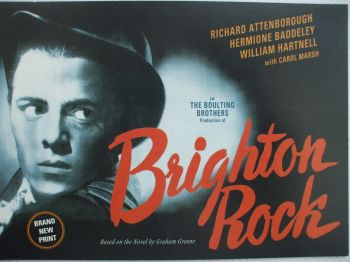
 |
| Poster from the movie version of Brighton Rock, the 1938 film by Graham Greene. |
Published 2/18/15
Brighton Rock (1938)
by Graham GreeneGraham Greene Book Reviews - 1001 Books 2006 Edition
England Made Me (1935)
Brighton Rock (1938) *
The Power and the Glory (1940) *
The Heart of the Matter (1948)
The Third Man (1949)
The End of the Affair (1951) *
The Quiet American (1955) *
Honorary Counsel (1973) *
* = core title in 1001 Books list
I'm two books deep into the Graham Greene oeuvre and I can already see why he is such a favorite of the
1001 Books editors: 1) English 2) Catholic 3) Had popular hits that combined genre work with "serious" subjects. Both
England Made Me and
Brighton Rock have worked in genre areas:
England Made Me is a proto-spy thriller and
Brighton Rock more straight forward crime fiction. I preferred the former to the latter.
Brighton Rock actually has a Catholic theme, with "Pinkie" Brown, the hero/anti hero/protagonist frequently referring to his own Catholic faith and that of others.
The plot of
Brighton Rock is straight forward: Pinkie kills a guy who kills his boss, and then he marries the only witness, a young waitress who is a willing accomplice in his scheme to prevent her from eventually testifying against him any potential court action. It's a little thin, as crime thriller plots go, and there is something quintessentially Catholic about a gangster who MARRIES a woman simply to keep her from POSSIBLY testifying against him in a case that hasn't been initiated. The marriage assumes he will be charged with murder and need her to NOT testify. That seems... to be a somewhat remote possibility during the entire book
Mechanics aside, there is much to enjoy in Brighton Rock, particularly the setting and the inherent pleasure of an English crime novel set outside of London, which seems to be the location for most every English novel that doesn't take place "in the country."
Published 3/9/15
Coming Up For Air (1939)
by George Orwell
Coming Up For Air is some deep Orwell... a social satire about a 45 year old toothless fatty: George Bowling, who sells insurance and lives in the suburbs with a perpetually distressed, dried up wife and two anonymous young children. After a brief introduction to Bowling's day to day existence in pre World War II England, there is an extended flashback concerning Bowling's childhood. Bowling repeatedly refers to himself as a Cockney, and his childhood is a kind of late 19th century semi-rural idyll, replete with nostalgic fishing holes.
After the flashback ends, Bowling decides to tell his wife he's going away for week but instead goes back to his old neighborhood and laments the destruction of a more innocent world. And drinks. Personally, I was obsessed with Bowling's lack of teeth- at 45. I don't think I'm alone when I say that this detail sends Coming Up For Air into the macabre. Why just today I was at Chipotle, and the bags they had for to-go orders had a quote attributed to Aziz Ansari that simply said, "Do you ever see people without teeth and want to ask, what happened?"
Of course, what happened is that they didn't receive proper dental care. Thus, George Bowling, a toothless 45 year old, is emblematic of an English "every man" and not, say, a drifter/hobo riding the rails. Coming Up For Air is minor classic territory, interesting for the committed fan, but nothing for the average student who reads Animal Farm and 1984 in class.
Published 3/10/15
Miss Pettigrew Lives for a Day (1938)
by Winifred Watson
Miss Pettigrew Lives for a Day benefited from the 1998 movie version- the LIBRARY copy of this book was a movie version. The foreword seems to indicate that immediately prior to the publication of the movie edition, Winifred Watson was "lost" because the writer of the foreword "discovered her" living in happy obscurity.
The action of Miss Pettigrew Lives for a Day takes place during a single day. Miss Pettigrew is a self-described dowdy, middle aged Nanny- and not a good Nanny- as she points out repeatedly who is sent- by mistake- to the apartment of Delysia Lafosse- a flamboyant English (in the book) or American (Amy Adams in the movie) starlet.
Miss Pettigrew is a fun romp- racy, flirty and modern- and quite unlike Watson's other books which are more in the neo-Hardian mode of somber rural country novels.
Published 3/17/15
Party Going (1939)
by Henry Green English author Henry Green placed four titles into the 1001 Books Project:
Blindness (1926), about a blind soldier after World War I.
Living (1929), about the lives of Birmingham factor workers.
Loving(1945), about the servants in an Anglo-Irish castle during World War II and
Party Going. The library edition of
Party Going is part of a three-in-one Penguin classic's edition along with
Loving and
Living. The foreword to this edition is written by John Updike, and if you take Updike's introduction with
Living,
Party Going and
Blindness you have the portrait of an author whose work places him after the Modernists but before the careful character driven fiction of mid to late twentieth century, or
'New Yorker short story fiction" as I think of it.
This style is a kind of literary miniaturism. Unlike the high modernists, who deployed the everyday and mundane in the service of grand ideas about life, the universe and everything, Green does not seem to be concerned with the world outside the universe of the particular characters. These characters are sharply drawn. Shifts between narrators are accomplished with a minimum of fuss. Green is in the business of domesticating the disorienting narrative techniques of the high modernists.
Party Going takes place entirely in a single afternoon, at a fogged-in train station, with the main characters huddled at a close by hotel while crowds mill about aimlessly outside. As the two hundred page story spools out, the upper class characters are questioned about infidelity. Green is a careful, subtle writer, and my thought is that he wrote on multiple levels. The Wikipedia entry for this book hints at a "symbolic" analysis of
Party Going that relies on Greek mythology and the god of Hermes. I certainly didn't get that, and Updike doesn't mention literary symbolism in his career summarizing foreword.
Published 2/10/15
Burmese Days (1934)
by George Orwell
George Orwell is a staple of English class from Junior High, where Animal Farm is a perennial, to High School, where 1984 is required reading, to college, where Homage to Catalonia, Down and Out in London and Paris and his short story Killing An Elephant are like as not to pop up in the general requirements for a B.A. degree. Orwell is certainly not fashionable in post-graduate circles, quite the opposite, with his reputation suffering in the aftermath of the 1960s led revolution in voices outside the limited perspective of the entitled white male. Although George Orwell made his reputation on books criticizing mid 20th century totalitarianism in ways that anticipate much of 20th and 21st century radical thought, he himself was a relentlessly bourgeois white male with issues related to women.
This makes his more autobiographical novels, including Burmese Days, more of a chore and less appealing for the contemporary reader than his immortal hits. BUT if you are someone who actually likes George Orwell and aren't just reading him because of a school assignment, it is more biographical works that really tell us about the Author. Andddd man, he seems like he really had issues with women. Burmese Days pivots on the relationship between John Flory, the Orwell figure, his Malaysian slave-prostitute and Elizabeth Lackersteen, a young English orphan (20 years old) who arrives in his remote Burmese village with the idea that she needs to find a husband and soon.
Like the love interest in Keep the Aphrisdia Flying, Elizabeth Lackersteen is a confused figure whose inner life only appears as a reflection of the narrative of Flory. In his more biographical novels, the love story takes second shift to the struggle between man and society. In Burmese Days, his critique of the British Imperialist project is trenchant and insightful. The lower level government employees and European representatives of Corporations doing business in the Teak forests of Burma are a surly and servile lot.
Compared to their Burmese and Indian counterparts (Burma was a part of India under British rule), the English are one dimensional a-holes; all the depth is reserved for the fascinating native characters, Flory himself excepted. Modern readers are likely to find Burmese Days troubling for repeated use of ethnic slurs and the casual use and disuse of a sex slave in the context of British Imperial rule.
Published 7/10/15
Cause for Alarm (1938)
by Eric Ambler The modern "spy thriller" is forever linked to the politics of the Cold War between the West and the Soviet Union, but its genre roots predate that conflict. The first novel to be widely acknowledged as a spy novel is the
The Riddle of the Sands (1903) by Erksine Childers. That book took place in the North sea, and the plot revolves around a couple of English gentleman seafarers who unwittingly stumble upon nefarious German activity. Conrad's
The Secret Agent, published in 1906, is widely known, though its literary quality sets it above the common genre work of most later spy novels. The clear inspiration for
The Riddle of the Sands is the "adventure novel," popular in the 19th century. In Riddle, the spy/espionage element seems almost happenstance, merely an additional element dreamed up by an author looking for novel incident for his sailing adventure story.
The spy novel as we know it incorporated the crime/hard boiled fiction of the 1920s and 30s with the political upheaval of the 20th century. In this sense,
Cause for Alarm, written almost a decade before the outbreak of the Cold War, is the first "true" spy novel in the
1001 Books list. The story concerns an English engineer who is suddenly put out of work in his native land and, out of desperation, accepts an assignment as the representative of an English machine tools company in Fascist Italy, stationed in Milan.
He becomes embroiled in the kind of international geopolitical machinations familiar to any reader of later spy novels. So unformed in the genre at this point that one of the main characters is an American working FOR the Soviets against the interest of the German/Italian Axis.
Cause For Alarm is a fast paced thriller, and will appeal to any fan of the genre.
Published 7/20/15
The Revenge For Love (1937)
by Wyndham Lewis
Ultimately, Wyndham Lewis' most memorable excursions into fiction are his satires. This book and The Apes of God (1930) are the two titles that best exemplify his dark explorations of the modes and mores of 1930s English "bright young things." Like many thoughtful writers of the 1930s, Lewis explored Communism, Fascism and the similarities between the two in the context of the times. This "context" were the tumultuous events between the Great Depression and World War II, with a heavy emphasis on the Spanish Civil War and fashionable London.
Whether a reader is interested in the bright young things of London in the 1930s is very much a matter of personal taste. Personally, I take interest in all 20th century avant gardes, but the English are at the top of the list in terms of just the level of documentation via the number of authors who were writing about the same smallish group of people. Aldous Huxley, George Orwell, Wyndham Lewis all traversed a social set that couldn't have been more than a thousand or so individuals.
 |
| A young Aldous Huxley. Eyeless in Gaza is supposed to be his most biographical novel, written after Brave New World was a smash hit. |
Published 8/5/15
Eyeless in Gaza (1936)
by Aldous Huxley
I know plenty of people who "don't read reviews" because they don't want to "spoil" the movie/tv show/book etc, and I have to say, I just don't get it. I actually like to know the plot before hand, because it helps me focus in on the art and craft of the work, rather than worrying if someone dies or whatever in the end. If "not spoiling the plot" is important to you, you might as well be reading dime store romance novels. To me, the plot is the least important thing because ultimately, every plot is predictable to a certain degree, it's the carrying out of the mechanics, the depiction of the scene and the characters, which are interesting- to me- anyway.
Eyeless in Gaza is a portrait of disaffected well off English youth in the 30s. The jacket copy on my Harper Perennial Modern Classics edition is laudatory ("An important book...without parallel in literature.") but I was not so impressed. This book concerns the trials and tribulations of Anthony Beavis, a wealthy, upper-class socialite who experiences multiple crises of meanings in the non-chronologically arranged narrative. The narrative is punctuated by incident: the suicide of a close friend, a love affair with a heroin addicted matron, an expedition to Mexico to assist a socialist revolution. The lack of chronology makes the reader work, but there are no other modernist techniques in evidence, meaning that what is on the page is at least, understandable.
It's unclear why this book, along with close to 20 other portraits of upper-class English youth in the early 20th century would be one of the
1001 Books to Read Before You Die. The only difference between this book and many of the themes (and characters)of D.H. Lawrence is that Huxley isn't afraid to pointedly discuss sex and drug abuse. The authorial voice in Eyeless in Gaza is closer to the tone of post World War II literature in its explicit treatment of historically "controversial" subjects, but the social milieu is unquestionably pre World War II.
The over-all impression I received from this survey of pre-World War II English literature was that the English upper classes were perilously close to declaring moral bankruptcy at the onset of World War II. This perspective is certainly colored by the querulous sort of people who write classic novels, but the impression is a strong one. Perhaps the most extraordinary part of reading Eyeless in Gaza was actually laying hands on a paperback copy. I had it "on hold" at the San Diego Public Library for a half year before I broke down and bought at a book store in Concord Massachusetts during summer vacation last year.
Published 2/6/16
A Day Off (1933)
by Storm Jameson
The depiction of loneliness in London is practically a genre itself within the 1001 Books project. Urban anomie is often associated with the rise of existentialism in the 1950s, but English authors depicted this alienation, minus the heavy philosophical overlay, starting in the late 19th century. Jameson's take on this fertile territory is that of a single woman, aging, with no children or spouse. Out of work, she decides to take "A Day Off" to ease her mind, and while doing so she travels back and forth in time, remembering lost lovers and worrying for her future. The feeling of sadness permeates A Day Off, and if a reader has any inclinations in the area of loneliness and anxiety, this book will certainly trigger an interior dialogue with those emotions
 |
| Brave New World was published in 1932, a decade and a half before George Orwell wrote along similar lines in 1984. |
Published 10/6/15
Brave New World (1932)
by Aldous Huxley Brave New World was published 17 years before George Orwell's
1984. Huxley's depiction of a futuristic totalitarian state may have been the first techno dystopia in fiction or non fiction. His future dystopia is a combination of mass production and "pure" communism, with a benevolent oligarchic dictatorship ensuring that babies are properly grown in test tubes, the five classes of humanity- alpha through epsilon- are properly indoctrinated via hypno/sleep suggestion and that every has an adequate supply of soma, a drug that sounds pretty much like morphine.
Compared to Orwell's 1984, Huxley's Brave New World is a fairly benign place. Orwell, of course, was writing with full knowledge of the horrors of World War II, where Huxley was writing during the interwar period where many English intellectuals flirted with totalitarianism of both right and left varieties. Huxley's most penetrating observations surround his depiction of the pleasure seeking consumer society that wasn't even beginning in the 1930's. The idea of cheap drugs and free sex began to resonate deeply a generation after Huxley published
Brave New World. Like Herman Hesse, Huxley wrote books in the early part of the 20th century that only fully resonated with it's largest audience decades later. In this way, he falls into the same category as Jane Austen or the Bronte sisters.
Although Huxley's techno-dystopia was prescient in many ways, his writing style is more or less derivative of H.G. Wells. That is nothing to be ashamed of, but the plot and the writing in general is not equal to Orwell in 1984. Orwell was very deeply involved with the language of totalitarianism, to the point where he generated his own argot for 1984. Huxley, on the other hand,
relies on Shakespeare, from where Huxley derives his title.
Published 10/12/15
Star Maker (1937)
by Olaf Stapledon I recently completed the
Remembrance of Earth's Past trilogy- written by Chinese science fiction author Liu Cixin and I have to say that my mind was blown. Not so much by book one- which was amazing- and reviewed here, but by the second and third books
The Dark Forest and
Death's End, which are impossible to even discuss without ruining the sheer mind-blowingness of it all. But in summary, the trilogy is a variation on the standard "first contact" narrative, where Earth makes contact with an alien race. The surprise and delight is in the science and philosophy that Cixin brings to the table, and while both might be off putting to casual readers, Cixin clearly strikes a chord, one that has resonated not just in his native China but also in the West, where Amazon studios recently picked up the trilogy for development.
The experience of the trilogy was so revelatory that I found myself wondering whether I had missed some influential works of science fiction that might have inspired Liu.
The Foundation Trilogy by Issac Asimov is an obvious inspiration, and the characters and the book reference it. Another book that is often cited by people writing about the Remembrance trilogy is Star Maker, by Olaf Stapledon.
I'd heard of neither book nor author, so I checked out 1970's era reprint.
Published 2/11/19
The Road to Wigan Pier (1937)
by George Orwell George Orwell is one of my favorite writers. He is very much on my completist list, of authors where I'm trying to read all their books. The Audiobook of Orwell's 1937 poverty tour in northern mining towns is readily available via the Los Angeles Public Library, and it also ranked #39 on the Guardian's 2011 list of Best 100 Non Fiction books, so I picked it as a space filler during my long weekly drives.
I didn't expect to be disappointed by Orwell, and I wasn't. Poverty is a consistent theme of the second tier of Orwell's books- not the ones you read in school but books you might come across if you take an interest in Orwell beyond his big canon-busting hits like Animal Farm and 1984. The most popular of his poverty books is
Down and Out in London and Paris, (1933) which explores similar themes and probably explained why this book was commissioned by
Victor Gollancz. Besides the non-fiction,
Keep the Aspidistra Flying, an early novel, deals explicitly with the theme of poverty in the guise of a kunstsleroman.
The 2011 Guardian list of 100 Best Non Fiction books takes
The Road to Wigan Pier as it's representative of the Orwell bibliography, and it's hard to argue, if only because it is the only one of Orwell's books where he well and truly gives his opinion about his subject, and I think the reader can see a hit of the kind of public intellectual he could have become were it not for his very early death at the age or 50, in 1946.
The first half of
The Road to Wigan Pier is a straight forward description of the living conditions and working conditions for the miners in northern English coal mining towns, the second is a polemic directed against the socialist leadership for not doing enough to appeal to actual working men, as supposed to the effete intellectuals who tended to be socialists back then. It's a critique that holds true into today- you can think of the Democrats in America repeated failures to appeal to white working class voters in the industrial midwest and south.
The descriptions of actual living conditions, it's hard to believe he's talking about life in England during the 20th century- for example, he describes a common condition of people who can't afford to buy bedding and just sleep on piles of rags placed on top of the bed frame. It's also very clear that nutrition was terrible for the English working class. What marks out Orwell from a half century of anti-poverty crusaders is that he actually lived it- experienced poverty both as a reporter and as a bohemian- so both naturally and unnaturally, which was very much not the case for educated writer inveighing against working class poverty in the late 19th and early to mid 20th century.
Stapledon was an English science fiction writer who had the misfortune to do most of his writing either directly before or after World War II, a time when opportunities were slim for trans-atlantic publishing of all sorts, and before science fiction was taken seriously by literary critics. He became a cult author, for example,
Borges wrote a foreword for 1960's era reprint of Star Maker.
Star Maker is, I think, the first serious attempt to imagine the outlines of intergalactic civilization. Stapeldon's Star Maker is an English man, living in the 20th century, who, one night, rises out of his journey and begins travelling among the stars. When he lands on a world with intelligent life, he is able to partially occupy the consciousness of the "other humans" as he calls them. What follows is a systemic attempt to describe all forms of intelligent life in the galaxy.
Stapledon then follows with an incredible description of millions years of Galactic history, featuring battles, intergalactic space travel and even conscious stars. It is a wild ride, although there is little in the way of plot or character development. I found myself repeatedly needing to confirm that Star Maker had actually been published in 1937, because it feels several decades ahead of its time.
I think there is a strong argument to include
Star Maker as a canonical novel, perhaps as a substitute for other proto-genre works like
At the Mountains of Madness by H.P. Lovecraft (1936), or a work of detective fiction like
The Glass Key by Dashiell Hammett (1931),
Murder Must Advertise by Dorothy Sayers (1933) or T
he Postman Always Rings Twice by James Cain (1934). Do Hammett and Sayers both need multiple titles published in the 1930's? Surely one book by each author is sufficient.
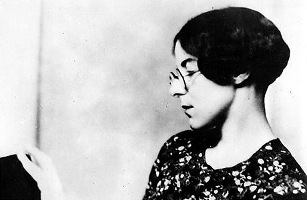 |
| Sylvia Townsend Warner |
Published 2/21/16
Summer Will Show (1936)
by Sylvia Townsend Warner The most striking difference between the 2006 and 2008 versions of the 1001 Books list is the exclusion of books by authors who placed multiple titles on the 2006 list in favor of non-English language, unrepresented authors. A major theme of the 2006 list which is eclipsed in the 2008 list is the emphasis of books by English language women authors who are commonly excluded from the canon. Sylvia Townsend Warner is a good example of an author from the group.
Summer Will Show is a little-read, historical novel about the French Revolution, written about a wealthy English woman who becomes a lesbian radical.
Warner is so little read today that all of her major books are published by the New York Review of Books publishing imprint. The NYRB is a who's-who of neglected 20th century authors, and I can only presume that their criteria for publication is a lack of interest from bigger publishing houses and a solid critical reputation.
Warner is so little read today that only one of her books even has it's own Wikipedia page. There have been perhaps less than ten titles in the 1001 Books list that lack an independent Wikipedia page. Obscurity aside, there is much to admire in
Summer Will Show, namely a strong female protagonist who engages in a lesbian relationship and forsakes a life of leisure in rural England for a position on the barricades of the French Revolution.
 |
| Criterion Collection cover for The Lady Vanishes d. Alfred Hitchcock |
Published 1/15/21
The Lady Vanishes (1938)
d. Alfred Hitchcock
Criterion Collection #3
The question of whether movies (or "film" or "cinema) is literature is very important to this blog- even if I do go half a decade or more without seriously addressing the question here. Now that I'm back to it (the last stand alone Criterion Collection review was in 2015), I'm back to thinking about the literature /movies/film/cinema issue. If you wanted to sketch out the major schools of thought on the issue, you can look at it in the context of the American/Western University system, where films are typically taught as literature to undergraduates, with a narrower band of technical education that typically takes place outside of the question of film as literature.
On the one side you've got the actually Professors and students of film. The Professors are typically Professors of literature. The distinction is less important to the students, many of whom may reasonably prefer movies to the more traditional forms of literature, poetry, novels, short stories. Because the idea that film was a type of literature to be studied only happened after World War II, all Professors of Film take a post-modernist perspective on the ideas of literature, so they all question the distinction even as they benefit from it.
On the other side you've got the Professors in the more traditional lines of Literature- World Literature, American Literature, 20th Century Literature, Poetry, Creative Writing, Comparative Literature, Etc. Those people are naturally going to resent/dislike Professors of Film because they take jobs from these same traditional Professor types. There is also some prejudice against the idea of moving images as art, and the broad technical and monetary restrictions on making a work of film as literature.
Alfred Hitchcock is interesting because he represents a key moment in the transformation of movies into a form of literature, in that he was the artist who inspired Francois Truffaut to coin the term "auteur" back in 1954. After the term came into common usage, film had its "author" -a prestige denied to the actual writers of films, who were and continue to be viewed as mere technical support. The whole idea of the auteur then inspired scholars and fans to go back to film before 1954 and re-evaluate film makers for auteur status. This is another very important example of how artistic reputation is often rejudged decades after the work is published.
Using the example of The Lady Vanishes, it was the third Criterion Collection film. That is despite the fact that, as the accompanying materials make clear, The Lady Vanishes was considered a thriller b-movie type production by the English studio providing the financing. One of the points that Truffaut makes in his discussion with Hitchcock that appears in audio format in the extras of the Criterion Collection edition is that he has seen The Lady Vanishes multiple times, and will go in saying that he is going to focus on the technical acuity that Hitchcock displays, but instead he gets swept into the story and forgets to look. That is the essence of great art. Indeed, I quite enjoyed The Lady Vanishes even though I've never been a fan of Hitchcock. Part of it has to do with the fact that his films aren't that widely shown.
I'm sure all Criterion Channel has is his early English films. They should really let those movies out to breath somewhere!
Published 11/10/14
To The North (1932)
by Elizabeth Bowen This is Anglo-Irish author Bowen's second book within the 1001 Books projects. Her first was
The Last September, published in 1929. In
To The North, Bowen has moved on from her rural Irish homeland to the fast times of post World War I, pre Great Depression London. Any discussion of To The North needs to address the role of technology on the characters of To The North. Opining that technology has changed our lives in many way is beyond a common place in 2014, but it's interesting to see how long it took Art to absorb and reflect the way technology and innovation changed the way we lived.
For example,
To The North is one of two books in the 101 Books project up until this point that uses the automobile as an active element in telling the story, and maybe one of five books where the characters use a telephone. Both this novel and
The Last September deal with a changing world where the characters struggle to adapt. The difference is that in The Last September the changing world is of a recognizable type: political upheaval brought about by the English colonial adventure in Ireland. In
To The North, the change is stranger, less familiar to the author and the characters, but infinitely more familiar to a present day reader.
The female protagonists of
To The North are sisters in law, Cecilia, 29, was married to Emmeline's brother Henry, but Henry died. During the novel Cecilia does not much of all, while Emmeline has a travel agency with a partner and tools around town in her own car. Emmeline is involved with a brilliant but decadent barrister who goes by "Markie." Emmeline and Cecilia are a kind of mid point between the heroines of Jane Austen and the Bronte sisters and those of
Bridget Jones and
Sex & the City.
And while no one is likely to mistake the chaste description of the interactions between Markie and Emmeline for a Sex & the City episode, the modernity of Emmeline with her car, business and lack of interest in marriage and children is impossible to miss.
Published 11/11/14
Sunset Song (1932)
by Lewis Grassic Gibbon
Widely acknowledged as the first important Scottish novel of the 20th century, Sunset Song is part of a trilogy of novels written by Lewis Grassic Gibbon. It's hard to argue that Gibbon in any way started the tradition of the Scottish novel, since Scottish writers like Sir Walter Scott and Tobias Smollett played a role in inventing the novel itself. However, Gibbon is the first author to attempt to portray the "common folk" of highland Scotland in a realistic manner. His trilogy of A Scots Quair, of which Sunset Song is the first volume, combines modernist technique (dialogue integrated into the text, stream of consciousness), a strong female hero (Chris Guthrie, who is the central figure of all three novels) and regional dialect (complete with a glossary.). to excellent effect.
It is the interaction of these three features that make Sunset Song/A Scots Quair classic, and they outweigh the limited invention of the plot, which has the strong scent of earlier nineteenth century novels from other northern countries like Sweden and Norway. A plot point dealing with a triple infanticide/suicide by Guthrie's mother can't help but recall the rural infanticide of The Growth of the Soil (1917) by Knut Hamsun. The earlier chapters of the novel, describing the history, courtship and marriage of her parents reminded me of The People of Hemso (1877) by August Strindberg. Which is to say that Sunset Song isn't necessarily breathlessly original aside from the technique, but it is first in the field, and at 195 pages makes for a quick read.
Published 1/21/15
Wild Harbour (1936)
by Ian Macpherson
I can't remember the last 1001 Books title that hasn't had it's own Wikipedia page. Wild Harbour, by Scottish novelist Ian Macpherson has to be one of the most obscure titles thus far simply for that reason. It's a shame that Wild Harbour is so obscure, because it is actually one of my top ten books for the last 12 months or so. Half survival narrative in the fine tradition of Robinson Crusoe and his progeny, half dystopian futurism, Wild Harbour also features a well observed Scottish highlands(?) locale and an engaging love story between the two lead characters, who pack up and leave in the early days of a (fictional) World War II set some time in the near future.
The transition from traditional-ish survival story to a depiction of an anarchic English country side is a clear influence on popular current dystopian narratives: Fans of The Road by Cormac McCarthy and the book or movie version of Children of Men will recognize the influence of this book on those books. Generally speaking, the world-systems perspective of serious fiction is conservative, with authors firmly rooted in the upper-middle class concerns of property inheritance and marriage protocol, with an increasing interest in corresponding concerns among the working classes. The idea of writing fiction in a world where government is absent is not particularly new, but the setting that world after the collapse of the current social system is. Wild Harbour merits attention for its early depiction of a post-apocalyptic landscape.
Published 2/20/15
Murphy (1938)
by Samuel Beckett You can get away with calling Samuel Beckett either the "last of the modernists" or the "first of the post-modernists" in casual conversation, either assertion is easily buttressed by
Murphy, one of Beckett's few novels. Published in 1938, the end of the modernist period, it contains a main character whose behavior is more in line with precepts of post modernism than any particular strain of modernism. Murphy is equally obsessed with not working and conducting breathing and meditation exercises while tightly restrained in a chair.
Beckett's prose technique is recognizably modernist or avant garde, but not excessively so. It's hard not to compare Murphy to novels written by James Joyce in their similar espousal of a low budget, pre-1960s concern with non-traditional brands of spirituality. For example, Joyce's
Ulysses is infused with multiple ruminations about Kabbalah. Murphy has no explicit ideology, Samuel Beckett clearly did not want him to have any appreciable motivation. At the end of Beckett, he is immolated in his "proper garrett" inside the insane asylum where he works. The portion of the book where Beckett goes to work among the insane is the only part that could be considered to have "action." The rest takes place mostly in the apartment of Beckett and his hooker girlfriend.
The relationship of Beckett and James Joyce is no secret, occupying pride of place on
Wikipedia for Samuel Beckett's "Early Works" heading.
Published 2/7/16
The House in Paris (1935)
by Elizabeth Bowen
Any author who placed more than 5 titles on the 2006 1001 Books to Read Before You Die list is practically guaranteed to lose 50% or more of those titles on the 2008 list. Elizabeth Bowen is no exception, losing three of her six entries on the 2006 edition. The House in Paris is one of the lost titles. All of Bowen's works combine modernist styles (use of the "free indirect" narrator, moving backwards and forwards in time out of sequence) but The House in Paris is the most modernist, with the action taking place within a single day and the use of lengthy imagined scenes (imagined by one of the characters) taking place out of the time sequence of the novel, as a flash back.
Like much of her work, The House in Paris touches on issues of class and religion without being about those things. Rather, The House in Paris is about a young boy, Leopold, learning about the tangled circumstances around his birth. In the fine modernist tradition, none of this is spelled out for the reader. You have to either work or pay close attention to really zero in on the story before the third act ties it all together. Before then you might find yourself asking which character is which. That is frequently the case with books that embrace early 20th century modernist technique, a disorientation, if you will, from the standard feelings obtained from reading a well written novel.
Does anyone read Elizabeth Bowen these days? Maybe in England. The last American edition of The House in Paris was published in 1976. I'd never heard of her before the 1001 Books project, now I would rank her as a middle of the table British (Anglo-Irish) author from the early-mid 20th century. I think though, that three books is adequate to represent her proper status.
Published 11/23/20
Monica (1930)
by Saunders Lewis
Replaces: Antic Hay by Aldous Huxley
It is kind of amazing that the Welsh have managed to preserve their indigenous language in the face of going on 800 years of English imperialism. Monica by Welsh nationalist Saunders Lewis makes it into the revised 1001 Books project as the sole representative of translated from the original Welsh. Of course, anyone following the 1001 Books project is reading the English language translation. Without the original language, Monica comes off as early kitchen sink realism with a Welsh accent.
Monica wasn't a hit- Welsh nationalists didn't like the negative take on social relations between wife and husband. "Kitchen Sink Realism" wasn't really a thing in England until the 1950's, so Lewis was ahead of his time in that regard.
 |
| Louis-Ferdinand Celine, forerunner of Henry Miller, William Burroughs, Jack Kerouac and Charles Bukowski. |
Published 3/11/16
Journey to the End of the Night (1932)
by Louis-Ferdinand Celine Before there was Henry Miller, William Burroughs, Jack Kerouac and Charles Bukowski, there was Louis-Ferdinand Celine. Celine was also, regrettably, a rabid anti-Semite who was firmly committed to the Nazi cause in World War II AND after- eventually being convicted in abstentia of being a collaborator with the Nazis. Celine's place in the literary canon is still debated. He was famously included then excluded from a list of "500 French intellectuals" compiled by the French government itself.
His widow, still alive at the age of 103, has ensured that his most rabidly anti-Semetic tracts are out of print and he's kind of a poster child for the impact that extremely non-p.c. believes can have on an artistic legacy. Unlike many other authors I've not read in the 1001 Books project, I know exactly why I hadn't read
Journey to the End of the Night before now: It's because Louis-Ferdinand Celine is a Nazi, more or less.
But now I'm quite clear on the philosophy of pardoning artists for moral flaws that would otherwise put them beyond the pale of polite society. Being a Nazi may be more offensive than living as a unrepentant degenerate or heroin addicted trust-funder, but only as a matter of degree. The direct and obvious comparison is to American author Henry Miller. Like Miller, Celine directly confronted the reality of life on the margins of Western society in the 1920s and 30s. Topics like venereal disease, back alley abortions and the ugliness of 20th century racism are put front and center to the reader.
Journey to the End of the Night squarely fits into the literary genre of 'bildungsroman' or "coming of age story," but it represents the negative image of what that genre typically represents. A fun house mirror, if you will. Like so many other 20th century anti-heroes, Ferdinand Bardamu is deeply imbued with an existentialist philosophy before such a thing existed. Bardamu isn't a thoughtful intellectual, but he isn't a thug, either. He starts out in the army during World War I, finds his way to Africa, where he has some memorable adventures, makes his way to America for a year or so, and returns to France, where he becomes an unsuccessful doctor.
There is also a kind of negative double to Bardamu, his "frenemy" Leon Robinson, whom he meets first on the battlefields of Belgium, where Robinson is trying to get himself captured by the Germans. They renew acquaintances in America and after Bardamu returns to France, Robinson ends up becoming a focal point of Bardamu's existence. This relationship between Bardamu and Robinson more or less constitutes the plot of
Journey to the End of the Night, but like Miller and Kerouac, the atmosphere is more of interest than any overarching narrative.
Once you get past Celine's unrepentant, explicitly pro-Nazi Antisemitism (or if, I guess) it's clear that Journey to the End of the Night is an early classic of 20th century existentialist
Published 8/30/15
Nausea (1938)
by Jean Paul Sartre
Nausea is the first novel by Nobel Prize decliner Jean Paul Sartre. It's also the first existentialist novel, and indeed the single text that introduced the most people to the idea of existentialism. It's common to associate existentialism with the post World War II period, but for Sartre and the other existentialists of the early 20th century it was the experience of the first World War and the subsequent post War crisis of faith that shaped their perspective.
Antoine Roquentin, the existentialist anti-hero, is living in a thinly veiled version of the French port city of Le Havre, where he suffers from a crisis of faith where being in society, in public, causes him to be nauseas. He consorts with a variety of low lifes, including his friend, "the self taught man," who spends his days reading indiscriminately at the local library.
The plight of the existential hero is so familiar 80 years after Nausea was published that it is difficult to plug in the excitement that it must have caused at the time. It's also unclear how far Nausea penetrated in translation- with the major current English translation dating from 1965, 25 years after it was first published in French.
Published 1/4/21
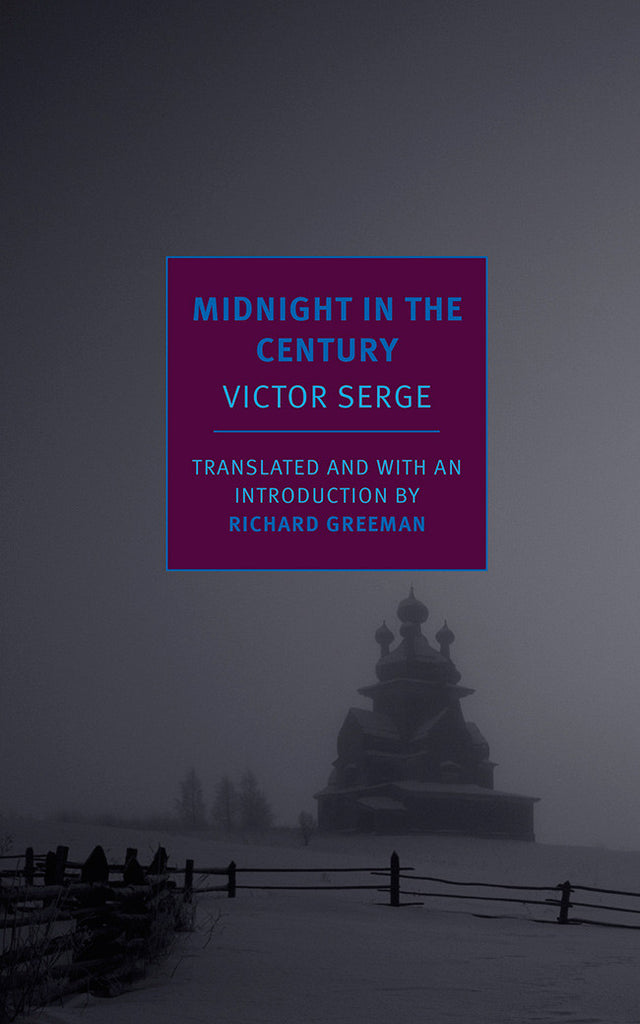
Vipers' Tangle (The Knot of Vipers)
by Francois Mauriac
Replaces: The Plumed Serpent by D.H. Lawrence
French author Francois Mauriac won the Nobel Prize in 1952. Unusually for someone known as a "Catholic" author, he supported the resistance during World War II and was the only member of the Acadamie Francaise to publish in support of the resistance. Mauriac is another good example of how a well known European author can be totally obscure in the USA. For example, this book is the only English language edition of his work which appears on the first page of his Amazon author search results- the rest are all French editions.
Vipers' Tangle struck me as an extremely French novel, about Monsieur Louis, a wealthy lawyer who becomes obssessed with disinheriting his family. Told in the form of a confessional journal entry, Louis gradually reveals that the Vipers' Tangle/Knot refers not to the family he hates itself, but rather the situation inside his heart.









 Instagram