Neumann take it upon himself to add flesh to the bones of Jung’s theory about universal archetypes. That universality is best symbolized by the Uroboros or “serpent that bites it’s tail.” Neurmann hypothesizes that this symbol is the THE original symbol of human culture. This argument is very closely linked to the theories first articulated by J.J Bachofen, published in the United States as Myth, Religion and Mother Right. Bachofen, writing in the late 19th century, claimed that matriarchal culture precedes patriarchal culture, linking the first religion to the agricultural settlements of the Middle East. Fifty years on from Neumann and more then a hundred from Bachofen the idea of matriarchal “original religion” has lost none of it’s hold on the imagination but further research has proved this idea false. The main mistake in the “mother right” theory is to assume that human religion began with agricultural settlements in the Middle East around the fourth millennium. It now appears that human culture extends far beyond agricultural settlements, and in fact that humans had culture and religion prior to forming permanent settlements.
Regardless of the accuracy of Jung and his followers, the sheer power of his ideas and their influence on artists and other thinkers makes a thorough investigation of Jung’s thought worth the effort. It’s not a body of thought that is particularly fashionable at the moment, but the whole point is that Jung is oriented to the Universal, so thinking about the relationship between the artist and the audience, it makes sense that you want to incorporate universal themes if possible.
The meat of Neurmann’s thesis is that there is a deep and abiding link between the shared experiences of our ancestors and the personality of individuals. The very idea of our unconscious steering our personalities may seem comical in an era of anti-depressants and increased knowledge about brain chemistry, but perhaps the enduring value of thinkers like Jung and Neumann is in their discussion of the group psychology of ancient and pre-historical cultures. Neumann analyzing the symbolism of ancient civilizations in terms of the relationship between parents and children. In Neumann’s view, the original concern of human culture was fertility: fertility of women, and fertility of the fields. Neumann believes that the original religion was the worship of a fearsome Mother Goddess that required blood (menstrua, sacrificial) for the annual renewal of fertility.
In making his analysis Neumann leans heavily on examples taken from Ancient Egypt. Here, his accuracy is hampered by subsequent developments in Assyrianology, namely, the translation of voluminous texts from Mesopotamian and Indo European civilizations. Placed in context against other ancient civilization, the Egyptian religion does seem particularly oriented towards the kind of theories that Neumann endorses, but you only have to shift to the Hittites, who were younger but still contemporaneous with the Egyptian religion Neurmann draws from, to see a more male oriented culture less oriented towards feminine fertility rituals.
Published 6/3/10
The Washing of the Spears
The Rise and Fall of the Zulu Nation
by Donald R. Morris
p. 1965
Simon and Schuster
So last bit about the Zulus and South African history. Have you ever scanned through the programs they show on the History Channel and wondered History means "War" as far as television cable channels are concerned? I've often wondered about why history means "history of battles" to many people, and I think that's because people in the military have always been history buffs, and that shaped the market for books about history. Me, I don't give a fuck about military history. Who gives a shit? War may be useful sometimes, but it is always a pointless waste of life. (or it ain't a real war.) Here's a tip, if you buy a history book, and it turns out to be a military history book, skim that shit. Skim the fuck out of it, or you'll spend a week of your life learning about the background of soldiers who fought in wars, the difficulty of fighting wars in strange locations.
Even though the sub head of this book is "the rise and fall of the Zulu nation" it's about as accurate as calling a book about the battles of the Civil War "The Rise and Fall of the Confederacy."
Military history is worse than useless, it's actually evil because it makes military types think that they can predict what is going to happen in a future war. And they are always wrong, and people end up dying because of shitty history books.
The Zulu's were defeated after the initial invasion was wiped off the face of the earth. Honestly, the description of the Zulu warriors annihilating gun toting red coats was the absolute high point of the book. Reading a book like this, the only thought I have is, "Gee, maybe the black South Africans should spring a genocide on the Whites left in South Africa and see how THEY like it." The Anglo Zulu war, the war that resulted in the deaths of thousands of Zulus and Europeans, was totally unprovoked. It was a war of extermination, fought for no reason, except to subjugate the Zulu nation. You know, Whites brought their racist bullshit to Africa, and maybe turn about is fair play.
Published 10/21/10 THE CHOLA DYNASTYPublished 10/25/10
Mayans, Toltecs & Aztecs It's hard to ignore the present-day drug violence in Mexico. I've been thinking about Mexico itself, and realizing that my present state is "sadly ignorant." The ignorance starts at the beginning. For example, I don't really know the difference between Mayans, Toltecs and Aztecs. The truth of Pre-Columbian civilization is that it blended elements of pre-Western middle Eastern civilizations with aspects of solidly "middle ages" civilizations. These civilizations spanned a thousand years in time, a large diversity of geography, the migration of different peoples, numerous ecological catastrophes and eventually contact with Europe. Although they are treated as "extinct" the people continue to exist. In many cases they continue to speak their own language, practice their own syncretic rituals and maintain an ethnic identity that has resisted Western assimilation for half a millennium.
Pre Contact Central/Southern Mexico was a diverse place culturally speaking. The first generally identifiable group is the Olmecs, documented back to 1100 B.C. The next significant group are the Mayans, whose civilization, occurring from about 300 AD to 800 AD, is generally considered the "golden" age of Pre Columbian Mexican civilization. The Mayans were clustered in Southern Mexico, on the Yucatan peninsula and into Guatemala. If you consult any edition of the Ethnologue, the entire Yucatan peninsula maintains Mayan speakers. A hoary entry point into any discussion of the Mayans includes belabored theories about the "mysterious" collapse of the Mayan Golden Age, but if you just look at the environment, hot, humid and jungly, it seems like a precarious place to build an enduring human foot print. They had a 500 hundred year run, but it's not like they went away, they just weren't quite so awesome.
After the Mayan's Golden Age collapsed, the center of gravity shifts North to the boundary of the valley of Mexico and the Northern Mexican hinterlands. Here, there was the familiar interrelationship between settled farming people and barbarous Northern tribes. As you can see by the similarity in names, the Toltecs and the Aztecs both came from the same cultural milleu and occupied the same general area around present day Mexico city. During this period, there were also separate Zapotec empries in present day Oaxcaca- languages maintained till today. Also, the Mayans were still around. But the Toltecs were the geographic predecessors of the Aztecs. The Toltecs height was about 1000-1250.
It's only after this point that the Aztecs enter onto the scene. The idea that the Aztecs were a dominant people is embedded in European "knowledge" about Pre-Columbian Mexico, but they were really just one tribe in a wider cultural area where the people all spoke various dialects of Nahuatl. You have to consider the Nahuatl languages were spoken in the area of the Toltecs/Aztecs from 700 AD onward, and the Aztecs had only been in control for a century when the Spanish showed up the 15th century. It's also important to recognize that Nahuatl is just a sub-group of the enormous Uto-Aztecan language group, which extends all the way from the Northern Plains of the United States to Southern California, down to Central Mexico.
It's quite breathtaking to consider that the Arizona river Indians spoke a language from the same family as the Aztec empire. There is a continuity there that is generally not appreciated. The Northern branch of the Uto Aztecan language family includes California tribes like the Mono and the Paiute.
At the time of the Spanish conquest, the Aztecs ruled over the valley of Mexico in a manner somewhat analogous to Mongol rule over China: Their immediate neighbors were more "civilized" but the Aztecs were tougher. The story of the Spanish conquest of the Aztecs is not the last chapter in Spanish/Native relations. The Spanish still had to subjugate the Maya, the Zapotecs, and relationships with the tribes North of the valley of Mexico were troublesome for centuries.
And while the natives suffered from the familiar depredations of diseases, the Spanish were slow in sending colonists abroad, so that the native peoples were never really surpassed numerically and they have endured, even as they slowly loose distinct cultural characteristics.
I think the reality of the War on Drugs in Mexico is that the vast majority of poor people in Mexico simply do not give a shit about the Mexican state, because its institutions are foreign and poorly representative of the needs of their people. Given it's ethnic/cultural history, Mexico would be better off looking towards India then the United States and Spain. Spain is in fact, a terrible model for Mexico, as is the United States. For the vast majority of people in Mexico, the situation today is no better or worse then it always has been, and that is the reality.

Published 11/10/10
The Zapotecs
Princes, Priests & Peasants
by Joseph W. Whitecotton
p. 1977
University of Oklahoma Press
Civilization of the American Indian Series Crazy people like to make a big deal out of ancient pyramids, and about how, you know, aliens came down from space to inspire them in different places around the world, but if you stop and think about it... a pyramid is a pretty useful way to get closer to the sky. Furthermore, any group of people that moves beyond hunt and gather style live is going to be obsessed with the sky and rain... because they are practicing agriculture. When you are farming you are reliant on sunlight and rain- that shit is important. What better way to get closer to whatever God you've dreamt up then to make something to get you closer.
The Zapotecs are a people of Southern Mexico. Their civilization was centered around what is presently Oaxaca. Oaxaca is in a valley south of Mexico City. It has two main branches, and between them is
Monte Alban- Monte Alban is considered the culture center of your classic era Zapotec civilization. Afterwards, the Zapotecs were invaded (or something) by the Mixtecs- a different culture that moved in as conquerers and ended up living side by side with the Zapotecs, often in different neighborhoods in the same village. Both groups were subjugated by the Aztecs prior to Spanish arrival, but it was a paying tribute kind of domination.
The Zapotecs remain in the state of Oaxaca, they also spread to the south into the Isthmus of Mexico and west to the coast. Their cultural situation is complex- Zapotecs never considered themselves a nation, and their tradition of governance maintains identity to the individual community of which they are members- similar to the situation in Italy in the Renaissance.
What is significant about the Zapotecs is that their language comes from a different linguistic family then that of the Aztecs. The Aztecs speak a variety of Uto-Aztecan, while Zapotec is part of the
Oto-Manguean family. Zapotec and Mixtec are the most successful of the Oto Manguean languages, and linguists generally agree that some form of this language has been present in Mexico since 4000 B.C, giving the Oto Manguean's a prior claim to Mexico.
If you look at a map, it seems likely that the Uto-Aztecan speaking peoples moved south, pushing the Oto Manguean peoples south in the process. It's not like the Zapotecs were inferior- they may have introduced writing into Classic Era Mexico. It's hard to know, since the Spanish did such a great job of eradicating and co-opting the pre-Contact Zapotec culture, but it's useful to know that pre-Contact Mexico was more then just the Aztecs.
Published 12/2/10
The Last Lingua Franca
English Until The Return of Babel
by Nicholas Ostler
p. 2010 Walker & Company You might consider Ostler a popularizer of the field of
Socio-Linguistics. His new book, published in the US on
November 23rd, is an extended essay on the role of English as a
Lingua Franca in the modern World. Having recently read the author's earlier book
Empires of the Word, I recognized both the theme and some of the details from the earlier book, which covers much of the same territory as the Last Lingua Franca, but in a more general manner.
Specifically, in The Last Lingua Franca looks to historical examples of other Lingua Francas, and how they failed, and asks questions about whether or not English, the current Lingua Franca, might suffer the same fate. I very much place this book along the same continuum where you find pop intellectuals like Malcolm Gladwell or, shudder, Jared Diamond. This group of writers familarizes itself with specific social science disciplines, distills the knowledge into modern magazine quality prose, and attempts to generate a hook that will interest readers who normally wouldn't give an eff about the field of "socio-linguistics."
As such, I would be inclined to think that Ostler has the right angle, since the "decline" of English is a subject that obsesses both liberal members of the education establishment and political right wingers who sponsor "English Only" bills in the legislatures of the southern states.
Most of Ostler's focus in this book is extended examples of different Lingua Francas, how they functioned, and how they collapsed. The reader is treated to chapters on the role of Latin, Persian & Sanskrit in their respective societies, followed by his take on the rise of English, and what "the future holds" for English or any other would-be Lingua Franca. Ostler's ultimate conclusion is spelled out in the title of the book itself, "The LAST Lingua Franca." Ostler takes the position that the rise of Machine Translation and non-English speaking countries like Brazil, Russia, China & India make English's survival as a the language of the world far from secure. However he also acknowledges that it is difficult to imagine ANY language replacing English.
Lingua Franca is a worthwhile read for a reader with a passing interest in linguistics and a college education, but it's hardly intellectual heavy lifting.
Published 12/20/10
The Barbarian Conversion:
From Paganism to Christianity
by Richard Fletcher
p. 1996
Henry Holt We take Europe's status as a repository of Christianity as a given, but it wasn't always the case. As late as the 14th century, the pagan Duchy Lithuania ruled over a wide swath of central Europe. Many parts of Germany weren't converted until the 900s. Scandinavia was largely pagan until after the turn of the first Millennium. Christianity just seems overwhelming because we know so little about the Pagan religions which proceeded it. But when you think about it... is there really such a big difference between what happened in the Baltics in the 13th century and what was to happen a little more than 200 years later in Mexico and Peru with the Aztecs and Incas?
The whole process of conversion of Europe from Paganism to Christianity is ridiculously complicated, particularly when one considers the rather straight forward way that the same religion triumphed within the Roman Empire. (Converting the Emperor helps!) In Western Europe, Christianity pretty much continued in the footsteps of the Roman Empire. The conquering Barbarian tribes in places like France, Spain and England emulated the Romans and their leaders saw the adoption of Christianity as a way to carry on the Roman tradition. This approach met with various degrees of success: In Spain, Muslims stormed in and wrecked the place. In England, Germanic tribes came in and wrecked the place, and also gradually converted to Christianity. In France, Charlemagne formed a solid dynasty and went to work on the Germans. This process of conversion coming from the West through Central Europe and into the East continued for several centuries, until the Lithuanians finally completed the process in the 14th century.
As Fletcher persuasively argues, the success of Christianity was attributable to a combination of religion as a motivating factor for power hungry warlords to go out and conquer, and a corresponding desire by leaders outside the Christian area to get with the winning team. Nowhere but nowhere does Christianity come "from below." At the end of Barbarian Conversion Fletcher brings up the idea that perhaps conversion was not a particularly deep experience for many in Europe. That seems about right to me. For the great majority of people in the Middle Ages, converting to Christianity was something they did because their local Duke or whoever made them. Christianity: big whoop.
Published 1/3/11
GREETINGS FROM PERU 
IT IS COLD AND RAINY BUT BEAUTIFUL.
The Incan Cross (1/10/11)

You can't let relativism interfere with the basic capacity to compare one group of people to another. The categories you pick and ways you talk about those categories influence the value of your observations. For example, it's easy to talk about the ways people are different but such observations are likely to place groups of people in different status positions. Religious differences, social classes, economic disparity.
Cultural comparison was very much on my mind during my recent trip to Peru. As a geographic place, the tourist region around the city of Cusco is a rich cultural environment. The history of multiple levels of cultural conflict plays out on a physically remarkable environment. While you're there it's perfectly appropriate to consider the history of the place.
The larger area of Peru and Ecuador was a culturally rich place in the Pre-Columbian era. Advanced civilizations were making anthropomorphic pottery and sophisticated human featured sculpture before Christ was born. The Incans were heirs to this broad, long running tradition in much the same way the Romans were heirs to the Greek/Mediterranean civilization.
The larger Peruvian civilization was handicapped because of a lack of writing. History mostly requires the presence of written language BEFORE events can be considered history. Thus, for civilizations without written language, you are looking at physical remains. Thus, the Incans are at the very cusp, with no written language tradition but physical remains that are top of the table. Most compelling for me is the symbol of the Incan Cross, pictured above at the Sun Temple in Pisaq. Wikipedia calls it the Chakana:
The Chakana (or Inca Cross, Chakana) symbolizes for Inca mythology what is known in other mythologies as the World Tree, Tree of Life and so on. The stepped cross is made up of an equal-armed cross indicating the cardinal points of the compass and a superimposed square. The square represents the other two levels of existence. The three levels of existence are Hana Pacha(the upper world inhabited by the superior gods), Kay Pacha, (the world of our everyday existence) and Ucu or Urin Pacha (the underworld inhabited by spirits of the dead, the ancestors, their overlords and various deities having close contact to the Earth plane). The hole through the centre of the cross is the Axis by means of which the shaman transits the cosmic vault to the other levels. It also represents Cuzco, the center of the Incan empire, and the Southern Cross constellation. (
WIKIPEDIA) Pretty sophisticated concept, no writing required to explain it necessary. You come across that in a ruin at 10,000 feet up and you get it.
Book Review: Nueva Cronica y Buen Gobierno (1/12/11)
 El primer nueva corónica y buen gobierno
, originally uploaded by
deSingel International Arts Campus.
Published 1/12/11
The Drawings of the Indian Chronicler
Guaman Poma
New Chronicle and Good Government
Published by Piki, Cusco PeruThis is a book of drawings by the author, a Peruvian of mixed Indian/Spanish ancestry. He was only two generations removed from the conquest. It's important to understand that he wasn't Incan himself, rather his Indian family had been officials in the Empire but not ethnically Incan. Bizarrely, this book was "discovered" in a libarary in Copenhagen Denmark- in 1908! Pretty incredible if you think about, even more so when you consider that is one of the best sources on Pre-Contact Incan civilization (It has...pictures...) Poma's perspective is largely one of indignation and outrage on behalf of the Native Population's treatment at the hands of the Spaniards.
In fact, the introduction explains that the function of this book originally was to obtain for the author the Spanish granted title of "Indian Advocate." It's certainly worth seeking out, first because, as a picture book you can read it in five minutes, and second, it is really interesting to see the Pre-Contact civilization depicted so accurately.
Published 1/18/11
A Social History of Music From the Middle Ages to Beethoven
by Henry Raynor
p. 1972
Crescendo Press It's funny to me that you would need to specifically modify a history of music with the word "social" to be allowed to write about this subject, but this book is from 1972. No matter what type of music or time period is under discussion, all music exists as a social construction. Music requires and Artist and an Audience, and if you are missing one of the two you don't have music. Thus, any long term survey of the social history of music must address the changing relationships between Artists and Audiences over time. In the time period surveyed in this volume (one of two), Raynor looks at three main developments: Church music in the Middle Ages, the rise and spread of Opera after the Renaissance and the development of the Artistic composer of the late 18th and 19th century (Beethoven, for example.)
Along the way, fascinating chapters on the early growth of music printing and publishing are interspersed with turgid technical descriptions of opera seria. Ultimately though, the social history of music from the Middle Ages to Beethoven is limited by the lack of a large audience- it isn't until the very end of the book that anything approaching a "popular" audience begins to develop. Indeed, perhaps the most crucial chapter in this volume is the one on the development of the Public Concert- for it was only after that point that an audience large enough to support an autonomous musician developed- prior to that a musician had to either be itinerant (traveling from place to place) or the house musicians of a noble man or independent city state.
For most of the time period covered in this book, the audience literally summoned the musicians into existence- initially through the church and monarchs, and later through independent cities and princes. Only with the development of the Public Concert and the development of music publishing could the Artist attain the heights of public prominence that we now take for granted.
Published 1/26/11
Maya History And Religion
by J. Eric S. Thompson
University of Oklahoma
p. 1979
Civilization of the American Indian Series No. 99 I wouldn't say I was changed by my trip to the Andes. That shit is amazing, but it's more in the category "delivered as expected" than "blew my mind." If you are talking Pre-Columbian civilizations, there are really three ballers: Aztecs, Mayans & Incans. Unlike the Aztecs and Incans, who were in their "classic" phases when the Spanish showed up, the Mayans were in a "Post-Classic" configuration. Generations of western social scientists have created a narrative of collapse to explain the transition from the classic to post-classic phase, but in a move academically analogous to what has happened in the world of post-Roman European historical scholarship, the recent trend has been to paint a more nuanced picture of the move from "classic" to "post-classic."
Thompson, writing over 30 years ago, was in the vanguard of this reappraisal. Unfortunately, Maya History and Religion is so old that Thompson feels it necessary to make an academically intensive case to rehabilitate the post-classic era. Throughout this book, Thompson makes the case that the disappearance of classic Mayan civilization was most likely a case of peasant revolt against the priestly hierarchy. In this way, the idea that Classic Maya is to Post-Classic Maya as the Roman Emprie was to the Early Middle Ages has evolved along the same lines (from a view that civilization really fell apart to a view that the impact on day-to-day existence was not that big a deal.)
Thompson also makes the case that post-classic Mayan civilization integrated heavy Nahuatl (Aztec/Mexican) influence via conquering elites. Thompson painstakingly documents the existence of Mexican influence in post-classic Mayan codices and the names of individuals documented in Spanish archives of the 16th and 17th century. This relationship, between Nahua and Mayan, is something that bears further investigation- a cursory search of Amazon revealed no other books on the subject- so I'm going to keep that in mind.

Map of the Toltec Empire, early 900s to 1160
Published 3/5/11
The Toltecs: Until the Fall of Tula
by Nigel Davies
Published by University of Oklahoma Press 1977
Civilization of the American Indian Series Volume 144 This was another rescue book I bought from
Wahrenbrock Book House- it's a handsome first edition with a minimalist cover aesthetic that reminds me of a good record jacket. I like to look at books from a design perspective, in much the same way I consider the physical media that contains popular music.
The Toltecs is also Volume 144 in the excellent
Civilization of the American Indian Series published by the University of Oklahoma Press. From what I can tell, it's the only series of value the University of Oklahoma Press releases, but it is a doozy. That series is still going and they are up to volume 265 according to their on-line catalog.
When the Spanish arrived in Mexico, they encountered a diverse linguistic and cultural environment. Driven by their own cultural peculiarities, they gravitated towards a center of power, the Aztec empire. After the Aztec empire was conquered by the Spanish, they inherited a perspective that was strongly shaped by the Aztec's themselves. For the first few centuries of the Conquest, little attention was paid in the ways that the Aztecs themselves were shapers of their historic past and in fact great attempts were made to eradicate pre-Aztec writings by the Aztecs themselves, BEFORE the Spanish arrived.
So when the Spanish showed up, the Aztecs told them that they traced their heritage to the Toltec Empire, but that the Toltec had vanished from the scene several hundred years prior. It was kind of the same conversation you would have if you asked a classical Roman about Troy or a medieval English aristocrat about King Arthur and his nights of the Round Table. Mythic overlay aside, the Toltecs were real in the sense that a Toltec empire existed to the north and east of the Aztec empire from about 900 to 1200 AD. The Empire ended with a poly-ethnic diaspora which sent residents in multiple directions.
The Aztec account of the Toltec was wrapped up in their main god Quetzalcoatl. In Aztec times he was the main boss god. In Toltec times he had reportedly been a man, an actual leader of the Toltecs. That was the idea, at any rate. In the centuries after the conquest, some written sources were saved for future historians, additionally western disciplines of archeology and linguistics added to the total sum of knowledge on the area.
However, the written sources are compromised by the Aztec system of recording dates, where a 52 year cycle was repeated without any century reference (so you can't tell if something happened in 1869 or 1969.) The written sources are further compromised by the trauma of the conquest, so that scribes were sometimes putting together occurrences that had happened hundreds of years apart because they happened on the same year of the 52 year counting cycle. Also, different communities started their 52 year cycles on different years of the month, so that it might be year 1 for community A and year 2 for community B.
In fact, much of The Toltecs consists of this kind of explanation about why it is so hard to know anything about the Toltecs, and I think it gets in the way of what is otherwise an interesting story. When Davies allows himself to speculate about what he thinks might of went down, it's some interesting information. Even writing in 1977, Davies was quite on top of the most recent advances in the theory of archeology, throwing in easy references to the seminal work of philologist/archeologist
Gordon Childe. Childe was one of the first people to attempt to draw natural history disciplines together with social history disciplines- it's an approach that has to underlie the intelligent study of any pre or semi-historic civilization.
Ultimately, the Toltecs are revealed as a crucial bridge between the classical Teotihuacan culture and the Aztecs that the Spanish encountered. They were a poly-ethnic moderately sized empire centered on the the North East interior of the Aztec region centered on the valley of Mexico. The main ethnic constituents were Nonalcas, participants in the Classical era civilization who had migrated from the Tabasco region- they likely brought books, legends and religion. In Tula, the capital city of the Toltec empire, they were joined by the Chichimecs, a nomadic war-like people of less advanced civilization who came from the northern desert wastes of present day Mexico. It's not hard to imagine that the Chichimecs were the muscle and the Nonalcas were the brains. The tales of the post-collapse diaspora, seem to describe a combination of Ethnic and Caste conflict between the Nonalca ethnicity priest caste and the Chichimec warrior caste. Davies effectively illustrates this hypothesis by comparative reference to the Indo-european split that is most traditionally described by the formula of "raj/brahman" in classical Sanskrit.
During the Toltec Empire, the most sophisticated religious/cultural ideas of the Nonalcas were effectively transmitted to the Chichimecs, lasting well after the collapse of the Empire itself. In this way they were likely a cultural bridge between the Classic Period and the Late Post Classic Period. The reader can make out the rough forms of the transition from a gentler, less human-sacrifcey Classic period, to an early Post Classic Period where the need for protection leads to the introduction of a more "muscular" type of religion/society, followed by the late Post Classic Period where the Warrior caste was firmly in control and shaping the earlier religious/cultural traditions to their own needs.
It's important to recognize that the Aztecs were much more like a Middle Eastern Empire of the 2000 BC variety then a Classical era Roman Empire. Mesoamerican Civilizations could support large populations through their use of irrigation and agricultural, but transmitting power across long distances was difficult. Of course, cultural influences were more easily transmitted, but it is simply unclear how deep that sort of adoption went.
Published 4/9/11
Popular Culture in Early Modern Europe
by Peter Burke
p. 1978
Harper Torchbook Edition Although the time period under discussion is remote (1500-1800) the topic covered is one which has seen a lot of action since the late 70s. In this sense Burkes Popular Culture in Early Modern Europe reads more like an anticipation of much scholarship in this area from the 80s onward, then a definitive statement on the topic. It's certainly no fault of the author. The field of "Indo-European poetics" literally did not exist when Burke was writing, so you can't blame the guy for not being hip to certain characteristics of Indo-European poetics that seem to united much of the early popular culture of Europe.
To give a simple example, in Calvin Watkins excellent survey of Indo-European poetics,
How to Kill a Dragon, he describes the common Indo-European feature of descriptive alliteration the "saucy servant" for example. Burke describes a similar feature as being common to European traditions of recited poetry, but can only speculate as to how this similarity came to pass.
Burke's task is also complicated by the fact that intellectuals didn't pay much attention to "popular culture" until the German-lead "Discovery of the People" in the late 18th and early 19th century. Thus, for the earlier periods surveyed in this book, Burke is left with the tools of supposition and guess work. Burke is more on target when he describes the general themes of
Popular Culture in Early Modern Europe. Like many a diligent scholar of the 60s through 70s, Burke adopts a "structuralist" approach to his subject, first laying down "the structures of popular culture": Its transmission, forms, important themes and events, before discussing how popular culture changed in the later part of the period. His description of the structures of popular culture in early modern Europe is hampered by the lack of primary sources. I didn't really need a book to tell me that wandering minstrels played a crucial role in transmitting folk songs in the 1500s, nor do I need a professor to elucidate the fact that there was a continuum between religious and popular culture during this time period.
Burke is more valuable when he describes the two fold change in Popular Culture which took place between 1500-1800, the first part of this change Burke dubs "The Triumph of Lent" (over Carnival.) This was a time period where Church authorities- both Protestant and Catholic, took action against the popular festivals which were the hallmark of Popular Culture in Early Modern Europe. Their actions were grounded in a variety of concerns, from religious to aesthetic, and the Triumph of Lent took place in two distinct phases- the period before the 1650s, and the period after, when the spread of the printing press and economic development made the transmission of their anti-popular culture ideas easier and more effective. Another way to look at this Triumph of Lent is as an attempt by religious authorities to remove Church rituals from the realm of Popular Culture as well as an attempt to remove pre-Church attitudes and practice from the realm of Popular Culture. Did they succeed? Yes.
The second type of change is that brought about by Social Change. This Social Change is largely attributed to the Commercial Revolution of the 18th and 19th century. During this time, poorer people became wealthier and more literate, which created greater demand for the Popular Culture in circulation. Ironically though it was at this point that the wealthy began to disengage from the masses and their culture. In that process lay the groundwork for the distinction between "high" and "low" culture, which, in my opinion, continues to haunt discussions of artistic merit down to the present day. The separation between Popular and "High" art which began to occur in the 18th century almost immediately spawned the counter trend of the "Discovery of the People."
It is from this counter trend that we derive many of our modern ideas about the value of popular culture. For example, the "Folk" movement is a direct result of the 18th/19th century counter trend. Unfortunately, this counter trend focused mostly on collecting existing works of Popular Culture and little attempt was made to conserve older sources, leaving us with the aforementioned lack of primary materials (at least as of 1978.)
In Burke's description of the upper classes abandoning popular culture in the late 18th, early 19th century one can see the foreshadowing of our own time period, where intellectuals and the wealthy disparage mass media as being unfit for consumption. Think of the stereotype of the Volvo with a PBS sticker on the bumper.

This is a Virus- it was the built up immunity to Viruses that Europeans obtained as a result of direct contact with 4000 years of civilization that gave their life forms a built in advantage over life forms in the global periphery: The Americas, Australia, the Oceanic territories.
Published 4/23/11
Ecological Imperialism:
The Biological Expansion of Europe 900-1900
by Alfred W. Crosby
Cambridge University Press
p. 1986 This book is what you call "a hit." The edition I read was printed in 1990 and represented the fifth repress. In fact, Ecological Imperialism is such a hit that inspired a second, even more monstrous hit: Jared Diamond's popularization of Crosby's thesis, the execrable "GUNS, GERMS & STEEL: THE FATES OF HUMAN SOCIETIES." I'm not positive of the direct connection because I shall not stoop to read Diamond's book, but Crosby's book could have been called "Weeds, Germs & Pigs: The Creation of Neo Europe"
Crosby's broad topic is the manner in which a handful of European nations managed to replicate their societies in places like North America, Southern South America, Australia and New Zealand. As an initial task he needs to make the widely recognized distinction between places where European colonization resulted in the mas or menos eradication of the native populations (those places above) vs. places where the native populations retained control (Middle East, South Asia, East Asia.)
The main thrust of Crosby's intelligent thesis is to demonstrate the biological differences between the Old Eurasian and New American/Australian worlds in terms of biology. Europeans were the direct heirs to four thousand years of pre-European civilization stretching back to Sumer, and with that came some distinct advantages when they eventually crossed the oceans to the New World. Specifically, European conquerors brought the small pox virus with them (in addition to a host of other diseases). Small Pox functioned like an advance army for the Europeans, clearing the way for them before they even arrived. No where is this more clear then within the United States, where a little known civilization with many resemblances to the Meso-American Aztec area flourished and disappeared before Europeans even got serious about exploring the place.
Crosby also makes good on a less obvious sub thesis having to do with why European weeds were dominant in their conquest in the New World (as much as their human counterparts) while their New World equivalents wholly failed to make their presence felt on the return trip to Europe. Here, he notes that weeds require environmental destruction to thrive (deforestation, slash and burn agriculture, etc.) and so the type of disruption caused by European colonial efforts was precisely what was required to foment the spread of European weeds (like the dandelion, for example.)
Throughout Ecological Imperialism, Crosby goes out of his way to downplay the importance of military technology- the fact is that in every single one of the major areas where the Europeans wiped out Indigenes, diseases led the way. And in place where diseases did not work in favor of the Europeans, the colonial experience was either a draw (South Africa, where whites held onto power but lost the population race) or an outright failure (India, China, Japan) where Europeans failed to do anything other then put down glorified trading posts.
As it should be clear from this summary, there was no moral or "natural" superiority of one civilization vs another, only what could be called the "luck of inheritance." The European conquerors combined their cultural inheritance with a (native) desire for expansion. In this way, they don't deserve credit for introducing small pox to indigenes around the world, but they certainly reaped the long term rewards.
White People in Kafiristan & The War on Terror (5/5/11)


These are photographs is of native children who lives in northwest Pakistan. It comes from a photo set labelled Kalash, Chitral. The
Kalash language is from an obscure branch of the indo european language family. The Kalash live in the part of Pakistan known as the "
north west province." I will guarantee you a million dollars that when most people think about islamic terrorism and the impact our behavior is having in that part of the world, they are wholly unaware that people who look like this- i.e. white- live in THAT part of the world.
Here is another one:

Check out this entire
photo set. Pakistan, people. Pakistan.
The Three Waves of Indo-European Migration in Pre-History Published 5/6/11 The major error of Indo-European studies is the FALSE equation of "Indo European Language" with "Indo European Race" or "Aryan Race." The fact is that Race is a concept that doesn't really exist in any universal sense, whereas language is in many ways the very foundation of human culture.
One of the issues with Pre-History is the lack of written history itself. This limits sources to non-historical scientific fields like archeology and linguistics. For Indo European studies, linguistics has proved particularly important because of a combination of twentieth century inaccessibility to archeological sites in Central Asia and the Middle East and the Greek/Latin/Sanskrit comparison itself being both a seminal moment in Indo European Studies AND the foundation of comparative linguistics.
The main debate in linguistics as it concerns Indo European Studies is what the different Indo Euroepan daughter languages can tell us about WHERE "Proto-Indo-European" speakers CAME FROM. For a looongggg time the debate focused on finding a "right" answer, but the debate was marred by errors made by earlier linguists. Current linguistics favors a 'three wave model' of diaspora, with groups spinning off from the center at different times in (pre) History.
Group A, the first language is Anatolian (present Turkey) and Tokharian (eastern Asia). Group B is Germanic, Italic, Greek, Indic and Armenian. Group C is Celtic, Slavic, Baltic Albanian and Iranian. If you add in the archeological findings in places like the Tarim Basin, the departure/split for Group A is about 2000 BC. Group B comes as early as 1600 BC and then Group C runs all the way into the "Christian" era. There was also interaction among the different daughter languages, both between and in-between groups. For example, Indo-Iranian is commonly referred to as a family, even though under this model Indic proceeds Iranian.
Published 5/6/11
Empires of the Silk Road: A History of Central Eurasia from the Bronze Age to the Present
by Chirstopher I. Beckwith
p. 2009
Princeton University Press In a certain sense, you could state that the entire pre-History and History of humanity can be described by depicting the fall in prominence of Central Asia from its position of shaper of all that was to come in pre-History, through the great Empires of the Classic and Medieval Periods down to Central Asia's present status as an economically depressed, under-educated, war-torn back water.
So far has the geographic area described in this book fallen that it does not even register on the radar of most contemporary West European/Americans as a location at all. Instead, Central Asia is known more for some of the nations that are located there- Afghanistan, for one, Tibet, for another then for its identity as a region. That's a pity, because considering the amount of money we are shoveling into Central Asia, you would think, we, as a nation, would have a vested interest in knowing the history of the place.
Beckwith starts with an abiding interest in the Indo-European diaspora and does an excellent job describing the common characteristics of the daughter cultures. Chief among the ideas is the "
Comitatus." The
Comitatus is a group of armed, mounted warriors whose loyalty lay with the chief of the tribe (as supposed to with a specific people, empire or nation.) The
Comitatus was tied to their leader by blood and honor- the idea of a "blood brother" is specifically derived from Indo-European roots. Although likely originated in the proto-Indo European morass, the
Comitatus was not limited to PIE speakers- the Mongols as well as other non PIE descended speakers adopted it to great impact throughout history. In the Arab world, the Turks brought Comitatus to the Middle East via the
Mamaluk tradition.
The primary pre-Historical dynamic that Beckwith illuminates is the role that agriculture played in pre-Historic times. The so-called "Nomadic" peoples of pre-Historic times farmed as well as herded, and Beckwith repeatedly makes the strong point that viewing Indo European and later expansion and diffusion through the filter of the desire to control trade makes just as much sense as any previous explanation. He notes that the Scythians, a northern Iranian speaking barbarian people known to the Greeks for their wild ways and red hair, were setting up wheat farms specifically to export to the Greek colonies of the Black Sea and the main land in the period 300-200 BC.
The historical diffusion of the Indo European speakers lasted from 2000 BC all the way to the edge of the Christian era, in three successive waves, after which remaining Indo Europeans in Central Asia (mostly the Iranians and their descendants) duked it out with peoples from the East: Tibetans, Chinese, Turks and Mongols, in a process that ended up with them being displaced out of Central Asia and taking their present day locations and merging with the peoples already in residence.
Under the Turks and Mongols, Central Asia reached the height of prominence in the early Middle Ages, a time when other World Areas were struggling- Western Europe comes to mind. Central Asians, particularly the little-known Sogdian people, influenced the rising Arab Caliphate as well as the Chinese Dynasties, and the intellectual achievements between about 300 and 800 AD were first class. Under the Mongols, the Silk Road had a "pax-Mongolia" where trade and wealth rose to unmatched heights. Mongol rule was disrupted by the plague, and after that Central Eurasia suffered a long term decline that was persisted up to today.
The Silk Road was displaced by the "Maritime Littoral" otherwise known to Western Europeans and their progeny as the "Age of Discovery," starting in the 16th century. That displacement was solidified by the 19th century partition of Central Asia between Russia and China. Since then it has been "all downhill" as they say. It's almost impossible to imagine a return to global prominence for Central Asia. Perhaps there is some grand world-historical lesson there, but I'm inclined to think not.
Regardless of the present situation, the incredible success of the Indo European daughter languages makes those ancestor cultures of interest to anyone who's trying to "show how we are all one people," promote peace, global understanding, cross cultural communication etc. Particularly when it comes to places like Iran, Afghanistan and Pakistan this history bears directly on our experiences there and the lessons should be heeded.
Scythians Published 5/10/11
This is a map of the situation 100 BC and you have to imagine a spreading over the 500-1000-2000 years prior. The fact that we can now speak of a language family means that there had been separation and lack of contact between Iranian speakers and other Indo European languages before the Iranian language themselves began to spread apart.
Understanding the waves of Indo European migration require understanding the role of the Iranian speaking folks in Central Asia in PUSHING other groups of Indo European groups OUT into places like India and Western Europe. Although many of the Scythian speaking languages were unwritten, the ole Iranian Language Family tree has a host of them under it's "northeastern" branch: Avestan, Bactrian, Samaritan, Soghdian and Alanian: All prominent players during the time when Germans, Greeks, Celts and Vedic groups were moving from their place of origin into their new worlds.
So even though they ended up getting dominated by the Turks and then the Mongols, to the point where the only ethnicity they have left is the
Ossetians in South Georgia, recently implicated in the mini war between Russia an Georgia when South Ossetia said they wanted to be with Russia or independent instead of being in Georgia, the Scythians played a HUGE role in determining who is where in todays modern world.
Published 5/26/11
Empire of The Mind
A History of Iran
by Michael Axworthy
p. 2008
Basic Books Considering the frequency with which the topic of Iran appears in the
mass media, it is perhaps surprising that there aren't more books written on Iranian history. Perhaps it's because few Americans learn Farsi, or maybe it's because Western/Iranian relations have been a non-stop roller coaster of disaster and missed opportunities for the last hundred years, or maybe it's because Americans don't understand the common linguistic heritage with share with Iranians. Who knows? But I am of the opinion that our current differences with Iran are largely grounded on ignorance and misunderstanding, and any attempts to rectify current issues must be preceded by a higher degree of mutual appreciation.
Looking for an affordable, one volume history of Iran led me to Axworthy's Empire of the Mind- clocking in at 290 pages, Empire of the Mind gives the reader a good jumping off point, but doesn't get to heavy into any particular debate. The first thing to keep in mind is that Iran really has two histories. The first is everything before the Arab invasion and Islamization of Greater Iran, the second period is after. The Arab Muslims conquered the area of Iran, and sporadic attempts by the Shah to revive a sense of pre-Islamic Persianism, wiped out the widespread appreciation for all things pre-Islamic. Thus, while the pre-Islamic history of Iran is fascinating, it's not really relevant, since no one gives a shit, including the Iranians, today. Today, Iran is an Islamic society, defined by Shiaism, though heir to a cultural history that includes amazing poetry, advanced science and linguistics as well as it's own tradition of written history.
Understanding modern Iran requires keeping a thumbnail sketch of the Shia Islam religion in mind. This split didn't have anything to do with the Persian/Arab ethnic divide- it involved a dispute concerning the successor to Mohamed, but as it turned out, greater Iran and Persian speaking people became the majority of the Shias. The bottom line is that the Shias are the perpetual underdog and base their entire identity on funeral procession type remembrances of their "murdered prophet." They also basically created higher education and have nurtured an independent intellectual tradition in a troubled, troubled environment for a thousand years before actually TAKING OVER THE COUNTRY in the mid 1970s. So, Shiaism is a STRONG cultural tradition that is a blend of a particular kind of Islam AND a pre-existing tradition of Iranian higher education. There was also a related but separate tradition of Sufism, which was characterized by a fascination with mysticism. It is one of the peculiarities of the current Iranian regime that their founder, Ayatollah Khomenhi, was a disciple of some of the Sufi inspired mystic thought that has made it's way into the Shai scholarly tradition.
Outside of Shia Islam, and it's peculiar role in the Iranian environment is the catastrophe of the the early modern period in Iran, namely the 18th and 19th century. After the Arab/Muslim conquest, Iran was pretty mellow until Genghis Khan rolled through: he hit Iran HARD. Once the Mongols abated, Turks took over, but they were Turks who were "under the influence" of Persian culture, and thus provided a relatively stable security environment, basically having border spats with the Ottomans in the greater "Mesopotamia" area next door.
The 18th and 19th centuries are what you call "lost years" for Iran. While Western countries were industrializing and "westernizing" generally speaking, Iran was lost in a 200 year haze of civil war. First, the Afghanis invaded the Iranian heartland (1719) These are the same Afghani Pashtun tribesmen that are fighting Americans in Afghanistan today. By 1730, the Afghanis had been beaten out by a Turkish/Persian General, Nader Shah. Shah comes off as a neglected hero, an Iranian counterpart to Napoleon. Nader Shah's poly-ethnic army disintegrated upon his death and his crowning triumph became Iran's nightmare for the rest of the century.
In a scenario that sounds familiar of Western encounters with non-Western countries/empires, the West just happened to roll in after the end of this century of misery. They didn't really understand that was the case, and this accounts for some of the racist theorizing that started to be disseminated about "Asian Despots" in this period within the West. As the 19th century moved forward, Iran experienced the worst Western Diplomacy had to offer as the object of the oft-written about "Great Game" between Russia and Great Britain with Central Asia and Iran the object. Surely, an Iranian scholar drawing his conclusions about Western Nations from their conduct in Iran in the 19th century could be FORGIVEN for thinking that we are bunch of lying thieves.
The 20th century was just as bad, there was a division of Iran into "zones of influence" around the time of World War I, followed by an out-right occupation by the Allies in World War II, with another three way division of "areas of influence," a lop-sided oil development contract with Anglo Iranian Petroleum AND- AND- the concerted effort by all concerned Western nations to PREVENT infrastructure from being developed, in terms of railroads, paved roads, etc.
So perhaps we should all be a little more sympathetic to our enemy in this regard. Clearly, they have grounds to be upset, set on top of a non-Western history that itself was pretty disastrous in more recent centuries. It's a testament to the strength of the Iranian "empire of the mind" that it has endured despite all that hardship, certainly to compare Iran to failed states like Afghanistan or reclusive dictatorships like Turkmenistan is to compare horse to a pony.
My opinion is that our attempts to solve the problems of countries like Afghanistan and Iran are hampered by our inabilities to actually understand the problems they face there. Maybe if we did a better job of understanding their history, we'd spend less money and fewer United States soldiers would die.
Published 7/25/11
In Search of Zarathustra: Across Iran and Central Asia To Find The World's First Prophet
by Paul Kriwaczek
p. 2002
by Vintage Press
As I've said before, you have to look pretty hard to get good information on the part of the world we know as "IRAN." Iran has a baaaad rap in the West right now AND it's not as "interesting" to Western intellectuals as your Soviet Union's and China's. Of course, any discussion of MODERN Iran has to begin and end with Islam, but such wasn't always the case. Historically, the area of Iranian SPEAKING people extended from the edge of Greece (Scythia), down through Central Asia (Samaritans) into modern Iran and Afghanistan (Persians.) Like other linguistic groups in the Indo European family, the Iranians were horse riding nomads and small-time farmers with an upwardly mobile streak. The Iranians, Turks, Arabs and Mongols are the Asian equivalent of the Greeks, Romans, Germans and Celts of Europe. The Persian Empire of the Classic Period most resembles the Roman Empire of the same period. And in fact, beginning with Alexander the Great and running through the Middle Ages, Persians and Romans (and their succesors) fought amongst themselves in the area of modern day Syria, Iraq and the Caucuses.
Additionally, the more nomadic linguistic relatives of the Persians got swept up in the great wave of Turkish invaders, typified by Attila the Hun. In these armies, Germans (Goths) and Iranians (Alans) served side-by-side, Alans specifically making it into Eastern Europe to settle during the transition between the Roman Empire and the Middle Ages. The Iranian nomadic "style" was instrumental in influencing Germanic/Celtic tribesmen in the Early Middle Ages: Think knights in Armor, riding horses and using lances, think the aesthetic of stylized animal imagery in Medieval coats of arms and royal banners. The "knight in shining armor" was probably a phrase in Samaritan four or five hundred years before you could say that in Gothic or Latin.
Unfortunately, none of this influence is particularly well documented, leaving a reader literally grasping at straws where the over-lap is concerned. Sure, you can get 200 dollar (German language) books from the nineteenth century that talk about these subjects, but they were probably written by Nazis. Into the gap comes In Search of Zarathustra, a mass-market attempt to chart the influence of "The World's First Prophet." Most Western readers know of Zarathustra through one of two sources:
Nietzsche or the sound track to the movie 2001. Kriwaczek is either well aware of this himself, or has been told it by his Editors, so it's unsurprising that he starts from the Present and works backwards in time to discuss Zarathustra, the semi-mythical founder of Zoroastrianism. Zoroastrianism is widely regarded as the first mono-theistic religion, and it was the state religion up until the conquering of the Persian Empire by Arab Muslims in the Middle Ages.
Unfortunately, islam has done a pretty decent job of suppressing Zoroastrianism in the same way that Christianity has done a good job of stamping out pre-Christian believes. After reading In Search of Zarathustra I was left with the following impressoin:
Zoroaster was an actual person who lived-in south-central Asia in the bronze age (1600 BCish). At this time, the linguistic ancestors of Indian and Iranian speaking peoples lived together and practiced a religion analogous to that of the
Rig Veda. Zoroaster was an old testament style prophet who basically presented a critique of the existing religion. This critique caught on with the Iranian speaking group, but not so much with the Indian speaking group. At first,
Zoroastrianism caught on with isolated tribal (Iranian speaking) kingdoms in Central Asia, but was adopted by the Persian Empire as a state religion. This initial period was brought to a close by the conquest of Alexander the Great, but after that tide receded, Zorastianism was revived as a state sponsored cult, with the Emperor figuring prominently in the practice of the religion. Outside of it's heartland, Zorastianism became known via Roman Cult adoption (Mithraism) and the activities of New Testament era prophet Mani. Mani himself came from a group of Jewish-Christians in the area of the Persian Gulf, but the dominant religion at the time was Zoroastrianism, and it was incorporated into his "Manicheism" the same way Judaism is incorporated into Christianity and Islam.
It is unknown, though highly likely, that Zoroastrian proselytizers were working in Central Asia during the time of the Huns. It is unknown, though likely, that Zorastrians were included among the Iranian speaking soldiers who fought on behalf of the Huns, Romans and Byzantine Armies, eventually settling down in Europe. It is unknown, though possible, that these soldiers influenced the development
Bogomill church in Bosnia and the
Cathar Heresy in Southern France: Two putatively "Christian" Churches that were stamped out by the Pope for heresy and had Zoroastrian sounding believes. Similarly, it is likely that these same soldiers influenced the aesthetic of the European Middle Ages by their successful example of Knighthood.
Finally, it is known that Zorastrianism was basically eradicated by Islam everywhere except among the "
Parsees" of India who have occupied the role of talented minority in that part of the world in a manner similar to the role of the Jews in the West.
Published 8/5/11
Four Cultures of the West
by John O'Malley
p. 2004
Harvard University Belknap Press I am of the opinion that you can't understand the present without a thorough grounding in the history of Christianity. It may be possible to be a thoroughly non-Christian western intellectual today, but that has only been true for about 20-30 years. Before that, even the anti-Christian writers and thinkers KNEW about Christianity because it was IMPOSSIBLE not to know. As a general rule, political liberals, intellectuals and hipsters spend more time mocking Christianity then understanding it- and that is a shame.
It's one thing to say that the history of Christianity is important to know, it's quite another to find the right books to convey that knowledge. Half a millennium of religious conflict between Catholics and Protestants has introduced a ton of partisanship into the subject area. Thus, when I find a good writer on the subject- I stick with him. John O'Malley is one of he good ones, Catholic though he may be. Last year I read his excellent history of the Jesuit Order, The First Jesuits. Four Cultures of the West takes as it's starting point the contrast between "ATHENS AND JERUSALEM" i.e. the respective influences of the Hellenic Philosophers vs. Hebrew Prophets on Western Civilization, itemizing that overlapping influence by describing Four Cultures and talking about their modern descendants.
Culture One is the culture of "Prophecy and Reform"- here he is talking about the culture that gave rise to "JERUSALEM": Hebrew prophets, Christian Saints & Luther and his disciples. This is a culture resistant to compromise and moderation.
Culture Two is the culture of "The Academy and the Professions." This is the culture which arose out of Athens, developed into medieval scholasticism, then into the University. It's hard to ignore the impact of the University on our modern world but less easy to understand the relationship between the University and medieval Scholasticism.
Culture Three is the culture of "Poetry, Rhetoric & The Common Good." This is the culture of what we would call today "The Gentleman"- educated but not scholarly- a culture that includes the Humanists of the Renaissance, the rhetorical orators of Rome and their spiritual descendants. Culture Three developed a strong critique of the Scholasticism of the medieval University that succeeded in transforming that institution into it's modern version.
Culture Four is the culture of "Art and Performance"- this one is pretty self explanatory and probably the most familiar to readers of this blog since it includes popular music/popular culture, novels, etc. Unfortunately, O'Malley's discussion of Culture Four is largely comprised of a recounting of the Iconoclast/Iconophile debate that took place in Southern Europe during the early middle ages, so it actually turns out to be the weakest chapter of the whole book.
Developed out of a lecture series, Four Cultures of the West is very readable- no specialized knowledge required. O'Malley's main point is not to describe each culture as independent from one another, but rather to note how they have influenced one another and how each has influenced the Modern World. Each of the four cultures has maintained relevance from Ancient times to Modern times. O'Malley is not trying to be totally inclusive- he acknowledges that he is omitting other significant cultures, such as the culture of the Germanic tribes on Rome's northern border, and the commercial/business culture that started in the early modern period. Ultimately, O'Malley has a strong thesis, and this book is a good introduction to the subject of Four Cultures of the West.

A map of Spanish Mexico at its greatest extent, more or less.
Published 8/8/11
Bonfires of Culture:
Franciscans, Indigenous Leaders, and Inquisition in Early Mexico, 1524-1540
by Patricia Lopes Don
p. 2010
University of California Press Just so you know, I buy most of the books I read according to price. Price is a main reason I read so many 18th and 19th century classics- they are ALWAYS for sale cheap on Amazon. So, when I spend 30 usd on a 250 page book, it had better deliver, and I'm pleased to say that Bonfires of Culture does just that.
I didn't know there actually was a "Mexican Inquisition" until a year or two ago, when I learned of it by accident. The very fact of it's existence wasn't well explored into the mid 1960s, when Richard E. Greenleaf wrote The Mexican Inquisition of the Sixteenth Century. That book has the flaw of treating the Inquisition directed towards native beliefs (as supposed to heretical believes among Spanish immigrants.) as an unimportant minority of cases.
Lopes, writing last year, fifty years after Greenleaf, has the advantage of the development of new source materials, i.e. the trial transcripts of the natives prosecuted by the Mexican Inquisition. She also has the benefit of new viewpoints on the institution of the Inquisition and new historical techniques like the use of "microhistory." The resulting work is a significant little package, helping any general reader to a clearly understanding of the early history of post-conquest Mexico.
The approach of Bonfires of Culture is to look at individual trials and then link them to existing suppositions about Nahuatl/Spanish interaction. A beneficial spin-off of this approach is an absolutely killer bibliography on all the subjects surrounding the Inquisition, 16th century Spanish history and the history of the Conquest. Although Lopes repeatedly talks about "microhistory" and "close analysis" in the manner of academic buzz words, I think she sells her own work of synthesis in a complex field short. Having personally read about 5-10 books on the subject of Aztec history, I can say that her so-called "Microhistory" is waaaayyyy more coherent then "classic" texts on some of these subjects.
The whole idea of basing historical analysis on documents extracted under pain of torture raises a host of histiographical questions, but if they are all ya got, then they all ya got. Certainly they represent the best source for documenting the persecution of native beliefs by the Spainards. It's important to credit the Inquisition as an institution of centralized "modern" government. The Inquisition was a tool the monarch granted to the local elites in communities of the Spanish Empire in order to make an alliance with social forces at the grassroots level.
Because of that dynamic between King and local elites, there was always a concern with DOCUMENTING THE PROCEEDINGS. Though the rules of these proceedings may distress the modern reader, the procedures for documenting the trials was sophisticated and 'state of the art.' This concern was no less present in the Mexican Inquisition, even against the back drop of whole-sale extirpation of Native religious practices.
The Mexican Inquisition only targeted Native leaders in a brief period- the highlight being the trial and burning at the stake of Don Carlos of Texcoco- the grandson of Nezhualcoyotl. As Lopez explains, the Inquisitor in Mexico was getting into the middle of an ongoing debate among various mendicant orders about whether the Indians could be and should be Christians (in the sense that the answer to that question for Jews of Spain was "yup" and the answer for Muslims had been first "no" and then "yup.") The Franciscians, who ran the Inquisition, took the position that mass conversion to Christianity was good enough, and worth while. Thus, the post-Conquest landscape in the valley of Mexico was broad and shallow: The official apparatus of state religion- temples, human sacrifice, was extinguished, but the non-official tradition of traveling spiritual advisers persisted alongside the continued practice of native religion in secret, outside (or underneath) major cities.
This was an embarrassment for the Franciscans. They had rivals for the attention of the Spanish Monarch, plus there was a hearty pragmatic reason to leave the Natives alone- they outnumbered the Spanish conquerors by many hundreds for each Spaniard. Additionally, Cortes had allied with some of the local city-states (Altepemeh as they are known in Nahuatl.) and they had to be treated with a certain deference.
Regardless of the risks, the Inquisitor of Mexico, a Basque by the name of Zumarraga, was out to prove a point. He managed to get his way for a few years, up to and including the burning of Don Carlos, but after that high-point cooler heads prevailed. It was simply illogical to hold the Native Americans to the same standards as Jews and Muslims inside of Spain. Ultimately, the tools of the Inquisition were ill suited to the task of achieving deeper conversions of the Meso-Americans.
Thus, the sequence of events as it relates to prosecutions of Native practitioners of religion is short and too the point. First, Lopes describes the trial of Martin Ocelotl. Ocelotl was a Nahualli- roughly a travelling priest/wizard who took advantage of the rupture in state-sponsored religion to "fill the gap" as it were, at the same time acting as a go-between with Spaniards and Natives (and accumulating a small fortune in the process.) Here, we are on familiar ground for Zumarraga- traveling holy man, promises of miracles, healthy estate to confiscate-- easy to classify. Ocelotl was chased down with the help of local leaders (Tlahtoani) and sent to Spain for trial.
Next, there were lower level free-floating millenarian types- the trial of Andres Mixcoatl is used as an example in Bonfires of Culture. These holy men capitalized on a specific ritual that had been part of the state centered religion in the valley of Mexico. This ritual involved choosing an individual to impersonate a specific God for an entire year and then sacrificing that person at the end of the year. The individual chosen would receive training to behave like the specific God and would then travel a circuit of locations where that God was important. Thus, the people of post-Conquest Mexico would readily accept a person claiming to ACTUALLY be a God because they had historically accepted people who were ACTING like a God.
Again though, Zumarraga is on familiar ground for the Inquisition. Wandering holy man, preaching against Christianity, yadda, yadda burn him at the stake. It wasn't until Zumarraga expanded his reach to the local non-religious leaders of local communities that he got into trouble, and it was this move that effectively ended the Mexican Inquisition as far as local practices went. While Zumarraga was prosecuting the wandering holy men, he became aware of the purported existence of Huitzilopochtlis- basically packets of what we would call "Holy Relics" that were kept for each God that was important to the Native leadership.
As it turns out, Montezuma had the foresight to send these bundles out of the city right before they were overrun, keeping alive the idea of a return to power for the King or a successor. Zumarraga became a leeeetle bit obsessed with these Huitzilopochtlis and sent out the message to the farther reaches of the Valley of Mexico.
Although his attempts to locate these relics turned out to be fruitless, they did have the side effect of uncovering a native informant who testified that Don Carlos, the Tlahatoani of Texcoco was committing heresy. Don Carlos did burn at the stake, the prosecution ended up raising the ire of the Monarch. A strategic decision was made by the Crown to move away from high profile prosecutions of Native leaders because they were counterproductive.
One of the themes that becomes clear from Bonfires of Culture is that the initial response of the elites of the Mexico Valley to the Spanish Conquest was to treat the Spanish as a new Altepemeh- a people worthy of respect, but who would be integrating into the existing Mentalite/Weltanschauung/World View. They saw Jesus Christ as "another God." The pre-Contact Aztec Empire had really been a triple alliance of city-states, Texcoco and Tlaque being in alliance with Montezuma's Tentochitlan (Mexico City.) While Montezuma had been directly conquered, Texcoco actually came under the control of a member of the royal house- out of favor in Texcoco during the period prior to Cortes landing, who allied with Cortes.
Over time, it would be incumbent on the Spanish to affirmatively go out and convert Natives in Mexico, not expect them to just give up their existing believes. The Inquisition was a detour on this route, and it is to the credit of Spain that this was recognized within a decade- even as the Inquisition stayed in full force for centuries on the Spanish mainland.
Published 8/8/11
The Mexican Inquisition of the Sixteenth Century
by Richard E. Greenleaf
University of New Mexico
p. 1969 When you are talking about the present, it's appropriate to reference the past. One of the main flaws of the discipline of history has been the habit of omitting "bad facts" as lawyers call them: Facts that are true, but lead to unpleasant conclusions about the present. In this regard, the organized persecution of minorities is a mother-load of unpleasant facts. We are talking about facts that are often obtained under torture, facts that led to mass-murder but facts, none the less, and often facts where no other written record exists, so therefore, useful facts despite their unpleasantness.
The use of Inquisition trial transcripts as a legitimate source for the study of history in the US only dates till the mid 1960s- specifically, this book by Richard Greenleaf. Although Greenleaf points to the existence of two books about New Mexico. The idea of using Inquisition transcripts as a source for "micro-history" or as some would call it "writing about some guy from the past" was either developed or popularized by an Italian professor,
Carlo Ginzburg- an Italian who wrote his big hits in the 60s and 70s but continues to be a force in historical study to today.
Thus, when it comes to looking at various Inquisitions, there are multiple potential sources: Papal, Spanish, Mexican, with records kept in different places. Due to the overwhelming tendency to ignore these records in the first part of the 20th century, history has a lot of catching up to do when it comes to simply cataloging all the interesting historical information in these records, and Greenleaf's The Mexican Inquisition of the Sixteenth Century is a call to arms in that regard.
Greenleaf is not writing micro-history, rather he's writing exactly what he says he's writing in the title, simply using previously ignored materials in a new way. Greenleaf's book is useful in a way that micro-historical books are not in that it purports to summarize the phenomenon discussed. When you buy a book called The Mexican Inquisition of the Sixteenth Century, you want to find out when it was, who were the main players, where it happened, how big it was, etc.
To understand the history of the Mexican Inquisition of the Sixteenth Century requires understanding the intercine political struggles of various mendicant orders in Spain during their Age of Empire. I won't bore you with the details but the main players were the Dominicans and the Franciscans, with the Augustinian's playing a diminished/secondary role. The Mexican Inquisition was mainly concerned with heresy among the European settlers and their descendants. After a brief period going after Natives (discussed previously) after the 1540s the Inquisition settled down and focused on the important people: Conversos and shipwrecked English pirates.
As an aside, this a phenomenon that persisted in countries settled by Spain well into the 19th century. Specifically, the book on whaling I read talks about Protestant sailors being imprisoned and even burned at the stake because of their Protestantism. That's...pretty embarrassing for those (South American) countries.
The funniest, and I do mean funniest, part of this book is the idea that the Spaniards, faced with their own, 16th century version of the "Wild West" thought it was a swell idea to send over Priests to prosecute wealthy land-owners out in the provinces for taking the lord's name in vain. I don't care what economic persuasion you follow, harassing the moving and shakers of your colonial economy for petty religious crimes is NO WAY to develop a colony. That's not a moral judgment, just a practical judgment.
And I'll just say up front that I think there is a direct link behind this sort of behavior during the 16th century and the kind of place that Mexico has become in the 21st century. Specifically, Mexico, like many other ex-colonies, have a weak civil society BY DESIGN. Like, the governments of the afflicted nations have Governments and Elites that conspired AGAINST civil society for generations and across political lines. Personally, I think the way to "solve" the problems different countries face is not to fund the government but to fund the opposite of the government, the voluntary associations that
Alexis De Tocqueville wrote about on his tour of America.
Within our country, the debate between limited government types and the rest shares a common ground in the idea that in a functioning democracy the federal government draws the lines but doesn't color in the picture. It's embodied repeatedly in the legal principles of our constitution- that states can do more but not less then what the feds require, and that the people are the reservoir of residual, non-enumerated rights. Mexico was missing that back in the 16th century, and they are missing it today.
Published 8/27/11
The Evolution of Technology
by George Basalla
p. 1988
Cambridge University Press This is a great book- it's only two hundred pages long, written without technical language or lengthy end notes, and it goes a great way towards demolishing many conceptions that normal educated people have about the role of technology in our society. The number one myth that Basalla targets is the idea of the 'heroic inventor'- a concept that has been peddled by two hundred years of corporate propaganda and patent law. The second myth that Basalla tackles is science's claims that science is what leads to technological innovation. Finally, The Evolution of Technology provides a variety of theories about why the human need for novelty- which is a universal, rather than western, characteristic, shapes technological innovation.
According to Basalla, technology evolves in that humans make variations of existing things, and the new things supplant the old things in "evolutionary" fashion over time. One of the main underlying assumptions that Basalla uses to construct his model of evolutionary technology is by linking the modern post-industrial revolution led proliferation of machines and inventions to the earliest attempts by humans to make knives and axes from rocks.
Basalla places the responsibility for the modern divergence between western and non-western technological innovation squarely on the Renaissance- Basalla points out that many of what Marx would call "pre-conditions" for technological advance in the 17th and 18th century in the West were firmly established by hits of the Renaissance- indeed the intense craving for novelty which characterizes modern (not to mention post-modern) civilization is a direct product of the Renaissance.
Later, the acceleration of technological innovation that culminated in the industrial revolution was a competition of the general culture of novelty, coupled with specific economic factors, like "supply" and "demand." For example, in 18th century England, Mill owners were paying ALOT for union weavers to super intend the non-automatic weaving process. They paid inventors to create machines, to specifically get rid of these workers.
Basalla is equally skeptical of the technologically based "religion of progress" and spends some time discussing the abject failure of technologies like super sonic air transport, electric cars (!) and nuclear cargo ships.
There are probably some interesting observations to be made about the vinyl record- an example of a technological innovation being discarded and reclaimed- not a frequent occurence.
Civilizations of the Western American Deserts Published 9/20/11
The California Desert is a large portion of an even larger desert Eco System that stretches all the way up to Eastern Oregon, across the American states of Nevada and Utah up to the Rocky Mountains, and then includes Arizona, New Mexico and West Texas, as well as North and Central Mexico.
Linguists have hypothesized that the dominant language family in the larger American Desert scene, Uto-Aztecan, had a northern and southern branch, and that the northern branch probably came from the Death Valley area of California, that the southern branch came from Mexico, and that the language itself came from today's Arizona. It's also well accepted that there were complex civilizations in this desert area as early as 500 A.D. What scholars don't know is what language the people in those civilizations spoke. They do know that these civilizations collapsed around 1200-1300 AD and that people generally moved south, from Utah and Nevada to Arizona and New Mexico, and from Az/NM into Mexico proper. This movement is echoed in the origin myths of the Aztecs, who claimed that they had "come from the North."
Although no one knows for sure what "happened" to these lost civilizations of the Western American Desert, it doesn't take a lot of imagination to point at climate change as a culprit. But looking at the ruins as well as the successor cultures, it seems fair to say that this North American civilization of the European Middle Ages- likely developed by Northern branch speaking Uto-Aztecans and incorporating other pre-existing linguistic groups and groups that migrated towards the larger settlements- belongs among the ranks of "known" World Civilizations.
You could say that they "barely" qualify on the basis of simply having some kind of water sharing arrangement and an organized religion of some sort, but based on my experience in this landscape, their achievement was damn impressive.
I think you can almost make an argument that even today this period is a "lost" civilization and requires further inquiry.
Published 9/29/11
Maya Resistance to Spanish Rule:
Time and History on A Colonial Frontier
by Grand D. Jones
p. 1989
UNIVERSITY OF NEW MEXICO PRESS Although it's easy to think of books on academic subjects as existing outside the market economy, it isn't true. Academic titles have long been a part of the "rare" book trade, and Amazon and other on-line vendors now put that market on line for anyone to see. For instance, this book sells for between 50 and 150 bucks on
Amazon. In this case, it's a price directly attributable to Maya Resistance being "Out of Print" or "OOP" as they say on Ebay, but it also shows a steady demand for the title and multiple sellers who think they can get 50 bucks for it.
Mayan studies have always been hampered by the traditional "Classic" and "Post-Classic" distinction, with the "Classic" period (lasting only until 900 AD or so) DOMINATING the scholarship. This, despite the fact that the actual existing civilization that the Spanish contacted was the "Post Classic" variety. Western scholars have been like children, drawn to big ostentatious temples and eschewing the harder, less glamorous work of unraveling the situation immediately prior to and after post-Spanish contact.
At the time of contact, post-classic Mayans were organized into a series of regional kingdoms that practiced agriculture, trade and shared a generally organized religion. After the "collapse" the regional Mayan kingdoms, located across the Yucatan peninsula and the areas of Belize and Guatemala, were gradually influenced/infiltrated and in some cases out-right conquered by Nahua speaking peoples who were typically bearing the culture of the Toltec/Aztec/Mexico City area.
Cortes's conquest of the Aztec Empire did not directly concern the Maya succesor states, but it was only a matter of time before the Spanish consolidated their control over the Yucatan region, founding the cities of Merida in Valladolid. These towns, located in the far North of the Yucatan bump, were supposedly in control of an area reaching all the way to Guatemala- a distance of 500+ miles- most of it solid jungle and jungle mountains.
After the Spanish arrived, the Mayans began to drift southward, into the remaining regional Kingdoms that had not been conquered by the Spanish. Because the terrain was so difficult and the Mayans so resistant, the period between the mid 16th century and the 19th involved lengthy periods where the Mayans in the southern part of their original territory remained independent and actually repulsed Spanish colonization attempts on multiple occasions.
Resistance was concentrated inside the Mayan state centered around the modern
lake Peten Itza. The relationship was defined by weak Spanish attempts to colonize- a real lack of will, you might say, combined with determined but low level organized resistance, which largely focused on convincing subjects of Spanish rule to escape to the south. The Spanish, in turn, supported themselves by forcing the natives to provide Cocoa and Wax for export. Thus, this pattern led to multiple Spanish attempts to "Reduce" the run-aways via small scale military expeditions into the bush.
At several points, this back and forth elicited actual attacks by the Maya on nearby settlements- killing people (Spanish and collaborating Indians) and cutting out their hearts, staking them through their rectums, but there were also multiple visits by the Spanish to the heart of the Itza hold-out Kingdom- only some of which ended with the Spanish being murdered by the (justifiably) pissed-off Itza.
One of the best single stories in this book is how, during an early visit by the Spanish to Lake Peten Itza, they found the Mayans worshiping a horse idol- apparently Cortes, during his early barnstorming tour of the area, had left the Mayans with a horse, and the horse died, and then they started worshiping a statue of the horse. Despite the fact that the Spanish realized they had to be on their best behaviors, one of the Spanish priests couldn't control himself: He smashed the idol to bits and started lecturing the Natives on the evils of their idolatry. Not only did that particular mission not end well, it was being cited by defiant Maya for a century afterwards. I'm sympathetic.
In fact, the Spanish come off like a bunch of bumbling morons- Jones actually says that the main extract from this entire historical period is how the Spanish failed to not only modify a failing colonial policy (forced extraction from the native population, punishment and increased burdens for those that rebelled) but failed to even recognize the flaws in the policy. And this is over a period of a century and a half.
An important aspect to understand about the Mayan/Spanish colonial experience in this region (modern Belize/Guatemala is how small the population groups were. In this entire 300 page book there isn't a single mention of a city/town/village with more then 1000 people. Most of the towns involved have about 100 Indians, Spanish or mix. All of the armed forces involved in conflict range from 10-40 people. So it was more like a long running, low intensity guerrilla war that lasted until the Spanish "conquered" the Peten Itza centered kingdom at the turn of the 18th century.
It's also important to recognize this north-south dynamic. The southern Petin Basin was both the original "Mayan heartland" and the place where the last Mayan kingdom held out BUT, at some point, the local post-classic successors were usurped by Northern Refugees. Thus, the classic ruin of Chichen Itza is in the north, at the site of the present day Spanish town of Merida and the ruling priests of the Peten Itza lake said they had come, from the north. So there was some conflict between the folks who "never left" and the folks who had actually lived under Spanish rule. That's probably a universal dynamic in the communities of partially colonized peoples. Some people 'don't get it', others 'don't like it,' others 'want to be like it.' the it being the colonizing culture.
How the non-colonized/partially colonized community reacts seems to be critical in the success rate, with history's "winners" being imitators and the losers being the 'don't get it' and 'don't like it' groups.
Published 10/4/11
The World of The Huns
by Otto J. Maenchen-Helfen
University of California Press
p. 1973 The Huns sacked the Western Roman Empire in the mid 5th century AD and were the straw in the drink of the so-called Dark Ages. With them, the Huns brought Germans (then known as Goths), Scandinavians (Gespids), Alans (Iranian language speaking white folks from Central Asia) and the Huns themselves. Despite their historical importance, little is known about the Huns because their language was not written and the Romans of the time had more important things to do then write histories of the folks who were sacking their Empire.
Maenchen-Helfen's book is an unfinished masterpiece- he emigrated from Nazi Germany, ended up teaching at UC Berkeley, but he died before The World of the Huns could be finished. Even in it's unfinished state, it's quite the accomplishment. Maenchen-Helfen draws upon sources written in Latin, Chinese, Persian, Armenian and Arabic.
There was nothing especially original about the Huns or their methods. Basically, they practiced the Iranian style of mounted horsemen using composite bows. They would ride up to Roman (or Barbarian armies, then retreat and shoot their arrows at the opposing soldiers. They didn't invent this method of combat- it was much in evidence during the centuries long wars between the Romans and the Parthians and Sassanids in the northern part of the Middle East during the 2nd and 3rd century. However they did bring their hordes right onto the doorstep of the Roman Empire and then sacked the shit out of it.
Published 10/9/11
The Conquest of the Last Maya Kingdom
by Grant D. Jones
p. 1998
Stanford University Press
I just finished reading another book by this author on the Maya. Specifically,
Maya Resistance to Spanish Rule: Time and History on a Colonial Frontier. That book ends where this one picks up, i.e. the conquest of the last Maya Kingdom at the end of the 17th century. It's what I would call a Werner Herzogian story, replete with forced labor, needless death, insane ambition and pointless conquest. In fact, I'm a little surprised that Herzog never made a movie about this story, but that might be explained by the fact that the first book written on the subject since the conquest itself WAS PUBLISHED IN 1998. How's that for forgotten history?
The last Mayan Kingdom was located around the area of Lake Peten Itza. At the time of initial European contact, the Mayans lived in a bunch of related Kingdoms on the Yucatan peninsula. The main Kingdom at the time of the original contact was known as Chichen Itza, the present day Mexican city of Merida, but basically there were several Kingdoms extending through much of southern Mexico, Guatemala and Belize. Some of these Kingdoms had been strongly influenced by the Mexica/Aztec vibe, others were more traditionally Mayan.
When the Spanish arrived, they immediately instituted their system of forced labor- resembling European feudalism. Quite sensibly, this spurred migration by the Mayans from the North to the South. Allegedly the rulers of the last Mayan Kingdom had themselves emigrated from the North within the last century, but they co-existed with local Mayan speakers who had never left.
This complicated territorial dynamic between the newcomers, and the never-lefts was something that the Spaniards never really understood, and since this is the first book length treatment of this subject EVER, it's fair to say that until Jones spoke up, no one else understood it either.
The last Mayan Kingdom was ruled in complex fashion. There were five sets of paired kings/high priests, four of which ruled for the communities living to the north/south/east/west of the capital. The last pair ruled the capital itself. It's quite clear from Jones' source material that the time immediately preceding and succeeding the Spanish conquest of the last Mayan Kingdom was a time of civil war among the Maya- and that this civil war prevented the Maya from implementing a coherent strategy of resistance.
Various factions among the Maya advocated radically different strategies. The main/central King was what you would call an accommodationist- to the point where he sent a nephew of his north- in secret- to be converted to Christianity and pledge loyalty to the Spanish King. A couple years later this created an awkward scene when the Spaniards showed up and gave him European style clothes symbolizing the submission of the entire Kingdom to the Spanish.
As you could imagine, this created conflict among the other four Kings- none of whom were aware of what the central King had done. Thus, after this point- which is still a year or two before the conquest, the "main" Mayan King basically lost all authority over his own people and created a climate where conflict between Mayans who wanted to resist and those who wanted to accommodate.
There were several skirmishes before the final invasion- skirmishes marked by Spanish missionaries and the odd soldier being attacked and having their heart ripped out. When the Spanish finally did conquer the capital- an island city in lake Peten Itza- it was a fucking disaster marked by famine and plague. At the same time, there was a lengthy period of civil war among the Itza themselves- specifically between those who helped the Spanish survive and those who wanted the Spanish to leave.
In the end, the area wouldn't recover until outside immigration picked up in the 1950s. The invasion itself happened in 1699- so we're talking about three and half centuries of recovery time. As I said- it's a Herzogian story. Someone ought to make a movie. What's Mel Gibson doing?
Attila and his Horde didn't much persist after the death of the man himself. Part of the problem is that the Hunnic hordes, being poly-ethnic, didn't have a "nation state" mentality- more like a "we are only going to stick around until we can get the hell out of here." Thus, after Attila's death, the Goths- serving as his lieutenants, rebelled against his successors and started their own statelets. Also, Germanic speaking peoples were pushed into Europe from the Russian plains in an attempt to flee the Huns.
Prior to the hey day of Attila, the Huns were often paired with the Alans- an Iranian language speaking people from the Northern Caucuses. However, after 400 AD the Alans split with the Huns and settled in Southern France and the Balkans, where they were a potential source of Zoarastrian/Cathar ideas in Europe.
As to the ethnic/racial/linguistic characteristics of the Huns, Maenchen-Helfen, comes down on the side of the Huns being poly-racial- being a mix of "Mongoloid" and "Europoid" peoples, but speaking a Turkic language. SO NOW YOU KNOW
Published 11/1/11
MEXICO
by Erico Verissimo
p. 1957
Orion Press
Translated from the Portuguese by Linton Barrett I bought this book from the very excellent Sage Brush Press in Yucca Valley, CA. In fact, this book review is largely an opportunity for me to wax rhapsodic about this book store. Not to be an effete snob, but a top notch used book store is the LAST thing you'd expect to find in Yucca Valley, except for the fact that Yucca Valley has some of the best antique shop/mall AND vintage/thrift stores in the Greater Southern California Area. AND Desert Hot Springs, CA is "on the way" to Yucca Valley, and that city has it's own vintage/thrift stores.
As far as I can tell, Sage Brush Press is run by this couple. Any GOOD book stores will have a "HOARDERS" vibe- it comes with the territory. Recently, I've become interested in the idea that you could find some great old book from the 50s or 60s- something out of print- non-fiction- and reprint it with a new introduction in an "ebook" format, and then just pay royalties to the copy right holder like you do when you cover a song.
I was very much in that mind as I read Erico Verissimo's "MEXICO"- which was printed in this nice hard back edition with a purple and orange 60s graphic cover. I would think if you were doing an "Ebook" you'd want a similar kind of catchy cover- in the same way you need to have a good 1" by 1" version of an LP cover that you publish. Erico Verissimo is said by wiki to be, "an important Brazilian writer" who wrote both fiction and non-fiction. Mexico is a combination travelogue/artistic criticism/philosophical musings along the lines of an Octavio Paz, a Borges, a Llosa, but a little more down to earth, and couched in the manner of a travelogue. Seriously, this book, written in 1959, could appear in the New Yorker tomorrow and people would be like, "Yeah- interesting stuff, it's not dated at all."
One of the things you could do in an ebook for a book like this book is link the text to public domain photographs of places discussed in the text. Verissimo actually travels BY BUS through Mexico in the early 1950s and it's a pretty quiet time. It sounds a lot like the world of Hemingway in the 1930s or Europe in general in the pre World War II era. I.E. a pretty chill vibe. Verissimo actually gets into lengthy conversations with some of the premier authors of the time/place (mexico/1950s) and they share their opinions about Mexico freely with the author.
I can't help wonder how many of these books were actually printed to begin with. 500? 1000? 100? I have no idea. This literary Brazilian perspective on the Mexico of middle 20th century is interesting, that's for sure. A welcome shift in perspective, let's say.
Published 12/29/11
The Great Game:
The Struggle For Empire in Central Asia
by Peter Hopkirk
p. 1990
Kodansha International
The Great Game is a name for the geo-political struggle between Russia and the U.K. for supremacy in the region that we today call Central Asia, the Chinese Far West and Afghanistan. This struggle, which bears many similarities to more recent conflicts in this region, took place during the 19th century.
The gist of the conflict pitted an expansive Russian Empire against the defensive British Colony of India (today's India and Pakistan.) Then, as was the case in the 1980s, the concern was with Russian expansion towards the Indian Ocean. In the 19th century, it was the British who got their ass handed to them by the Afghani's- in particular during the first Afghani War of the 1840s the Brits lost 16,000 men from their occupying force- during the course of their retreat- from an Army that numbered about 16,000.
Aside from the to-and-fro of the British occupying strategically important countries like Afghanistan, the Great Game was a contest between the secret agents of Britain and Russia- trying to bring disparate Central Asian Despots "into the fold." Along the way many people- British and Russians- lost their lives in ways directly and indirectly related to the conflict.
The Great Game very much pre-saged the cloak and dagger aspects of the Russian/Western Cold War in the 20th century- secret codes, spies, murky geo-political ambitions- it was all there in the 19th century. The Brits and Russians even had their own Cold Warriors- called Anglophobes on the Russian side and Russophobes on the British. These partisan created their own body of literature that excited much popular comment, much as similar literature created excited during the 20th century cold war.
I can't help but wonder to what extent the American Government was familiar with the narrative of the Great Game in the aftermath of 9/11, and why, exactly, they thought our intervention would end any differently then the intervention of the Russians and British in the 19th century. Afghanistan is a bloody place, best keep your distance, is my view.


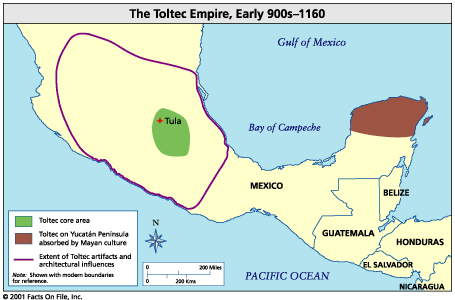


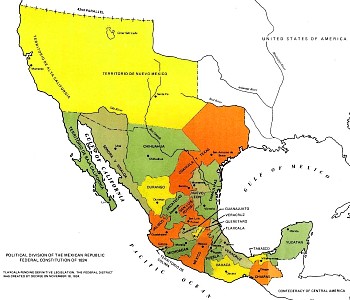


 Instagram
.png)
Greg Ashley (gris gris frontman) (Oakland)
Los Sweepers (Calexico/SD)
The Okmoniks (Tucson)
from Intertate 8 take 111 South until you hit the border
when you hit the calexico/mexicali border crossing, pick the border checkpoint on the left, stay on your leftest lane
once you cross stay on that lane because there is a fork and you wanna stay on the left side of the fork
you'll go straight on that street (which is called Madero),for about 2-3 miles
you hit the Justo Sierra stoplight, turn right
turn left on the Av. Cuauhtemoc stoplight
as soon as u turn go right into the first driveway/shopping center
Velouria bar is there