Dedicated to classics and hits.

Showing posts with label 2013. Show all posts

Saturday, March 04, 2023

2013: Towards Los Angeles

 2013: Towards Los Angeles

   2013 started with me going to New York, post break up.  As 2013 went on, I moved through the break up and thought about what to do next.  I was doing fine in San Diego post-break up in terms of money and career, but socially speaking most of my friends were through my ex, who was a native.  My eyes immediately turned to Los Angeles and I even had my eventual new partner in mind, having met her at a wedding- of someone I met through this blog- while my ex and I were still together.  Specifically, the Ariel Pink show in June in Los Angeles was the first occasion to hang out, though it wasn't a date and we were part of a group.

   Also, 2013 was the last year of the "Dirty Beaches/Zoo Music" era- Alex's amazing double record, Drifters/Love is the Devil represented a high point with the record getting Best New Music on Pitchfork- during an era where that still meant something, mind you.  The record was a big financial success, though it quickly became clear that even with the benefit of the Best New Music designation, true financial success was several orders of magnitude away- but both Alex and the label were making money in this period- not life changing money but money.


Roentgens Desk


Published 1/16/13
Thank God!
 Extravagant Inventions: 
The Princely Furniture of the Roentgens Exhibit Is Still At The Met

  Phew- I was worried that Extravagant Inventions: The Princely Furniture of the Roentgens Exhibit was going to close before I made to New York City- but- relief- I will be there while the exhibit is still open (closes January 27th, 2013.)  I don't think there's an exhibit about 19th century furniture I've been THIS excited about since I last visited the Rijksmuseum in Amsterdam a decade ago.
  Unfortunately, I won't be in town for the Exhibition Tour- A Conservator's Perspective on Extravagant Inventions: The Princely Furniture of the Roentgens Exhibit.  I can't believe they got Mecthild Baumeister to do a walk n talk.
  This exhibit promises to be THE definitive statement on the rise of the father/son Funiture design and manufacture duo Abraham and David Roentgens from their begins in Germany in the mid 18th century to their closure in the early 19th century.
   People are like, "Why go to New York in January- sounds terrible." And I'm like, "BECAUSE I LIKE TO GO TO MUSEUMS."

  I promise a full review upon my return!


Rubin Museum Interior


Published 1/24/13
The Rubin Museum of Art (of the Himalayas)
New York City
150 17th st. New York, NY.


   I am a big, big fan of museums.  Everything about museums.  And although I would say New York City is only the third best city for Museum-going in the world (Paris, London)- New York City has still got an amazing number of museums.
   Staying in Greenwich Village I decided to choose my museum visits by proximity.   The Rubin Museum is located between NYU and Chelsea.  Housed in an ex-Bloomingdale's ladies store, The Rubin Museum specializes in the art of the Himalayan region.  A more accurate description would probably be "Tibetan Art Etc." but I'll stick with their preferred nomenclature.
   Unbelievably the permanent collection was closed for my visit- the museum-goers equivalent to flying to NYC for a Broadway show and finding out that the understudy is playing the lead instead of the Hollywood star you came to see.  However, I'm just going to assume, based on the quality of what I did see that the permanent collection is amazing- because everything else was.

Collection of Nyingjei Lam (HAR 68323).


 I don't fancy myself an expert in the area of Tibetan art, but I've been to the Asian Art Museum in San Francisco a good half dozen times and could do ten minutes of party material on the wonders of Tibetan art- namely tons of scary looking demons derived from the Tantric Buddhist tradition and elaborate, detailed wall paintings of Buddhist themes and personages.
  My visit to the Rubin Museum of Art expanded that thin familiarity with two excellent exhibits:  Casting The Divine- a collection of 104 miniature sculptures Nyingjei Lam Collection.  The sculptures were quite a revelation- demonstrating a level of sophistication and quality that equaled any comparable European work from the same time period.  The subject matter is repetitive- Buddha/High Level Monk/Wandering Holy Man- though there were some interesting subjects- like a real-life famous wandering Ascetic who was depicted with dense curly hair that reflected his south Indian upbringing.
  Certainly, these exquisite sculptures were something I had never seen before and I was impressed.
  The other interesting exhibit was The Place of Provenance- about regional variation of Tibetan painting.  Again- the subject matter was repetitive- you can tell the difference in regions by the way they paint the clouds- but the workmanship was really high quality.
   And while the Rubin Museum didn't alert me to the existence of high level Tibetan Art Products, it did expand my knowledge of the kinds and varieties of artifacts and their high level of quality.  It's worth a stop if you are in the area- though fyi it costs ten bucks to get in.  The Permanent Collection re-opens the first week of February 2013.
  

The New Museum on the Lower East Side New York NY

Published 1/25/13
The New Museum
L.E.S. New York, New York


Viewed
Rosemarie Trockel: A Cosmos (closed)

Prime Age, photograph by Rosemarie Trockel


  I'm not sure there is much value in reviewing a now closed museum exhibit, but the same could be said for this entire blog so.  First thing about the New Museum: No permanent collection so it's a very WYSIWYG kind of scenario.  The exhibit on display while I was visiting was Rosemarie Trockel, a German Artist who is notable for her refusal to stay in a single media or discipline.  The exhibit contained everything from punk style Zines, to knitted "paintings", to sculptural assemblages with a sprinkling of non-Rosemarie Trockel outsider Art/non-art "pieces" selected by the Artist.

Rosemarie Trockel

  Trockel's refusal to "settle down" and pick a studio art discipline is a primary reason that her collected output deserves a career retrospective at an NYC museum.  It also places the question of "what is art?" into a sharp focus- both by the width and breadth of "things" that Trockel has transformed into art through her vision, but also by the "non-art" objects that Trockel selected to stand along aside her artwork.  One "non-art" object is an amazing botanical illustration made by a woman in the 17th century- the woman was long overlooked because it was thought that a woman "couldn't" make such an accurate drawing of a living thing.

Rosemarie Trockel portrait

  There was an unexpected overlap between the Trockel retrospective and recent conversations I've had about the business of music, where people have emphasized the transformative aspect of digital reproduction in freeing specific Artists from formerly difficult to cross artistic boundaries.  For example, a Musician publishes a book instead of a record.  Such cross-marketing has always been an integral part of the upper layer of the Art-Industrial Complex, but digital distribution extends this layer downward to the very floor.
  What's lacking in that realm is the existence of Artists who are sufficiently keen enough to grasp this new freedom AND make Art products that people want to buy/put in museums to look at.

Rosemarie Trockel: A Cosmos exhibition lay-out

  I'm sure that Trockel has had people asking her for her entire career, "But what kind of Artist are you?"  Are you a painter? A sculptor?" etc.   Young Artists would be smart to a take a cue from the diversity of Trockel's output- and imitate her- not the specific artworks obviously, but the practice.

Published 1/27/13
Extravagant Inventions: 
The Princely Furniture of the Roentgens (closed)
Metropolitan Museum of Art 

   Another review of a closed Museum Exhibit in New York City! You are Welcome, readers!
   This was interesting to me because you don't see a whole lot of high-end 18th century European furniture on this side of the Atlantic.  Sure, if you want to hit Paris or Amsterdam the Louvre and Rijksmuseum got suites filled with the stuff, but not so much the United States.  
  Roentgen was a father/son furniture workshop from Germany/Netherlands that sold to a bunch I like to call, "The crowned heads of Europe."  Basically, he would finagle a face-to-face meeting with various royalty and then pitch them on buying furniture which he has either already made or would make on demand.  We are talking, King of France, Catherine the Great of Russia Etc. 
  As one might have every reason to expect, the furniture is amazing because they just haven't made furniture that ornate and detailed since the 18th century- the 19th century kind of killed demand for ornate writing desks among the Kings and Queens of Europe:  pesky social revolutions!
  But as I sit here today- that time period- the early Modern period where skilled craftsmen made material possessions for royalty using modern techniques of craft and manufacture- they made some ill shit.   Whether it be jewelry or furniture- the work stands up.  Particularly the techniques used by craftsmen to manufacture articles like furniture and jewelry.  I won't say it's a lost part, but people don't appreciate it like they used to, and there certainly aren't a ton of Kings and Queens sitting around going, "BRING ME YOUR FINEST MARQUETRY." 
   People still appreciate furniture, but the appreciation is more likely to take the form of appreciation for the sturdy workmanship of Colonial America or the sleek lines of Modernism.  America wasn't even independent when most of the pieces in Extravagant Inventions was manufactured.  Pretty incredible that these pieces still exist.

Thomas Jefferson

Published 2/10/13
Thomas Jefferson: The Art of Power
by Jon Meacham
p. 2012
Random House


    Here is the funniest thing about Thomas Jefferson and his legacy.  Historians spent close to two centuries denying that Thomas Jefferson banged the enslaved half-sister of his wife and fathered a half dozen children by her.  "Oh no- that's impossible- it was his nephew....no, no no, he would NEVER EVER do such a thing."  Across the board- historians denied it coming up with dozens of excuses.  Then- in the 1990s they finally got some quality DNA tests done AND GUESS WHAT YEAH HE DID.    Jefferson not only fathered a half dozen children by Sally Hemings, he kept the children AS SLAVES.
  So now of course, historians are like, "Oh you have to judge him by the standards of his times."  Oh rly, historians?  Is that why y'all spent two centuries bending over backwards to deny the truth?  What a crock of shit.  There were plenty of founding fathers who didn't enslave their own children- like- oh, I don't know- all of them.
Meacham, to his credit, I guess, acknowledges the factual truth of this relationship and tries to place it into the context of Jefferson's life and times but man- the more I think about it the more it grosses me out.  Which is not to say that Thomas Jefferson: The Art of Power is a gross book- quite the opposite.  Meacham's one volume biography of Jefferson won the Pulitzer Prize last year.
  It clocks in at 500 pages with an additional 200 pages of footnotes.  It's pretty hard to write a one volume of Jefferson's live- and to do it you need to assume that the reader is already familiar with the historical events in the Revolutionary/Early Republic era.   With 43 chapters Meacham keeps the narrative moving along- 10 pages on this, 10 pages on that- the pace more resembles a well-researched feature film then a scholarly biography.  Perhaps for that reason Thomas Jefferson: The Art of Power seems destined to maintain a position as a primary source for people looking to canvass the various stories of the founding fathers.

SIR SLY band
Published 2/13/13
SIR SLY
Miner
@ The Casbah


    There is no part of the music industry that isn't an absolute shit show in 2013 (except maybe publishing) but as someone who primarily interfaces with that industry as a record label partner, I am particularly fascinated by the world of music management.  Historically, successful managers moved became record label owners- two primary examples being David Geffen and Irving Azoff.  Here is a quote from Frederic Dannen's national best seller, Hit Men- which is about the music industry during the halcyon days of glory (i.e. the 1980s):
   "Though artist management had made them rich, it was only a matter of time before Geffen and Azoff leaped the bargaining table to become label presidents.  Almost all top managers and lawyers in the record business secretly hanker to run a label.  However powerful the artist representatives may be, the label bosses are the ones who hold the check book."
  "Lawyers and managers never forget, meanwhile, that their power is tenuous.  Artists may fire them or, even more likely, fall from the charts.  The average career of a rock artist is cruelly brief- five years is an achievement, and twenty years is a miracle." (pg. 141-142.)

   These days, the traffic is 100% in the other direction, particularly since record labels don't hire anyone ever these days.  On the other hand, there are plenty of ex-A&R types working as managers. The difficulty of being a manager is that you don't get paid unless the Artist gets paid, and the Artist isn't going to get paid unless they are very, very successful and even then...if you get them after they hook up with an indie label- poof- there goes a huge pot of money.  So I'm never surprised when a manager comes between a label I work with and a band they are releasing- that is the natural order of things.  It's like being mad at Nature for the weather- your time is better spent trying to understand it then being angry at it for what it does to you.
    I'm bringing all this up because the only reason I went to last night's show is because I was curious about "what it takes" to get picked up by Monotone Management- and Sir Sly is the most recent act to be picked up by Monotone Management. I'm always curious to see what people who are actually successful in the music industry are interested in, and what they decide to spend time and energy on.  Monotone Management of course, is the home of Jack White, Vampire Weekend, The Shins and Foster The People.

Kate Miner


  First up at last night's free show was Los Angeles indie-folk act Miner.  Miner essentially treads the same sonic space as Edward Sharpe and the Magnetic Zeroes.  Now, they aren't original, but man- think about the potential upside- FM radio and actual record sales for one.  It's not too hard to draw comparisons to Grammy Album Of The Year Winner Lumineers or Mumford & Sons.  It's not music I listen to, but I literally saw dollar signs on top of the heads of the gently swaying crowd.

Miner band

  As I've said before, originality in music is highly, highly, highly overrated- what you want is a twist on something with an established sales track record, and when you are using Edward Sharpe, The Lumineers & Mumford and Sons as your benchmarks the upside is unlimited. Maybe they make it, maybe they don't but it's hard to imagine that one could lose money putting out an LP on Miner.  Actually, it's impossible to imagine losing money on such an LP.
   They should consider changing their name to something like the Miner Family Singers though- so it's more obvious to casual music listeners what they are about.  Miner sounds like a band on Dischord.
      Headliners SIR SLY lost about half the crowd that was there to see Miner (score a point for Miner.)  They are a five piece- singer/guitarist, lead guitarist, bassist, drummer and key/synths guy- all dudes. To say that they are they are polished is a mild understatement- they are slick like a California freeway after the first rain of the year.  The focus of SIR SLY is clearly the singer/guitarist who fronts the band-   and the sound has obviously been crafted for maximum impact on alt rock FM radio.  Paul Lester of the London Guardian called them a "Chillwave Coldplay" but you could also just call them a super pro synth pop act and leave Coldplay out of it.  Maroon 5- also a comparison made by the London Guardian and also apt, although the singer will have to ditch the guitar and pop off his shirt to really merit a comparison to Adam Levine.
  All told it was pretty darn easy to see why Monotone Management is fucking with SIR SLY- they sound exactly like the kind of band that gets signed to a major label in 2013.  I'm sure both bands have a viable future ahead of them due to their combination of professional grade sound and performance chops. I say, "Good luck on your journey gentlemen, and may the odds be ever in your favor."
   Oh last thought- having a live drummer play drum pads instead of actual drums seems like a solid move in 2013- like the drum break in Phil Collins In The Air Tonight:

  You can't go wrong with that sound.

Love this Dirty Beaches poster from a Hong Kong Show in 2013


Published 2/22/13
Dirty Beaches announced some 2013 UK Tour Dates:


May
18 4 St. Petersburg, Russia - Модный клуб Грибоедов(FACEBOOK EVENT PAGE)
19 4 Moscow, Russia - P.P.C.M. (FACEBOOK EVENT PAGE)
21 4 Kursk, Russia - Somewhere great (FACEBOOK EVENT PAGE)

5 5 - Newcastle, UK- The Cluny (FACEBOOK EVENT PAGE)
6 5 - Dundee, UK - DCA (FACEBOOK EVENT PAGE)
7 5 - Glasgow, UK - Nice 'n Sleazy  (FACEBOOK EVENT PAGE)
8 5 - Dublin, IE - The Workman's Club  (FACEBOOK EVENT PAGE)
9 5 - Liverpool, UK - The Shipping Forecast (FACEBOOK EVENT PAGE)
10 5 - Chester,  UK - The Compass (FACEBOOK EVENT PAGE)
11 5 - Manchester, UK - Soup Kitchen (FACEBOOK EVENT PAGE)
12 5 - Leeds,UK - Brudnell Social Club (FACEBOOK EVENT PAGE)
14 5 - Brussels, BE - AB Cafe (FACEBOOK EVENT PAGE)
16 5 - Amsterdam NED  - OT 301(FACEBOOK EVENT PAGE)
17 5 - Groningen NED  - Vera (FACEBOOK EVENT PAGE)
18 5 - Utrecht, NED - Le Guess Who Festival(FACEBOOK EVENT PAGE)
21 5 - Drifters/Love Is The Devil Album Release (FACEBOOK EVENT PAGE)
22 5 - Winterhur, SZE - Salzhaus (FACEBOOK EVENT PAGE)
24 5 - Limoges, FR - ccm John Lennon (FACEBOOK EVENT PAGE)
25 5 - Paris, FR - Saint-Ouen (FACEBOOK EVENT PAGE)
26 5 - Lyon, FR - Le Sonic (FACEBOOK EVENT PAGE)
27 5 - Turin, IT - Hotel Astoria (FACEBOOK EVENT PAGE)
28 5 - Ravena, IT - Hana Bi (FACEBOOK EVENT PAGE)
29 5 - Rome, IT - Circlo degli Artisti (FACEBOOK EVENT PAGE)
30 5 - Milan, IT - Video Sound Art Fetival (FACEBOOK EVENT PAGE)
31 5 - Berlin, GER - Festsaal Kreuzberg (FACEBOOK EVENT PAGE)
5 6 - Hamburg, GER - Hafenlang (FACEBOOK EVENT PAGE)
6 6 - Koln, GER - Reineke Fuchs (FACEBOOK EVENT PAGE)
7 6 - Munich, GER -Gallery Kullkcu (FACEBOOK EVENT PAGE)
8 7 -  Frankfurt, GER - Zoom Club (FACEBOOK EVENT PAGE)


  I don't know which date looks more interesting- Chester? or Dundee? (LINE OF BEST FIT POST)(FACT MAGAZINE)

Jeremy Irvine playing Pip in the 2012 adaptation of Charles Dickens Great Expectations


Published 3/8/13
The Dickens World
by Humphry House
Oxford Paperbacks No. 9
p. 1941

    Even though Charles Dickens was a huge popular success as soon as his books came out and, in many ways, the first truly international literary celebrity (Sir Walter Scott didn't do a reading tour of the United States and Charles Dickens did); critical acclaim lagged by nearly a century.  During the early 20th century critical taste was with the sophisticated proto modernism of Henry James and the pure modernism of James Joyce- Dickens was considered to be merely a popular author.
  This began to change in the mid 20th century and The Dickens World by Humphry House- originally published by Oxford University Press in 1941- was one of the first works of criticism to take Dickens seriously without claiming that he was unduly sentimental/sappy/not worth serious thought.

Gillian Anderson playing Ms. Havisham in BBC 2012 adaptation of Charles Dickens Great Expectations

  This leads to the question of how one rehabilitates or establishes the critical reputation of a popular artist a century after the author died.  House's The Dickens World is largely a project of establishing a context for obtaining a deeper understanding of the complexity of "The Dickens World."   Charles Dickens was writing classic hits for a couple decades and he was writing during a time of great change.
   Before critics started taking Dickens seriously it was held that he had a simplistic, sentimental view of the world and that this point of view made his characters and plots simplistic.  Certainly Dickens reflected the taste of the audience during the time he was writing, but the assertion of thematic simplicity is shown by House to be false.
    As the title implies, The Dickens World take the reader through the different aspects of existence in the early mid 19th century and how that influence Dickens writing.  Notable are chapters on "Religion" and two whole chapters on "Economy: Domestica and Political."   Chief among the observations that House makes is that Dickens started writing before money craziness took hold of society in the 1840s, and then he witnessed this change- and this made it's way into his fiction even though his characters APPEARED to identify with an older era.
   House also highlights how the morality of Dickens was a welcome contrast to the conventional morality of the period, and how Dickens competed successfully with the religious literature that dominated the literary marketplace prior to the emergence of the novel as a popular art form.

Published 3/25/13
Dickens & His Readers:
 of Novel Criticism Since 1836
 by George H. Ford
p. 1965
The Norton Library edition

   This books appears to be utterly forgotten in light of the deserted Amazon Product Page.  That is a pity because I happen this book is pretty relevant for the big data era we currently happen.  Specifically, it is relevant for obtaining a proper understanding of Charles Dickens and his relationship to his readers and his critics.


   I agree with M.H. Abrams and his schematic regarding critical theories of art, pictured above.   The thing about that scheme is that almost 100% of art criticism focuses on the relationship between one aspect to another aspect, but rarely is the Audience considered, whether they be critics or fans, or both.

  But this book is unique as far as I can tell because of the detailed consideration of the RECEPTION of Charles Dickens by his different Audiences, popular and critical.   Writing in the 1950s,  Ford is perched on the precipice of an explosion in esteem for Charles Dickens.   According to Ford, Dickens reached a critical nadir in the 1920s and 1930s when he was derided by critics (who often asserted that a popular audience no longer read Dickens, i.e. that he was unpopular.)

Scrooge McDuck


   Charles Dickens was, above all, a popular phenomenon.  He was an Artist critics came to embrace only after his popularity with the general reading Audience was perfectly clear.   The popular success of the early Charles Dickens novels made everyone sit up and take notice.  Dickens success was such that he helped elevate the Novel as an Art Form from something that literary critics treated with derision to the rising Art form that came to dominate the both the market for literature as well as the market for literary criticism.

Charles Dickens Little Nell


  After the initial acceptance,  Charles Dickens had one notable popular failure- Martin Chuzzlewit.   Chuzzlewit was published after his most popular, least enduring work, The Old Curiosity Shop.  The Old Curiosity Shop had the archetypical example of "bad" Charles Dickens- Little Nell.  Little Nell would become a symbol of the saccharine sentimentality that plagued much of his early work.

  Ford argues in Dickens & His Readers that the failure of Martin Chuzzlewit was based on it being such a digression in subject matter and tone from his prior success.  In other words, Dickens failed to meet the expectations of his popular Audience.   But again- critics mirrored rather then shaped the reception of the popular Audience.  Today, of course, Martin Chuzzlewit is considered a top five Charles Dickens title and The Old Curiosity Shop is not popular.

  An interesting chapter in Dickens & His Readers handles the way the English literary critical establishment handled the emergence of the Russian trio of Dovstoyevsky, Turgenev & Tolstoy, the French naturalism of Zola & Flaubert and the homegrown sophistication of George Eliot.  All three of these forces were in play by the 1880s, which was also the beginning of a generation long decline in esteem for Charles Dickens by critics, if not the reading the public.

  All three of these trends shared a more adult, sophisticated take on the Novel.  Out were the broad comedy and emotion of Charles Dickens, in was the delicate contemplation of inner existence and human motive.  Critics were anxious to argue that the Novel had "grown up" and this view required Charles Dickens as a foil.
Oliver Twist


   One fact that becomes clear with the ebb and flow of the relationship between Charles Dickens and his critics:  Critics liked to make the claim that the popular Audience had stopped reading Dickens at various points in time but the continued sales strength of all of his works would tend to rebut that claim.  In fact, despite the rise and fall of critical esteem, the "collected works" of Charles Dickens was a household staple in countries from England, to the United States, to France, to Germany.  Like, Dickens would be the only Author that people would ever read.  Like, people would re-read all of his books every couple of years- these were behaviors that have persisted among his Audience for over a century and a half.

  In light of Dickens' proven Audience pleasing talents, I'm inclined to favor him over the serious minded Naturalism/Realism of the late 19th/early 20th century.  I'm talking, Thomas Hardy, Henry James- the really, really, boring novels that crop up during the transition from the late Victorian to the early Modern period of literature. To these people, Dickens was a kind of a clown.  But you know what: People don't give a fuck about Henry James today, and Charles Dickens is an international literary saint of the highest order.  I'm with Charles Dickens.   Fuck Henry James.

Published 4/15/13
Watch Waterpark by Evan Prosofsky w/ Dirty Beaches OST

Shorts on Sundays: Waterpark on Nowness.com.

  Here is something else that happened totally independent of anything I do or tell people to do- you can watch the Evan Prosofsky directed Waterpark- which is a documentary about a water park in Canada- with an OST by Dirty Beaches.  I've encourage Alex in this area. Who wants to be touring night clubs for the rest of their life? Movies seem like a cushier, not to mention unionized, gig. (GORILLAVSBEAR)

Published 4/23/13
Relevant Search: Internet Art/Net Art


INTERNET ART/NET ART WIKIPEDIA
RACHEL GREENE INTERNET ART AMAZON PRODUCT PAGE

Relevant information.

Published 5/20/13
Dirty Beaches - Casino Lisboa (Official Video)

 So proud to be a part of this!  Dirty Beaches Drifters/Love Is The Devil is in stores today in the EU/UK, tomorrow in the US.  US tour this fall.
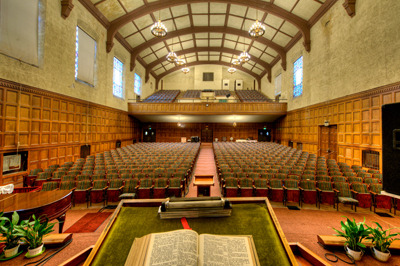
The First Unitarian Church in Los Angeles


Published 6/22/13
First Unitarian Church (f/ Ariel Pink)
DO LA party
Sponsored by Goose Island Beer

  I love a new venue and if the invite includes free beer (courtesy the lovely people at Goose Island Beer, Chicago's Craft Beer) and industry networking, SO MUCH THE BETTER.  Also, I happen to love driving between San Diego and Los Angeles- call me crazy.
Court Yard at First Unitarian Church in Los Angeles

  The First Unitarian Church is located west of Downtown Los Angeles, near the intersection of W 9th and Vermont Ave.  There are three separate spaces:  a gymnasium type social space, a church/venue and a lovely open air court yard that really made the night.  The venue is seated and it gets hot inside but it was a nice place for a mixed all ages/21+ show.

  On street parking is scarce but valet was provided.  I wanted to write about the Goose Island Matilda that I had.  The Matilda is a Belgian Style Pale Ale and uh... it was pretty solid.  I could have had a half dozen but driving so I couldn't.  Goose Island has a wide selection of fine beers and ales.. and last night people were saying positive things about Honker's Ale.  I would order Goose Island products in a bar scenario: it was crafty but not TOO crafty.

  Ariel Pink was ok.  He acts like he is on drugs and doesn't like to shower- more power to him as far as I'm concerned, I'm just saying.  I would def go back to First Unitarian Church for another summertime show.  In winter it might be too cold, but hey in LA- probably not?  Last night it was beautiful night that made me glad to be alive.

Published 8/28/13
List of Important Japanese Films 1950-1973


     I think movie reviews of Japanese films are the least popular subject I cover on my blog.  So far I've watched six films via the Criterion Collection: YojimboSanjuroKwaidanSamurai I & II Good Morning.   Then I've got three scheduled in September: High and LowRashomon & The Seven Samurai.  Then I've got three scheduled in October: Double SuicideThe Hidden Fortress & Samurai III.  Yeah.  I spread them out because they are so very, very unpopular.  The Ozu review (Good Morning) got 17 page views.  17.  That is embarrassing.  The most popular review is Yojimbo, published in June, with 84 views.

  I figure... maybe it is because I'm not doing Japanese cinema justice, that I am ignorant.  The same goes for many of the discrete areas of world cinema: Italian neo-realism would be another example.  I don't see any value to watching these movies other then them being great art.  It truly seems like not a soul I know in the world could give two shits about Japanese film, but does that mean I ignore it?

  Last time I was in Los Angeles I went to a few used books stores to look for a cheap, college-level text that provided summaries of the different genres of World Cinema.  I found A History of Film by Jack C. Ellis, published by Prentice-Hall, which I believe is an educational house.  Each chapter ends with a list of the important films, and I think it is quite a useful resource for what I'm doing.

  Another interesting aspect of Japanese films on Criterion Collection/Hulu Plus is that they are 100% streaming.  There are some countries where it is almost 100% the other way- films from the U.K.- for example- very few of those titles are available streaming.

  Ultiimately though I think one of the things you do if you are actually into Art vs. just being a poser who likes to hang out with cool people, is you take it on yourself to learn about new kinds of art with which were previously unfamiliar.  And Japanese cinema fits that bill.  So the fact that it is unpopular to readers of this blog is irrelevant.

 Here is the list for Japanese films between 1950-1973 (Date of review)

1950
Rashomon (Kurosawa) (September 11th, 2013)

1952
Ikiru (Kurosawa) Criterion Collection #221 !
The Life of O'Haru (Mizoguchi) Criterion Collection #664 !

1953
Gate of Hell (Kinugasa)Criterion Collection #653 !
Tokyo Story (Ozu) Criterion Collection #217 !
Ugetsu (Mizoguchi) Criterion Collection #309 !

1954
Chickamatsu Monogatari (Mizoguchi)
The Bailiff (Mizoguchi) Criterion Collection #386 !
Seven Samurai (Kurosawa)(September 18th, 2013)

1956
The Harp of Burma (Ichikawa) Criterion Collection #379 !

1957
The Lower Depths (Kurosawa) Criterion Collection #239 !
The Throne of Blood (Kurosawa) Criterion Collection #190 !

1958
Conflagration (Ickikawa)

1959
Fires on the Plain (Ichikawa) Criterion Collection #378 !

1961
An Autumn Afternoon (Ozu) Criterion Collection #446 !
The Human Condition (Kobayashi) Criterion Collection #480 !
Onibaba (Shindo) Criterion Collection #226 !
Woman of the Dunes (Teshighara) Criterion Collection #394 !

1965
Red Beard (Kurosawa) Criterion Collection #159 !

1968
Death by Hanging (Oshima)
Diary of a Shinjuku Thief (Oshima)

1969
Boy (Oshima)
Double Suicide (Shinoda) (October 7th, 2013)

1970
Dodeska-den (Kurosawa) Criterion Collection #465 !

1971
The Ceremony (Oshima)

1975
Dersu Uzala (Kurosawa)
Kaeski (Kobayashi)
Realm of the Senses (Oshima) Criterion Collection #446 !

! = Available on Hulu Plus


Published 9/13/13
The Story of Film - An Odyssey
Available on Netflix Streaming
Released 2012

The Story of Film - An Odyssey New York Times Review January 2012
The Story of Film - An Odyssey - IMDB
The Story of Film - An Odyssey - Rotten Tomatoes

  I DVR'ed episode 2 of this sprawling 900 minute plus television documentary by critic/narrator Mark Cousins about the history of film.  I was so impressed by the DVR episode that I searched "The Story of Film - An Odyssey streaming" on Google, and quickly discovered that it was on Netflix streaming. I watched the first two episodes a little bit each night this week and I found this documentary really enthralling on a number of levels, but mostly because Cousins actually seems to be in touch with the last 50 years of film criticism and non-Hollywood film, so he's giving what is essentially the Criterion Collection history of film.

  Cousins posits fairly early on that this is a revisionist or alternative history of Cinema, assuming that the main Hollywood driven narrative is the recognizable narrative for most viewers.  However, for me it is the history of Cinema, not a competing story.  Hollywood still plays the central role in a history of film that includes non Hollywood film, if only because the Audience for non-Hollywood films  within the United States was negligible until after World War II.

 The two most interesting themes from the first two episodes of this monster documentary are the movement of film from being a "popular amusement" to an art form between 1900 and the 1920s.  The second is the analysis of the mainstream 1920s Hollywood aesthetic as being "Romantic" and not "Classical."    Although he doesn't really delve into the terminology, it is clear that he is using Romantic and Classical with the meanings established in 19th and 20th century art criticism.  So by Romantic he means Romantic like M.H. Abrams meant Romantic in his book, The Mirror & The Lamp: Romantic Theory and the Critical Tradition.

  Using Abrams Mirror/Lamp metaphor, Classicism sees art as a mirror and Romanticism sees art as a lamp.  Thus, for Cousins the Hollywood spectacle film of the 1920s, with it's soft lighting of starlets, emotive subject matter and over wrought set design, is the definition of Romantic and is about as "Classic" as a Wordsworth poem.  This whole analysis seems to play off of an understanding of the silent film era as being equivalent to "Classic" Hollywood.  I'm not sure that is a term that is really embraced by American audiences.  Being Northern Irish/British, Cousins comes from a different perspective on that question.

 The other interesting theme is the process by which film started as an amusement, something less then art, and evolved into a recognized art form by the teens/twenties of the twentieth century. Again, as a television type documentary, Cousins doesn't get into the mechanics of it, but he does show some early theaters- built before the movie "palaces" of the teens and 20s, and they look like the equivalent of video arcades.  Early theaters were often referred to as Nickelodeons, which is a compound word combining Nickel (price) and Odeon, which is what they called a theater in ancient Greece.

  The Story of Film is a must for anyone looking to dive into the Criterion Collection- because it shares a similar perspective on world cinema and many of the non-American works discussed are represented in the Criterion Collection.

Emma Watson does her Vanessa Hudgens in the Bling Ring, d. Sofia Coppola (2013)


Published 10/10/13
The Bling Ring (2013)
d. Sofia Coppola
Theatrical release June 21st, 2013


   Wow so people really didn't dig The Bling Ring did they?  What the fuck were they expecting from a Sofia Coppola joint about this subject?  Citizen Kane or something?  People be hating on Sofia Coppola but she knows how to portray contemporary mores in more or less the same fashion as a 19th century English novelist like The Bronte sisters or Jane Austen.  Her women are young, vulnerable but with huge social influence.  They have been the subject of Art since they came into existence at the beginning of time.  Each of Coppola's films details some woman at the cross roads of irrelevance and power.
  The Bling Ring is her most explicit foray into the relationship of young women to power.  Here, the setting is modern day Los Angeles, specifically the subset of Los Angeles residents who are there to "make it."  The girls/women of The Bling Ring exist outside of a framework of morality, they are "home schooled" by a Mom who follows the "spiritual" tenets of The Secret.  They are modern day Maenads, young female followers of Dionysus ready for a frenzy or down for whatever.
  Like Spring BreakersThe Bling Ring is best viewed without reference to Christian morality.  Whatever you want to say about the movie, "Thou Shall Not Steal" does not come up in conversation at all, for the entire movie.  The gleeful amorality of contemporary youth culture is in no way a novel subject for film, but Coppola deserves unacknowledged credit for opening a window on this most recent iteration of a theme that requires regular updating.
   The non mise en scene aspects of Coppola's work always fascinate- her soundtracks have been influential since Air scored a huge break-out in the aftermath of the Virgin Suicides.  Coppola outpaces other potential filmic/musical influencers by virtue of impeccable taste and an apparently excellent licensing department.  I would even argue that The Bling Ring is the superior soundtrack vs. Spring Breakers.  Spring Breakers and Bling Ring both have M.I.A.'s Bad Girls, which is obviously the theme song for this genre of film.  Only The Bling Ring opens with Sleigh Bells Crown on the Ground over the credits.
  I'm inclined to think that cinema at it's best is a kind of fun-house mirror, reflecting and distorting truth/reality and showing it back to people (for 10 USD plus a pop) so I think some of the negative reaction to The Bling Ring is from people who are like that and didn't like what they saw.  A bold strategy for Coppola as a director, and I think The Bling Ring is a film that will be appreciated more in the future as more people get a chance to actually like it.
   I also think that Coppola is right on in depicting the young upper middle class women of Southern California as a group of beautiful gangsters.  Gleeful amorality doesn't even begin to describe it. And the sound track, wow, evocative of the milieu.

Published 10/12/13
New San Diego Main Library/Central Library
330 Park Blvd.

  The new San Diego Main Library/Central Library replaces the decrepit prior Central Library, a claustrophobia inducing Public Works Administration holdover favored by members of our Vagrant-American population.  It is no way an exaggeration or slur to simply state the fact that the old Central Library smelt strongly of stale human urine.  Truth be told, I haven't been into a non-legal library since I graduated from law school in San Francisco more then a decade ago (and oof.)
  There is something charming about opening a new library in 2013, just as books and reading seem to be on the verge of extinction.  The new location is excellent, across the street from Petco Park and located near trolley and bus lines.  The interior has an indoor/outdoor design appropriate to the weather in San Diego.  The first three stories have a spacious open-air atrium that invites the casual user inside.
  Plenty of computers as one expects, but also all their books on display.  I wouldn't say that I was impressed with the collection, but fuck man, it's a brand-new library.  I've been reading public domain novels on my Kindle for like three years, so it really opens up some new opportunities in literary criticism and history books.
  If you are a downtown/Golden Hill/South Park/Barrio Logan this is a great opportunity to renew your love affair with the library.


Published 10/30/13
The Relationship of Astrology to Babylonian Star Worship

   Star worship is a fairly common spiritual/religious theme.  In Western culture, it most often take the form of "astrology," which in terms of esteem is held somewhere between legitimate "new age"  spiritual belief and parlor trick depending on who you talk to.  However the Astrology column in the local daily that focuses on Birthday horoscopes does not represent the great history and, frankly, majesty of the larger category of "star worship."

 To understand the depth of star worship, it's best to start at the beginning with the practices of Babylonian Star Worship.  Babylonians are a key world-historical culture because they are the first civilization with writing who spoke a language from a contemporary language family, Semitic. Semitic is the family of Hebrew and Arabic, and Akkadian is the earliest known example. Akkadian is now extinct, but it was "succeeded" by a different Semitic language, Aramaic, which was the language of the Assyrian Empire.  The Assyrians conquered much of the Middle East and held it from roughly 1300 BC to 1000 BC.  By the end of this period, the language of the Assyrian conquerors had become the lingua franca of the entire Middle East, much in the same way Latin was during the Roman Empire and the way English is in the west.  Akkadian itself was the prior Lingua Franca but it was surpassed by Aramaic in the west, and in the east it fell victim to the Persian invasion.  The Persians, of course, spoke a language of Indo-European extraction and thus were outside the Semitic linguistic sphere.

 Babylonian astronomy/star worship both precedes and runs concurrently with the Assyrians but Babylonians and Assyrians were separate related peoples/languages like Spanish/French.  The Assyrians would have essentially received Babylonian/Akkadian texts intact and there would have been interaction and overlap between two religions, with Babylonian's "leading" and Assyrians "following." (1)


NOTES

(1)  From the Wikipedia Page:

Old Babylonian astronomy refers to the astronomy that was practiced during and after the First Babylonian Dynasty (ca. 1830 BC) and before the Neo-Babylonian Empire (ca. 626 BC).
The Babylonians were the first to recognize that astronomical phenomena are periodic and apply mathematics to their predictions. Tablets dating back to the Old Babylonian period document the application of mathematics to the variation in the length of daylight over a solar year.

Centuries of Babylonian observations of celestial phenomena are recorded in the series of cuneiform tablets known as theEnûma Anu Enlil—the oldest significant astronomical text that we possess is Tablet 63 of the Enûma Anu Enlil, the Venus tablet of Ammisaduqa, which lists the first and last visible risings of Venus over a period of about 21 years. It is the earliest evidence that planetary phenomena were recognized as periodic.

The MUL.APIN contains catalogues of stars and constellations as well as schemes for predicting heliacal risings and settings of the planets, and lengths of daylight as measured by a water clockgnomon, shadows, and intercalations. The Babylonian GU text arranges stars in 'strings' that lie along declination circles and thus measure right-ascensions or time intervals, and also employs the stars of the zenith, which are also separated by given right-ascensional differences.[5] There are dozens of cuneiform Mesopotamian texts with real observations of eclipses, mainly from Babylonia.


   This section establishes Babylonian astronomy/astrology as dates to 1830 BC- almost five hundred years before the Assyrian empire arose. 


Monday, June 06, 2022

Collected Writing: Music Business 2013-2014

 Collected Writing: Music Business 2013-2015

     This period was both the peak and end of my experience running an active record label with pr and national level exposure.  One thing I had learned from the history of recorded music, is that if you have a break through artist, you need to hold onto that artist, because the odds of you developing a second breakthrough artist art are much, much higher (the odds) than the odds of you holding onto your first breakthrough artist.  The entire history of independent music is about indie labels losing that battle, so when so when this became an issue with Dirty Beaches, I was ready.  The key was being open and honest and writing royalty checks.  I showed Alex the sales figures, physical and digital.  I told him he could do whatever he wanted artistically.  He took the meetings, but ultimately what those people told him is that they wanted him to step it up and write some more ballads. 

   So I was able to hold onto Dirty Beaches for Zoo Music and he put out Drifters/Love is the Devil in 2013.  That was the high point, financially speaking- it was a double LP, Revolver paid for the physical production and it got Best New Music on Pitchfork back when that really meant something.  After the three month wait for royalties it was a good year, but as I've already said, not great if you actually do split the profit 50/50 with the artist. 

   Meanwhile, I was going out with someone who was in the real music industry and I began to get an idea of the wider world out there, particularly via my exposure to country music, which I'd never thought about before 2014.   When my partner started managing Margo Price, that became my front row seat to the biggest come-up I'd ever seen up close, and after that I stopped writing about the music business, because I felt like I'd reached the end- not just the world of Margo Price but the world of the other artists my partner didn't manage, but who were manager by the same firm.  Jack White, Vampire Weekend, Danger Mouse- these were like figures from my childhood, or indeed, from the pages of this blog, and now I was just peripherally in the wash around these people.  It wasn't anything to do with me financially, but I was there.

Dirty Beaches Drifters/Love Is The Devil Enters Revolver's Top Seller Chart (2/6/13)

Dirty Beaches Drifters/Love Is The Devil


       Heeeyyyy so the new Dirty Beaches Double LP Drifters/Love Is The Devil has entered the Revolver Weekly Top Seller Chart where it sits at #14 as I write this.  That is FOUR AND A HALF MONTHS before the release date.  If you look at the other records on that list there isn't a single one that is being released AFTER February 5th, let alone four and a half months from now.

Touring Market: BENELUX (3/6/13)

BENELUX Map


  "BENELUX" is actually an acronym... wait... not an acronym but a combination of the first syllables of BElgium, NEtherlands, LUXemburg = BENELUX.  I feel like I'm constantly defending this area as being worthwhile as an Audience.  Let me make the case.  First- market size: 30 million people.  You can hit the entire territory by playing 2 shows: Brussels and Amsterdam and there are multiple festival opportunities and secondary markets that you can play: your Gronigens, your Rotterdam's.


 Second: geography.  France may have 50 million people and Germany may have 60 million people but  BENELUX is between the two places.  It's also proximate to the United Kingdom and Scandinavia.

The imposing Brussels Palace of Justice: Who Doesn't Want to see such an Imposing Palace of Justice?


  Third: Quality cities.  Most people are familiar with the pleasures of Brussels and Amsterdam.  The manikin piece in Brussels- the stirring public buildings of the European Union Government- also in Brussels.   And of course Amsterdam, with her canals, and bicycles and the Rijksmuseum.  But Benelux isn't just primary markets- the secondary markets are worth a look:  Utrecht, Luxembourg and of course Groningen.   Personally, I have not been north of Alkmaar- which is essentially a suburb of Amsterdam.  Amsterdam is a hundred miles south of Groningen.


Map of Frisia


   Groningen has a linguistic and ethnic heritage independent from the rest of the Netherlands- it is located in the area historically known as "Friesland." It's a language- the language is West Frisian that used to cover a large part of the Benelux territory but is now reduced to the single territory centered in Groningen- only a half million speakers.  Frisian is the language most similar to Old English so it is a very, very, fair speculation that some important part of the English population came from Frisia- which is also supported by the geography.  Basically Frisians and the Anglo-Saxons came from the same tribal groups and they just settled in different areas after the Roman Empire lost it.

   And you know, these are 30 million people who have a pretty high standard of living and buy music and such.  There are worse places in Europe- Italy- for example- where people don't buy music at all.

Dirty Beaches Passes One Million Last Fm Plays (3/9/13)


(DIRTY BEACHES LAST FM)

   The way I look at it, when an individual artist/band goes over a million plays on last fm it means that someone can earn a living- whether that someone is the Artist, a major label or a combination of the Artist and their manager, that is going to vary- but someone is going to be earning enough money to survive to make another record.

       If a band gets to that one million play threshold there should be enough income to support one or two primary song writers to the tune of about 20-30k a year.  From there, the idea should be to make to 50k then 100k as additional records are issued are additional tours are planned on a year to year basis.

  If a specific Act reaches that one million play level and can't support themselves there is a flaw somewhere: Either record labels that are overspending to get the Artist to the one million level, a touring show that doesn't live up to the recorded output or some kind of work ethic issues- something.

  Last FM doesn't capture every play of course, the Last Fm artist play count is a small fraction of the total plays- but it's probably close to being the same percentage of total plays for every Artist, which it makes the best proxy in the world for measuring total Audience for pop music act.

    But for me anyway the one million last fm plays is a huge, huge threshold.  Whoever the Artist maybe and whatever kind of music is being offered, you simply can't deny the existence of an Audience for a new record and/or tour on one or more continents.
  

Established Indie Record Labels & The "Negging" Game (3/18/13)

  For whatever reason I've had a bunch of people bring up Neil Strauss' The Game, which I guess is a book about the sub culture of Pick Up Artists- guys who delight in picking up chicks, banging them and then ditching them.  Not a fan, not going to read the book but there is at least one interesting concept therein that I've heard tell about- and that is the practice of "negging" which is when a pick up artist belittles a target so that she... I don't know- doubts herself and finds the guy more attractive?

 It's funny because while I've never tried (and wouldn't try) that strategy in the context of dating, I've experienced it a bunch from the other side when talking to larger entities about the possibility of a distribution agreement for the record labels I work wtih.

 Basically the pitch is "Here's what you can't accomplish on  your own."  As Alex Dirty Beaches put it on a really compelling blog post he recently wrote about, "[D]ealing with bigger labels that continue to make me feel like all my efforts are hardly worth anything." (DIRTY BEACHES BLOG)

  Now, I had nothing to do with those negotiations but I'm familiar with the tactic from my own discussions. All these more established labels rely on making the Artists feel like:

      a) they haven't accomplished much on their own
      b) they can't accomplish what they want to without signing a restrictive, multi-album deal.

    That's the pitch- and that is also what A Pick Up Artist would call "Negging" putting someone down to help close the deal.  Pretty shitty way to start a business relationship if you ask me.  Why bother?  Artists get so brain washed by the music industry that most of them never consider that they only reason established indies WANT to talk to them is because of what they've accomplished without the help of that established indies.

     These Artists lack confidence in their own abilities, and maybe in some cases it's justified, but in others... it's just weak.  It's a weakness and a lack of confidence, and the answers are going to lie inside the Artist, not with some outside business that only wants to make money off them.

New Dirty Beaches Jam Casino Lisboa (5/3/13)

(FACT MAGAZINE PREMIERE DIRTY BEACHES CASINO LISBOA)

  It's funny that the reward for success in any field of enterprise is the opportunity to fail on a much grander scale.  It's a truism of the business world that people rise to the level of their incompetence, and when you trying to get some skin in the indie record game, the prospect of massive, enterprise failure pops up every time you try to expand your scale.  Plus, literally the only feedback that a newer indie label gets from more established indie labels is that what your are trying to accomplish is impossible and that you should give up.  I can honestly say that in the last five years I haven't got a single compliment from anyone: local or national.  I've actually gotten waaaaayy more positive feedback about this blog then the labels I've worked with.

  And while I certainly don't do anything because I crave the approval of others, the lack of feedback can lend a most funeral air to sessions of self reflection, which is why I'm well over asking questions of the universe.  Don't ask questions of the universe has been my motto for about a decade and I think it's working out.  I highly recommend that attitude if you are someone who is actually trying to accomplish something vs. someone who is trying to figure out "what makes them happy" or "how to survive."

  All I'm saying is that is pretty easy to be on the cusp of an epic success and a career ending failure at the exact same time.  In the indie music game a small label doesn't get a half dozen shots to scale up.  It gets one shot.  Maybe two, and then it's over.  So as I sit here I can see it going either way, but I'm pretty sure the answer will be clear by this time next year.  If it works: Awesome.  If not: also OK.  It hasn't been a  bad experience to have before I turn 40 and I will always look back on this period of my life with fondness even if it's a business flop.

  Dirty Beaches Drifters/Love Is The Devil double LP comes out May 21st in the US, May 20th in the EU/UK and it is being released by Zoo Music.  Above all I'm grateful to my partners for giving me the chance to participate in something that at least possesses the potential to be larger then myself.
 

Dirty Beaches Interview in Liberation (7/2/13)

  (DIRTY BEACHES INTERVIEW IN LIBERATION)


  France may still be the third or fourth biggest market in terms of actual sales for Dirty Beaches and Crocodiles, but it is the second largest market in terms of actual numerical fans to the United States for both groups.

Crocodiles Crimes of Passion Out Today in UK/EU (8/9/13)

Crocodiles Crimes of Passion LP- I would have left the sticker off.

Crocdiles Crimes of Passion Rough Trade UK
Crocodiles Crimes of Passion Picadilly Records UK
Crocodiles Crimes of Passion NME Review 7/10
Crocodiles Crimes of Passion This Is Fake DIY Review 8/10
Crocodiles Chuck Rowell Interview Radio Adeliade
Crocodiles Crimes of Passion Spectrum Culture Review 3.75/5
Crocodiles Last Fm


   When you are an Artist, and you are more or less instantly embraced by a critical and popular Audience upon your debut, that's impressive, but it doesn't say anything about the depth of your character as an Artist. There is something deep and compelling to be said about struggling for your artistic survival prior to "making it."  For an Artist who immediately succeeds upon reaching Artistic maturity, success is simply expected, but for an Artist that struggles to find that success, it's arrival is sweeter and more meaningful.

  Despite having a long history in the music industry, and experiencing success in that history, the path hasn't been a simple one for Crocodiles. The creation of Crimes of Passion, their fourth LP, came under circumstances that are impressive to contemplate.  Crocodiles third LP, Endless Flowers, was released on June 6th 2012 by Frenchkiss/Souterrain.  Souterrain promptly went under. I know this from talking to the principal of Fresh & Only's- another artist that they released, and one that is still featured on their so-called "new releases" page.  Sales of Endless Flowers were poor, and the attendance at live concerts was so-so.  No big festivals, no second tour of the United States. Thus, at the end of the Endless Flowers life cycle they had a record label in the U.S. and little momentum.

 For 90/100 bands that might have been the end, but Crocodiles wrote and recorded a new LP, found a replacement for Souterrain (Zoo Music) and generally handled their shit in a professional way.  That's what you call "Surviving" and for my money I'd rather work with a band that has shown they can persist then a band that has every fucking thing handed to them on a platter. Artists that have struggled have demonstrated that they have it what it takes to survive. Crocodiles have demonstrated that they have what it takes to survive.

 And what is simply not appreciated about Crocodiles and front-man Brandon Welchez, is that while this has been going on, they've essentially established a viable independent label that exists separate from Crocodiles and their future.  That is a real accomplishment, and if you want to give me a list of corresponding achievers It would be a good list to be on.  For whatever reason, this combination of skills doesn't seem to be something that critics have the intelligence to appreciate.

  To take a non-Crocodiles related example, Thee Oh Sees front man is a partner in Castle Face Records of San Francisco and I almost never see it mentioned let alone appreciated. When a working musician creates a functioning record label whose success is traceable to their participation,  that is a fact worth taking into consideration when you assess the actual Art produced by that same Artist.

  It shows an understanding of the ideas that inform creeds like "DIY" and "Indie."  I'm not talking about marketing buzz words, I'm talking about the actual ideology of "DIY."  The fact that an artist/band has started a record label that has released other bands is proof that the band believes in DIY and that their heart is pure.  It should earn them the benefit of the doubt when it comes to making numerically based assessments of new efforts.  The two things are related, even if critics seems disinclined to take the connection into consideration when formulating their opinion of a specific work.

Pitchfork Reviews Crocodiles Crimes of Passion (8/23/13)

(Crocodiles Crimes of Passion Album Review)

  I say that the number of Pitchfork album reviews is more important than the score of those album reviews. If you were to compare the career of an Artist who has one album review with a high score, vs. an Artist who has a half dozen reviews with mediocre or even poor scores, you know that the first Artist literally hasn't done shit since they got their award, because otherwise Pitchfork would be at least reviewing it.

 I think the proper way to express the relationship between Pitchfork and the Artists who get their albums reviewed is that Pitchfork is a kind of global university/college for non-Top 40 musical Artists. You can think of the various local and international artist generating scene/locations as being the equivalent of "high school/secondary school."  So not everyone from high school goes to college, and not everyone who goes to college graduates, and no everyone who graduates goes on to a succesful post-college life.  "Post-college life" in this analogy would be the universe of Top 40 bands.

  Examples of Artists who have made it "all the way" are Vampire Weekend, Arcade Fire, M83, Animal Collective, The Shins, Deerhunter. End of list. The goal however, is not necessarily to be one of the graduating Artists who makes it to Top 40, it is to obtain four LP review in a five year period or so to demonstrate that you have what it takes to survive.   After all, music is a business, and while fashions come and go, the business side is built on productive personal relationships and reliability, and band with 3+ Pitchfork album review has shown that they have both attributes.

 Far worse is to have a first LP reviewed and to then release a second LP and have it ignored entirely.  That is the equivalent of flunking out of college.  It doesn't mean you won't succeed, but it is not a great indicator of future success.

  I think it's fair to think of Pitchfork editorial as being a kind a faculty of prim, grim faced professors.  I mean obviously, Pitchfork takes itself seriously. Individual teachers/reviewers are free to hand out their own grades, but the central administration retains discretion to make grading policies consistent over the entire faculty.

  Within that world, Crocodiles are like a smart-ass student with potential but one who doesn't really do well within the constraints of the "academic" system, a band whose strengths are simply not particularly appreciated by this global University of non Top 40 music.   However, they are also a student who has managed to graduate, perhaps with average marks, but with a diploma.

 I can tell you from my own personal experience over 7 years of post-high school education, that is not a bad place to be in.  There is nothing wrong with being a straight A student but it doesn't necessarily set you up for real world success once you leave. At the same time, failing to graduate by releasing the sufficient number of LPs in the four/five year time line (unless you already made it to Top 40) is the absolute worst thing that could happen.

 All I'm saying is that once you've actually had 3-5 Pitchfork Album Reviews, the actual scores are less important then simply continuing to release records on a periodic basis, preferably once every 12-18 months.


Status Update 2013 Experiences in the Popular Music Business (8/5/13)


   It may seem strange to write a year end summary in late August, but it truly is the end of my year.  If you are on the lower rungs of the popular music business the entire last quarter of the year is essentially blacked out.  September is blacked out because of the level of competition from the upper rungs of the Popular Music Business ladder.  October and November are blacked out because the attention of the Audience is weak, and December is blacked out because the holidays make scheduling and distribution difficult.  On the other end of the year January and February are possible times but pretty weak.  That leaves the heart of the calendar for a lower level Music Business entity: March through August.   How many releases can a record label be expected to make in this six month period.  One?  Two? Certainly not more then three.

 This year it was two releases, one in May and one in August.  Both releases brought home the fact that the record business has only two categories of releases: Those which do not have an established Audience and those that do.  Releasing records of new bands without an established Audience is the most difficult thing in the world to do.  Success rates are very low, and the costs are very high.  On the other hand, releasing the record of a band with an established audience- NO MATTER THE SIZE OF THAT AUDIENCE- is essentially a given in terms of simply being an accounting exercise and an attempt to expand the size of that particular Audience for the next effort.

 Any record company business model which is built on the premise of the ability to discover new acts is doomed to failure for multiple reasons.  First, the over all success rate is low, the chance of generating profit is even lower. Second, a position on the lower rungs of the Music Business ladder is tantamount to being plankton in the ocean: You get eaten by everything, so the odds of losing an Artist once you break them is very high.  Third, and this is something I've been thinking about a lot: Time passes you by.

    Consider that there are two target demographics that comprise more then 90% of the Audience for new music:  18-24, 25-34.

    If you then say that a record label started in 2009, by 2013 you are already into the second half of that first demographic category.  In other words, you've lost 30% of your initial Audience.  The new people in that 18-24 demographic don't know shit about you unless you are a Top 40 Artist.  There is no reason for that new cohort to favor your product at the expense of a competing product.

   Locally, I've seen this happen with Burger Records- which is way, way, way more popular then anything I've been affiliated with in terms of a record label.  At the same time, I'm conscious that their popularity is akin to the popularity of a band, and doesn't reflect a strong retail presence outside of cool tape displays in some discerning retail environments.  Also, I know they signed a distribution agreement with Sony/Red Eye distribution, and if asked I would say that was a mistake.  But at the same time, when I actually talk to people at the lower end of the 18-34 age range, they all talk about Burger Records, so you can assume that national retail presence will follow. (1)  And I am impressed by their reach on social media: 25 thousand Facebook friends- 25x what Zoo Music has.

  I suppose it is that fact alone that might motivate a record label to continue to try to break new bands, on the theory that they will at least secure an Audience for that product at the lower end of the 18-34 range.   But something I've realized is that achieving even a tiny modicum of success breeds complacency almost instantly- more than anything else.  In fact, success and complacency practically require one another- they are co-dependent.

  So I know that even as I achieve some small amount of that success in the record business, the basis of that success is evaporating.  It's the equivalent of an Indiana Jones films where Harrison Ford is running with the floor collapsing behind him as he runs.  Maybe you make it to the other side, or maybe you plunge to your death. That is the cold hard fact of existence in the American Popular Music Business.  If you just sit there and do nothing you will plunge to your death. If only I knew what to do, besides breaking a new band, which is almost impossible.

Foot Note

(1) Burger Records is an actual store in Fullerton California that was created at the same time or even before the label.  Prior to their distribution agreement with Red Eye/Sony they did not have national production/distribution abilities.


Auteur Theory, DIY & Bedroom Indie (8/27/13)

  Auteur Theory, like "Post-Modernism," and "Gothic" is a good example of a critical concept that transcends art forms.  Auteur Theory was developed by film critics in Paris to describe the personality of a films creator transcending the compromises required by the industrial nature of the production and distribution of films. (1)

 As I've watched dozens of Criterion Collection titles from decades of Cinema, I've had ample time to muse on the meaning of Auteur theory and what, if any, relationship it has to the Artists I've worked with in the music business.  It occurred to me early on that some of the Artists I've worked with: Best Coast, Dum Dum Girls, Crocodiles, Dirty Beaches, had many of the characteristics of the film auteur in that they were controlling all stages of the recording and distribution of their Art, albeit at a  "DIY" level.

  In a very real sense, every unsuccessful Artist can be considered an Auteur- Auteur status typically comes only after a film maker has succeeded.  Auteur status is often confirmed AFTER the qualifying works are released, and one of the important currents in film criticism is the continuing struggle over whether a specific film maker can be considered an Auteur or not.

  Because of the industrial nature of film production and distribution, the desire to control every aspect of the creation of a work of art may be compromised by other needs by other players.  This is well documented within the world of popular music.  It is almost taken for granted that the involvement of larger players with musicians: major labels, management, public relations, will result in that musicians ceding important parts of their artistic identity to a third party.

 This process is so taken for granted within the world of Popular Music that there has essentially been no attempt to apply Auteur Theory analysis to musicians.  To apply Auteur principles to any Top 40 Artist borders on the absurd.

  On the other hand if you look at recent trends in the DIY/Indie area of music, technology has enabled an entire generation of bedroom indie Artists whose rise relates directly to the standard definition of "Auteur," creating a work in an industrial production/distribution arrangement where the vision is solely/primarily that of the Auteur.

  There are also Top 40 Artists, particularly those within the world of hip hop, who would likely claim Auteur status if you asked them.  I'm sure Kanye West would call himself an Auteur. (2)

  In conclusion, the point of this analysis is to suggest that when you are evaluating a new Artist, it's important to consider the extent to which that Artist has the makings of an Auteur, i.e. the ability and wherewithal to control every aspect of their production and distribution.  This is a facility that doesn't necessarily have anything to do with talent, in fact the world is littered with Auteurs who are unsuccessful because their vision is not compelling to anyone.


NOTES

(1) Auteur Theory Wikipedia page.
(2) Kanye Weste Auteur Google Search.

Nothing Tells The Truth Like Pre-Sale Tickets (8/29/13)

 When you are in the business of popular music you look for indications of success that aren't susceptible to manipulation.  For example, Facebook friends and Twitter followers can be faked, Last FM total plays and users can't.  Spotify plays can not.

  One indicator which is just brutally, brutally honest is ticket pre-sales.  Man, there is no denying what ticket pre-sales tell you about the comparative popularity of two Artists.  It's only within the past six months that I've had access to both national and local pre sale figures and.....it really poses existential questions.  Sure, walk up is great, and sell outs based on walk up is great, but it is a big difference between doing that and selling out a month in advance.  And it is great if you sell out a 200-300 person venue, but let's be honest... you are probably treading water unless you can sell 10x that number of tickets.

  But I now have access to local pre sale tickets in both San Diego and Los Angeles, and access to national and international pre-sales, and then I kind of keep track of sell outs in other markets and the size of venues and man the news is just always brutal.  It's also truth about the real popularity of a specific Artist.

Museum Review: The Grammy Museum (9/16/13)

Museum Review:
 The Grammy Museum
Downtown Los Angeles/Staples Center
Los Angeles, CA.

   My first hint was that I had to convince my companion, an actual music industry person, who had been to the Staples Center numerous times for sporting events, that the Grammy Museum was a think that existed. "No really;" I said, "The Grammy Museum is a real museum that exists near the Staples Center."
Grammy Moments: Cee Lo and Gwyneth Paltrow get down.

  These is something incredibly bold in placing your Museum in a building with a bunch of enormous chain restaurants (Wolfgang Puck's Pizza Factory! Yard House with misters and outdoor televisions at every table!) across from a Sports Arena,  as if to say, "We know this isn't a real museum, and we do not give a fuck." That is line with the philosophy of a the Grammy's themselves, which have to be the least well regarded of the four major art/commerce awards in the United States (The EGOT formulation from 30 Rock is the most useful acronym.)

  I'm not one to quibble about nomenclature and/or categories, but I do think the Grammy Museum scrapes the bottom of what can properly be called a museum and verges more towards an attraction, like a wax museum or water park. At the same time it is hard NOT for me to identify with the idea of turning popular music, popular music awards even, into a proper subject for something that calls itself a "Museum" at all.

  I want to like the Grammy Museum but any Museum that does an actual exhibit on Ringo Starr.  Well. I just don't know if you can overcome that. Also difficult to overcome is the idea of choosing to tell the story of popular music via the choices of the Grammy, which is like telling the story of 19th century painting from the perspective of the French Academics.  It's like, "OH- hey here is the time we gave best metal album to Jethro Tull instead of Metallica; OH- look- hey here is the time we gave Steely Dan album of the year... in 2001!  2001 can you believe that? Wow."

 From my perceptive as a bit player on the fringes of the music business, the story of the Grammy's is a series of extremely ill advised, inexplicable decisions reflecting the continuing out-of-touchness of the voters, and then Arcade Fire winning Best New Album two years ago.  The Grammy Museum does nothing to rectify that view, in fact, it confirms it.  I spent at least five minutes staring at a photograph that The Grammy Museum had of Cee-Lo, dressed like Big Bird, singing a duet with Gwyneth Paltrow.  She named her child Moses.

  
The Stylistic Influence of Pearl Harbor/Puro Instinct on Haim (10/17/13)


The Stylistic Influence of Pearl/Harbor/Puro Instinct On Haim

This photograph accompanied an LA Times print feature on the bands Best Coast, Dum Dum Girls and Pearl Harbor/Puro Instinc in 2010.

   The class of bands this blog is most closely follows are those that emerged from the greater Southern California indie scene from 2006 to the present.  That list includes:  Best Coast, Wavves, Dum Dum Girls, Crocodiles, Cults AND Puro Instinct/Pearl Harbor.
      Three of those artists were featured in a photograph which accompanied a 2010 LA Times feature, "Queens of the Lo Fi Scene."  Written by Jeff Weiss, the article made statements like, " Over the last half-decade, a group of exciting artists united by their use of inexpensive home recording technology has begun to emerge out of the Silver Lake, Echo Park and downtown scenes. The performers below rank among the brightest talents continuing the female rock tradition..."

  This article has been very much on my mind over the last couple weeks as I've encountered a tidal wave of Haim in Los Angeles.  Haim, on the cover of LA Weekly perused over coffee at Intelligensia in Silver Lake.  Haim, discussed in the back seat of BMW driving across Hollywood at 11 PM.  Haim, peering back at me from the screen of an Iphone 5 clasping the hand of British Prime Minister David Cameron.   Haim, being played on the Sirius/XFM download 15 driving to a showing of Gravity at the Arclight.  Watching an unfamiliar television and seeing Haim  enter the VH1 top 20 countdown. (Quoth the DJ, "Haim's mom is a huge fan of the VH1 Top Twenty Count Down, and so are the girls.")  Best New Music from Pitchfork, number one record in the UK, Haim, Haim, Haim.

Haim Sisters Strike a Pose


    Haim, of course, was formed in 2012, but all three sisters had been active in the entertainment industry in their formative years. (WIKIPEDIA)  Anyone who thinks that Haim wasn't consciously put together by Hollywood insiders doesn't have a very clear grasp on reality.


    I would argue that Haim owes it's existence to the example of Pearl Harbor/Puro Instinct who were, of course, a sister act (2 not three) who evoked the gauzy haze of 70s Los Angeles in a youthful, precious and of course female package.   I can imagine Haim's Mom- who exists- and is probably their manager(?) sitting down over her coffee in 2010, and reading that LA Times article, and seeing a light bulb pop off on top of her head.


   I'm not talking about music, although you would expect Haim to share reference points with other similarly aged women who started rock bands between 2008 and 2012, but rather about the concept of "HAIM" as an act.  After all, Haim was not the first try of any of the people involved in its conception and execution.  Rather they reflect an aesthetic sensibility that has already tested well with a smaller Audience.  Haim then, is an example of the larger music industry reaping what indie artists have sowed.  This is neither good nor bad, and Haim is a demonstrably popular band with a huge Audience, so any questions about their aesthetic merit are simply irrelevant.


  I've written this post merely to illustrate the reality of how careers in the Arts are created, people on the inside are always watching people who emerge from the periphery.  They seek to repackage the style generated by outsiders or fringe players and replicate the appeal to the broadest general Audience.  This is a standard event in the culture industries.   There is always some kind of give and take between the fringe and the center, and the people who negotiate that border are remembered as successes. 

Optimal Economic Conditions for Artistic Production (1/6/14)

 I gladly cop to any accusation that I am "reductionist" in my more esoteric musings about music and business.  The point of my writing in the areas of music business and aesthetics is simply develop my own model so I can then run that model.  Personally, I don't want it to be over complicated/over elaborate- I think that is a common mistake when it comes to theories and ideas, "too complicated."

 I am very interested in the optimal economic conditions for artistic production. The marriage of artistic inspiration to capitalist marketing and sale of art is such a complex and difficult subject, fraught with examples of failure.  There is a conflict between the optimum economic conditions for artistic production and the production of art itself that make any discussion a difficult task simply in terms of finding a common vocabulary to discuss both subjects. At least, on the economic side of the "equation" you have a language for quantification.

 When you are talking about "Artistic Production" you are getting into a grey area, because after all, what is art?  The art I'm talking about is art that has an audience, or art that seeks an audience, by being displayed in public. Privately created art, not avail to any sort of public audience, doesn't count for this discussion.

 The essential exchange here is the artist obtaining money in such a fashion that is sufficient to allow for artistic freedom, without surrendering said artistic freedom for said money.  In other words, the provision of money sufficient to create artistic freedom often requires that the artist surrender that same freedom in exchange for the money.  Take the money, lose your artistic freedom.

  Thus, the optimal economic conditions for artistic production are a kind of riddle.  How do you obtain the necessary funds for freedom without surrendering freedom for money?  The answer is to reduce the scale of the enterprise, so that the amount of money required for artistic freedom, and resulting in a steady stream of sellable products for the artist, is at its lowest possible point.

  An illustration of what I'm talking about, is best framed in the context of the production and distribution costs for an LP.  Starting with production costs, in 2013 those can go from zero to millions.  The optimal condition for artistic production is not zero, but it isn't a million plus either.  Another illustration is the amount that the artist obtains for the necessaries of life, food, shelter, entertainment, art supplies, etc.  Here, we are looking at a number that needs to be something substantially more than zero, but again, where a figure of hundreds of thousand or millions is simply not OPTIMAL to ensure further artistic production.  Quite the opposite: An artist who makes millions from their art can be less likely to produce new art than an artist who is making NOTHING.

  Another plus side of keeping those production, personal living expenses LOW is that it places less pressure on the Artist to appeal to the broadest possible general Audience.  Securing a personal income in the hundreds of thousands or millions REQUIRES appealing to the broadest possible audience.  Trying to make 50k a year, DOES NOT, surviving on 25k a year even less so.  Thus it is a slam dunk that the optimal economic conditions exist at the lower end of the scale in terms of the exchange of money for art, but that there must be an exchange or the risk is that the art will cease to exist because the artist will choose to do something else with their time.  Sad but true. 

Book Review: The Sound of the City - The Rise of Rock and Roll by Charlie Gillett (3/3/14)


Book Review:
The Sound of the City - The Rise of Rock and Roll
 by Charlie Gillett

  Something that is amazing to me is that 9/10 local musicians are incredibly knowledgeable about bands and songs and equally ignorant about the history and structure of the music industry.  For me it is the opposite- I know there will always be tons of people who care more about ANY band/album/song then me, so I don't bother to compete in that department.  On the other hand, I've learned a ton of lessons from the "history of rock and roll" that I've been able to directly apply in my own semi-pro career operating a record label.

  My favorite lessons from the history of rock and roll are 1) avoiding the situation where an indie label has one hit artist and spends all of that artists' money putting out the records of less lucrative artists, using the royalty money owed to the successful artist to subsidize the less successful artists.  2) The incredible ability of the "major" labels of the era to take the most successful artists from independent labels of that same era.  

  One fact from the early history of rock and roll is that very many indie labels have had hit records in the rock and roll era, but very few were still around five years after the hit. Failure is very common, success is always fleeting. That doesn't mean history inexorably repeats itself, you only have to be familiar with the bare outlines of the history of the rock and roll era to understand that changes in technology and distribution can make it more or less difficult for major labels to cherry pick the most successful indie artists.

  I would argue that the "internet era" is most amenable to the rise of indie labels since the early rock era, where a sluggish, complacent post-War record industry virtually ignored the early stirring of rock and rhythm and blues to the benefit of a number of regional record companies. Over time, the major labels of the early to mid 1960s reacted and adapted to the various changes in the composition of the rock market- notably the 'british invasion' of the early mid 1960s, the bonafide success of Motown records and the "hippie rock" revolution in the mid to late 1960s.   These three episodes were aftershocks of the initial youth-quake/emergence of rock and roll as a thing that existed.

  By the beginning of the 1970s, the major labels had essentially gotten a handle on the rock and roll situation and began a basically unchallenged dominance of the market that lasted until the dawn of the internet era itself.  The Sound of the City takes you from the antecedents of rock until the dawn of the 1970s, when the "rise of rock and roll" is essentially complete.  Author Charlie Gillett is a well regard authority on the subject of rock history, and his book is admirably complete.

  There are only a few unsteady moments, such as when he tries to describe late 60s garage rock as "punk." ( he understands what he's talking about, but seems to shy away from using "garage rock" for some reason.)  His perspective often discusses the contribution of independent labels, but typically it's a situation where you get a paragraph sketch of the back story, and then a paragraph about their one or two hit records/artists and that is the end of the story.

  Although the description of various independent labels can be cursory, his discussion of the underlying structure of the music industry and how it reacted (or didn't react) to rock and roll is priceless and I think it's probably the last word on the back-and-forth that went on in the United States and England/UK between the first rock and roll records and the early 1970s, when rock had secured its place in the music industry.

Meeting Jimmie Rodgers by Barry Mazor (4/15/14)

Book Review
Meeting Jimmie Rodgers
 by Barry Mazor
p. 2009
Oxford University Press

  Meeting Jimmie Rodgers was a totally random pick up, found by a friend at the always-amazing dtla used book hot spot The Last Bookstore.  Can't say enough about The Last Bookstore, from the location to the selection!  And the crazy second story! So many books, much reading.

  Jimmie Rodgers is constantly mentioned in almost an book you read about twentieth century popular music.  He's a key nexus between older genres of popular music like Blues and Hill-Billy and newer genres like Country and Rock and Roll.  He was also a prototype for the single singer songwriter accompanying himself on guitar, and an obvious inspiration for Folk trends of the later 20th century.

  While Rodgers hasn't exactly been forgotten, the fact that all of his recordings were done on now scarce 78s gives his story a bit of a "lost and found" vibe similar to what accompanies the re-discovery of African American bluesman.  However, that is a misleading comparison, because Rodgers recorded more than 111 "sides" via 78 and sold hundred of thousands if not millions of copies of those records, before succumbing in proto-rock star fashion to Tuberculosis during the Great Depression.

 Meeting Jimmie Rodgers devotes itself equally to chronicling Rodgers true life biography and then chronicling his long afterlife as an inspiration for broader popular music trends of the 20th century.  The most interesting of these descriptions is Rodgers relationship to the country-music establishment in Nashville Tennessee.  Rodgers recorded when what we call country music was called "Hilly-Billy" and when what we call "Western" (as in "Country and Western") was a largely separate genre called Western Swing.  Nashville did not emerge as "Music City" in a formal sense until the 1950s, roughly the same time Rodgers was going through the first of several "revivals."  One problem: Rodgers maybe played one show in Nashville, and was from Meridien Mississippi.

 Obviously it is a battle that Nashville was destined to win, but it's interesting to see the way Rodgers was initially held at arms length as an outsider before being broad into the warm embrace.   Mazor's chapter on the Rock influence is weaker- perhaps it's simply more obvious since Elvis Presley was from Tupelo Mississippi and had parents who were Rodgers fans.  Rodgers influence on rock music is less direct because the star of his early 50s revival had waned by the time of the British Invasion.

 Mazor deserves high praise for turning out an Oxford University Press title on such an interesting, but traditionally "non academic" subject.  There need to be more titles that bridge the gap between "popular" biographical accounting of pop music stars and academic treatises that focus on narrower subjects.  This is one of those books.  For other books on popular music that reach this level of sophistication without being obtuse, check out The Selling SoundThe Rise of the Country Music Industry (Duke University Press) by Diane Pecknold and Selling SoundsThe Commercial Revolution in American Music (Harvard University Press) by David Suisman.


Quarter Notes and Bank Notes: The Economics of Music Composition in the Eighteenth and Nineteenth Centuries by F.M. Scherer (8/8/14)

Quarter Notes and Bank Notes: The Economics of Music Composition in the Eighteenth and Nineteenth Centuries (Princeton Economic History of the Western World)
Princeton University Press, 2004
 by F.M. Scherer

  This is a very interesting, unfortunately dry book about the economic history of music composition in the eighteenth and nineteenth century.  This was a critical time and place for the role of music in the West, and many of our "received ideas" (a favorite term of the Author) about art and artists and their relationship with their Audience come from some of the people included in this book: Mozart, Bach, Beethoven.

  The method employed is that of a trained social scientist, and the hypotheses tested are those that come from other disciplines (history and pop social science.)   Scherer looks at other commonly accepted ideas about this subject- the idea of the "star system,"  the idea that better transportation led to increased wages in this system, the idea that the "arms race" among German principalities in terms of having choruses and orchestras.

  It's hard to detect any bias or agenda other then the method itself- using quantifiable data sets (Composers) and then creating graphs comparing changes over time and trying to explain change by using "multiple regression" analysis.  The main reason I didn't pursue graduate level social sciences was because I'm not a huge fan of the academic side of statistics, but it's hard not to think that statistics is having a kind of renaissance in the form of "analytics" or "big data" and its easy to look at this book and think of other similar experiments to run using the Google Ngram tool.

   Scherer keeps the heavily academic stuff in a series of appendixes that can remain unread by a general interest reader.   While not a text for the general reader, it is a must for anyone who is interested in ways to make data talk about art in an intelligent, intellectually sophisticated fashion.  Graduate students, writers, cultural reporters, bloggers etc.

The Story of Chess Records (1998)by John Collis (10/17/14)

Book Review
The Story of Chess Records (1998)
by John Collis
Bloomsbury Publishing

   A few years back I read the excellent book, Record Makers and Record Breakers: Voices of Independent Rock n' Roll Pioneers by John Broven (University of Illinois Press, 2009.)  That review has garnered a surprising number of page views, 1719 to date, putting it in the top 20 or so posts of all times in terms of views.  I remember at the time thinking I should review more books about classic rock and roll labels from the 50s and 60s, but there is a lot of expensive, mediocre material out there, and I basically abandoned the area until recently, when I revisited some of my Amazon Wish List titles from that time period, and found The Story of Chess Records on the shelf at the San Diego Central Library.
Muddy Waters

   The most recent piece of culture that focused on "the Chess Records story" was the thinly veiled Cadillac Records, with Adrien Brody as Leonard Chess, which literally was the Chess Records story under a different name.  Today Chess Records is known for three things:

1.  The label that broke Muddy Waters and played a huge part on the pre-rock and roll era with their Chicago area "electric blues" records.
2.  The label that, along with Sun Records and Modern Records, essentially invented rock and roll, with Chuck Berry being the stand out artist.
3. Ripping off their artists by not paying appropriate royalties.

  I'm sympathetic to Leonard Chess on the payment of royalties- as I've pointed out on this blog before, very often successful artists end up subsidizing the less successful artists simply because of the limited resources of most independent labels- robbing Peter to pay Paul, or to pay for the manufacture and distribution of Paul's records, more like.

 Muddy Waters isn't my taste, and neither are his noted English imitators like the Rolling Stones, but it is interesting how the Stones managed to revive interest in Waters, a forgotten man in the music business prior to the British Invasion by a series of bands who worshipped the Blues.
   Chuck Berry, on the other hand, was an interesting dude, but since this is the Story of Chess Records and not the story of Chuck Berry, the reader gets very few deals of Berry's very interesting personal life.

   On the balance, the most interesting part of this book are the numerous rare photographs and gig posters that immerse the reader in the look and feel of the glory days of 1950s-1960s independent music.

Dirty Beaches Issues Final Record, Stateless (11/3/14)

DIRTY BEACHES STATELESS PITCHFORK REVIEW (7.5)

 One of the things I've learned in the last decade is not to overplay a winning hand.  Put another way, don't talk past the sale. There is nothing wrong with resting on your laurels, playing out the string, and generally preserving ones reputation via inactivity or a relative absence of new activity. Ambition, for those who have already achieved some level of self sustaining success, is not a flattering characteristic and if you find yourself in the position of having achieved some kind of stable, viable success in any field that does not require additional activity, you should appreciate it, and not feel compelled to pursue further success.

  When Dirty Beaches Badlands was released in April of 2011, I had already thought that it would be the high point of my involvement with Zoo Music.   I knew from my familiarity with the history of independent music in the United States that repeat success was essentially reserved for repeat players, and that bedroom indies had a close to half century record in this country of shining briefly and then fading away quickly. I wasn't necessarily interested in acknowledging that fact in 2011, and I certainly didn't want to rest on Badlands, but as time passed, it became clear that Badlands was likely to be the main legacy from my involvement with Zoo Music, whether it lasted another year or another decade.

  In 2013, Dirty Beaches released Drifters/Love is the Devil, an unlikely second act to Badlands, that both sold better and received more critical respect, with many removing the "out of nowhere" type language that they applied to Badlands, and obtaining a deeper understanding of Badlands within the long output of Dirty Beaches prior to Badlands.  Fame and acclaim aside, neither record was the kind of financial life changer that I believe people imagine when they think about what the impact "must have been" on artist and label.  Money was made, checks were cashed, royalties were paid, but nothing changed in my life.  For Alex, of course, it was different, and he was forced to confront many new fans who he essentially despised.  It is a common fate for serious artists who experience popular success, and by no means limited to Alex and his experience.

  This new found popularity and the absence of remuneration commensurate with the toll the new fans took on his artistic identity led to the end of Dirty Beaches.  Despite the disclosure of this information via a social media platform, the decision was not something made in a rush or under the influence of drugs or alcohol.  Prior to the announcement I had already been told that Dirty Beaches was to go on indefinite hiatus.

 I knew that because of a sequence of events a few months ago where I made the decision to leave Zoo Music, and accepted the offer to start a new label with Alex.  I don't think it is my place either to detail my decision to leave Zoo Music, or discuss Alex's new label.  I'd rather leave the former unsaid (but add that there are no hard feelings, and that money played no part in the decision, and that the decision was mutual, and that Zoo Music will continue without me.)   As for the later, it's not my place to say.  I'm sure Alex will discuss it when he is ready.

  But I do want to assure his fans that Alex is going to continue to make music, and my readers that despite leaving Zoo Music I will continue to be involved in distributing Alex's future projects.  I am grateful for my time at Zoo Music, and for all the experiences that I had, and for my partners in the project, Brandon and Dee Dee.  They retain Zoo Music, and I'm excited to see their next chapter as well.

  One final thing I've learned, not just from music, but also from my personal life, is that you have to be ready to pull the plug on relationships and move on, even if it causes short term pain and emotional distress. Sticking a thing out to the bitter end may in some places be considered a positive character attribute, but from my experience, stubbornness and an unwillingness to admit that a particular thing has run its course only leads to deferred unhappiness.

  This is not to say that one should be hesitant to form relationships and try new things- quite the opposite- the purpose of ending something that no longer works is not to withdraw, but to open up the space and energy to try a new thing, label, relationship, partnership, business venture, whatever.  That's WHY you go through the pain and difficulty of ending something, or agreeing to end something.

  If it turns out (as well might be the case) that the only lasting impact of my involvement in popular music is the Badlands/Drifters/Love is the Devil/Stateless album cycle released on Zoo Music between 2011 and 2014, so be it.  Many independent labels exist for much longer periods of time then my participation in Zoo Music and never have a single record that makes as much of an impact.  I feel lucky for having been given an opportunity to participate in Zoo Music by Brandon and Dee Dee, and I wish them the best of luck with their label in the future.

Rockabilly as a Model for the Growth of a Subculture (11/6/14)

1957 Elvis liked Pink.


Rockabilly as a Model for the Growth of a Subculture

Book Review
Rockabilly The Twang Heard 'Round the World
The Illustrated History
with Greil Marcus, Peter Guralnick, Luc Sante, Robert Gordon and foreword by Sonny Burgess
Michael Dregni, editor
Voyageur Press
p. 2011

   I was largely ignorant about rockabilly outside Stray Cats, Brian Setzer's subsequent solo career and the odd friend who liked the Cramps until 2011, when Dirty Beaches Badlands came out.  The three most descriptive terms applied to that record were:

1) Rockabilly
2) Elvis
3) Suicide
4) Cramps

  Three of those four descriptive terms were Rockabilly derived.  Describing something as "Rockabilly Elvis" is the same thing as saying "Early Elvis."  The Cramps are a revivalist manifestation of the original Rockabilly culture.  Thus, conscious or not, people seemed to think that the Dirty Beaches Badlands LP was some kind of rockabilly inspired work.   Whether the description is accurate or not, it is what the audience was thinking about while listening.


  That episode didn't trigger any kind of active interest in rockabilly.  Within the last year, a trip to Nashville and the Country Music Hall of Fame Museum and the opportunity to watch Wanda Jackson perform at the Stagecoach Festival have led to moments of Rockabilly inspired contemplation.  Finally, Dirty Beaches ending its run as a "band" have led me to review the history of the project, and of course to focus on the time surrounding Badlands as being both crucial to the break up itself and the fact that anyone at all cares about the break up.

  This was the route that led me to: Rockabilly The Twang Heard 'Round the World
The Illustrated History.  This volume is a 200 page picture book, with text from multiple contributing authors.  Most of the space is devoted to either interviews with surviving (or recently deceased) artists from the original period, or thematic essays on important subject.  The key point to emphasis about this volume is how CRITICAL photographs are for obtaining any thorough understanding of the rockabilly era. You need to be able to see records, record art, show posters, etc if you want to really get what was going on.

  Rockabilly The Twang Heard 'Round the World is very precise about the historical facts of rockabilly, and sports its assertions with photographs, interviews and footnotes.  The original period of rockabilly started with the first Elvis record and ended by 1960, though the precise end point is a matter of dispute.   The time period of the original Rockabilly subculture was: 1950ish-1956: precursor events/beginning 1956-1958: heyday 1959-1960: end.

   Between 1956-1958, Elvis rose to fame, but perhaps more importantly, "package tours" of rockabilly artists toured coast to coast, and not simply major markets. Although the roots of rockabilly seemingly lay in Memphis because of the confluence of Elvis and Sun Studios, the active area includes West Texas and New Mexico.  The origins of rockabilly are inseparable from the origins of Elvis Presley, and his early records and shows are the fountainhead for all subsequent rockabilly culture.

   Elvis was of course the son of poorish whites from Tupelo Mississippi, but the music that brought him to attention was unarguably "black" sounding.  Multiple people interviewed about their involvement with early Elvis and commercial radio in the South explicitly say that they would always introduce him by saying what High School (a segregated, whites-only high school) he attended so that his audience would "know" that he was white.

  In fact, race seems to be a critical determinant in separating Rockabilly culture from the larger culture of Rhythm and Blues and rock and roll.  I did not see a single black face in this book, which is a book of photographs, and there was not a single black artist profiled among dozens.  Since so much of the growth of rockabilly culture was the direct result of the success of Elvis Presley with a large audience, it's impossible to "blame" anyone, but it just happened that the Audience for rockabilly and the culture it inspired was 100% white, and it stayed that way until Japanese fans created their own revival twenty years later.

  The second aspect of rockabilly culture that requires emphasis is the style being equally or more important than the music.  If you were to look at subsequent rockabilly revivals, it would be clear that the fascination with rockabilly costume plays a greater role for revivalists than does the accompanying music.  The great majority of this costume was either directly modeled on the wardrobes of Elvis Presley or Gene Vincent (the motorcycle jacket look) and worn by fans of those artists, often at their concerts or events where there music was played by disc jockeys.

  In the example of rockabilly, sub-cultural growth is tied to a very narrow range of conditions and events: the growth of audience for a few musicians and the efforts of their fans to increase their emotional involvement in the career of that artist.   The book makes clear that after the initial break through by Elvis, stake holder in the music industry rushed to find their own versions of Elvis.  It was this effort that dominated 1957 and 1958, and Rockabilly the Twang 'Heard Round the World makes this process abundantly clear by profiling dozens of Artists.  These records were not produced and distributed by rockabilly specific labels, rather they were added to the rosters of existing independent labels who were making a living selling other genres of music.

  This growth in the number of "rockabilly" artists dovetailed with the market for "package tours" in smaller markets all over the United States, and gave these secondary Artists a chance to tour (and extend the hey day of the rockabilly period.)  The "end" of the classic period can be identified a number of ways- Elvis "leaving the building" for pop music, the death of Buddy Holly, Richie Valens and the Big Bopper in a place crash or through changes in the underlying conditions: Diminished audience interest, co-option by larger industry players and subsequent dilution of the underlying culture, incorporation of the most interesting elements by musicians outside the rockabilly sphere.

  At the end of the classic period for rockabilly, again the racial nature of the culture stands out, with essentially no rockabilly artists migrating to Rock and Roll, but many returning to the fold of Country and Bluegrass.  The conclusion that subcultural growth is more narrowly tied to specific Artists and even more specific economic conditions is inescapable.  The desire for critics to venture further afield seems typically to be a mistake concerning the influences on a specific Artist (What inspired Elvis) with the influence of an Artist on his Audience (What Elvis inspired.)

 Elvis' fans did not necessarily know or care what he "stole" from black music, they just knew they were fans of Elvis.  Trying to attribute some racist impulse to his fans his ridiculous, but documenting the overwhelming white Artist and Audiences of classic rockabilly seems impossible to avoid.
  

Blog Archive