Show Reviews: 2017-2025
These reviews reflect the fact that my girlfriend works in the music industry and most of the stuff I went to in this period was as her guest. Pre-pandemic, it was Margo Price- a wild ride to be sure. Well captured if I do say so, and I got some good writing in about Tyler Childers before he broke out nationally (Margo and Tyler have the same booking agent). Theres a gap between November of 2018 and February of 2022. The pandemic was, obviously, horrific for the live music industry- 2020, 2021 was mostly about reading as far as this blog was concerned. In 2022, 2023, 2024 up to last year there are shows related to my most recent label, Dream Recordings. It's been a low volume affair, with little or no momentum. Mostly, the music business is existential dread.
Published 4/10/17
Sleaford Mods
@ The Echoplex
April 9th, 2017
England's reigning working class talk-rap duo delivered the goods last night to a crowd of predominantly older, male and English non working class fans, their first show in Los Angeles. The easiest catch phrase to describe Sleaford Mods is "post-Brexit the Streets/Mike Skinner." That capsule summary doesn't do justice to the magnetism and delivery of rapper/talker/singer Jason Williamson. Sleaford Mods are a genuinely compelling live act perhaps because of their bare bones aesthetic.
You can count me as convinced by their performance last night
Published 4/26/17
The Stagecoach Discovery Tour
w/ Jamey Johnson, Margo Price & Brent Cobb
@ North Park Observatory
San Diego, CA.
Getting ready all this week for Stagecoach, particularly Saturday Night with a sequence of Margo Price, Willie Nelson and Shania Motherfucking Twain basically in a row. The prep for that begins this week, with a couple of local dates on the Stagecoach Discovery Tour with Jamey "Kicked Out of Country" Johnson, Margo and Brent Cobb (He's Dave Cobb's cousin, not his brother, FYI). Last night it was the first date on the tour, playing the North Park Observatory (f/k/a the North Park Theater). I am a decided fan of the venue, if not the staff at the venue.
Pre-gaming across the street at the Waypoint Tavern, I got a taste of the vibe for the night: manly men wearing Johnson's trademark "Kicked Out of Country" t-shirt and some combination of work wear and/or cowboy books, with a much smaller number of cowgirls. When the tour was announced, the question on my mind was who was Jamey Johnson- turns out he's a Chris Stapelton type with several great records and a spotty relationship with labels and publishers. He's currently in the middle of a multi year dispute that has rendered him unwilling or unable to release a new record, but his passionate fan base provided a justification for his headliner status. That and his enormous tour truck/bus combination.
The shows at the North Park Observatory start impressively early, Brent Cobb's set started before 8, Margo played at 8:15 AM. Amazingly, last night was her first date in San Diego since her last record came out, another testament to her competitiveness in so many mid size and small markets that she can afford to ignore San Diego completely. The crowd was assuredly there for the headliner, but they were very interested in both opening acts, far beyond what you'd expect from a similarly sized rock crowd.
I would have liked to do more wandering through the crowd, but I'm planning to get my crowd work in tomorrow night at the Ace Theater in downtown Los Angeles, where the same tour takes the stage. Good tickets still available! Jamey Johnson has a two hour set!
w/ Jamey Johnson, Margo Price & Brent Cobb
@ North Park Observatory
San Diego, CA.
Getting ready all this week for Stagecoach, particularly Saturday Night with a sequence of Margo Price, Willie Nelson and Shania Motherfucking Twain basically in a row. The prep for that begins this week, with a couple of local dates on the Stagecoach Discovery Tour with Jamey "Kicked Out of Country" Johnson, Margo and Brent Cobb (He's Dave Cobb's cousin, not his brother, FYI). Last night it was the first date on the tour, playing the North Park Observatory (f/k/a the North Park Theater). I am a decided fan of the venue, if not the staff at the venue.
Pre-gaming across the street at the Waypoint Tavern, I got a taste of the vibe for the night: manly men wearing Johnson's trademark "Kicked Out of Country" t-shirt and some combination of work wear and/or cowboy books, with a much smaller number of cowgirls. When the tour was announced, the question on my mind was who was Jamey Johnson- turns out he's a Chris Stapelton type with several great records and a spotty relationship with labels and publishers. He's currently in the middle of a multi year dispute that has rendered him unwilling or unable to release a new record, but his passionate fan base provided a justification for his headliner status. That and his enormous tour truck/bus combination.
The shows at the North Park Observatory start impressively early, Brent Cobb's set started before 8, Margo played at 8:15 AM. Amazingly, last night was her first date in San Diego since her last record came out, another testament to her competitiveness in so many mid size and small markets that she can afford to ignore San Diego completely. The crowd was assuredly there for the headliner, but they were very interested in both opening acts, far beyond what you'd expect from a similarly sized rock crowd.
I would have liked to do more wandering through the crowd, but I'm planning to get my crowd work in tomorrow night at the Ace Theater in downtown Los Angeles, where the same tour takes the stage. Good tickets still available! Jamey Johnson has a two hour set!
 |
| Margo Price and band prepares to take the stage at Stagecoach 2017, photo credit me. |
Published 5/2/17
Stagecoach 2017 w/ Willie Nelson, Jamey Johnson, Margo Price & Nikki Lane
One of the major ironies of being a moderately successful pop artist is that your work day is everyone else's party. Even for the biggest, most successful artists, touring is a grind. The process of touring is a function of minimizing unnecessary costs over time, so if you are doing reasonably well as a touring musician, there are not a lot of days off- by design. Every city you play is different, every lodging, every venue, you are playing in front of a live audience five out of every seven days, and then, to top it all off, every human you know in each city comes out and wants to hang. Touring musicians, unless they are psychopathic-ally unable to be alone or chronic substance abusers or both, do not want to hang out with random people during their work day, they want to play their gig, maybe have a couple hours to relax, and then they want to go to the next city. It's nothing personal, its basic humanity.
No where is this dynamic more apparent than at a mid to large size festival, where you've got dozens of artists and camp followers, squeezed into unusual time slots, with a double or triple portion of friends and family from the surrounding area. If you happen to be one of those camp followers, as I am, it should be more about the festival audience than whatever artist you may taking along behind. I've long espoused the audience first perspective, and no where does that pay higher dividends than at the Stagecoach Festival, or "Cowboy Coachella" as members of Margo Price's band of trained killers were calling it over the weekend.
Despite my love for the festival, I felt like it was over all a down year for the bill, particularly the headliners, with only the Saturday night Shania Twain post-Vegas headline slot feeling really festival worthy. Dierks Bentley, and Kenny Chesney, headlining Friday and Sunday night respectively, were of no interest. Friday had some "aww sorry I missed them moments": Elle King, an ancient Jerry Lee Lewis, Maddie & Tae and John Moreland. Sunday had Terry Allen, who I really did want to see. But basically, Stagecoach 2017 was all about Saturday afternoon, with Margo Price, Tommy James, Nikki Lane, Jamey Johnson and Willie Nelson celebrating his 84th birthday, playing in that order between 4 PM and 8 PM.
In many ways, the 4 PM Margo Price set felt like the fulfillment of a promise made two years ago, when I came to Stagecoach for the first time. It was in September of that year that Third Man announced the Margo Price record, that same week, my gf brought her into Monotone (who manage Jack White, who owns Third Man records) and then flash forward two years and here we are. So it was satisfying to see it all go down, even if there was the normal frisson of anxiety that accompanies any live show by a band you care about.
Obviously, the crowd at 4 PM was just filling in. The Palomino tent for Stagecoach is the Sahara tent for Coachella, so it is a big space, and it can be half empty with a few thousand people watching. The performance was workmanlike, not inspired. I mean, how inspiring can you be at 430 PM on a Saturday afternoon? I suppose it has happened, I can think of some memorable afternoon performance at Coachella- MIA's first performance was in the mid afternoon, but it's a tough sell. The band was truly spectacular, a fact that everyone who watches picks up on, country fan or no. I could just watch the band play for an hour without Margo at this point.
The crowd was that amazing Stagecoach mix of races and classes, though mostly white with a sprinkling of darker skin tones and ethnic identifies subsumed by a unifying, American flag inspired visual aesthetic. I'm hardly a member of that coterie of festival goers, but at least they aren't the annoying, drug-addled children who dominate the general population area of Coachella in 2017. I would have liked to have seen more artists, period. After Willie Nelson wrapped his set at 9 PM Saturday night, there was no one left to see except Shania Twain. It would be great if the second stage went a little deeper into the night.
 |
| East Nashville artist Nikki Lane also played Stagecoach 2017 |
It's probably a leetle embarrassing that I've been following Margo Price and East Nashville so closely for the last year and a half and had yet to actually hear Nikki Lane sing. And I was impressed by the voice, and the general look/style/aesthetic that she brings to the table. But her band is not as good as the other East Nashville based bands I've heard. Also, I think her twangy singing style is something that I personally enjoy but one that limits her upside. The only place that twang has in contemporary Top 40 country is the accent of country artists who are belting out choruses or "rapping" in between verses. I'm sure, though, that after Stagecoach I'll be paying closer attention, but my take is, based on the fact that she has three LPs out and the first one was in 2011, that it isn't going to happen for her in this iteration. She needs a hit, and she didn't get one from the new record. I'm saying this having heard the new Margo record and knowing that there is at least one, maybe two or three radio level hits on her next record.
The Willie Nelson set was a total shit show, in the best possible sense of that term. His set started out with 10 minutes of Bradley Cooper shooting for his Lady Gaga featuring Star is Born. No sound, just Cooper "playing" on stage with a band. The big story backstage was Neil Young literally driving up in his beater car. He ended up hopping on stage for 45 seconds, alongside Margo, John Doe, Jamey Johnson and others as Willie was serenaded with happy birthday.
Afterwards, there wasn't much celebrating- we had gone early for the managers and bookers Stagecoach Brunch, so Shania's set would have required a full 12 hours at the festival. The band did watch Shania Twain, then it was off to Tempe for the Sunday edition of the Stagecoach Spotlight tour with Jamey Johnson and Brent Cobb. I would also like to again say that Brent Cobb is a very nice guy with an excellent attitude.
A major difference between Stagecoach and Coachella is the artist village- for Coachella it's the beating heart of the industry scene, but for Stagecoach it is essentially deserted. I sat in the artist area for hours, in the middle of dedicated trailers for Willie Nelson (he never even used it and eventually they turned it over to Steve Moakler), Maren Morris (she was there for about 15 seconds, sporting legit side boob), Margo, Nikki Lane and Brent Cobb and really it was only after the end of Nelson's set that anyone started hanging out. Most of the main stage acts have their own tricked out tour buses and never leave, and the lesser artists were just stopping through Stagecoach on their own tours.
Sunday I was disappointed that I didn't see Terry Allen.
Published 6/25/17
Arroyo Seco Weekend: Day 1
Gold Course next to the Rose Bowl, Pasadena, CA.
Yesterday I went to Day 1 of the new Arroyo Seco Weekend, a new festival- pitched somewhere in the Venn Diagram between Desert Trip, Coachella, Stage Coach and a food and drink fair. Arroyo Seco Weekend raises the question, "Have we reached the point of a post-music music festival?" The answer I think, for now, is no, but Arroyo Seco Weekend has raised the issue for resolution at a later date.
The first argument AGAINST Arroyo Seco Weekend being the first example of a post-music music festival was the obvious monster draw of the night one headliner: Tom Petty and the Heartbreakers. Like, I suppose, every human being living in the United States between the late 1970's and today, I like me some Tom Petty radio hits. Not so much into the deep cuts, but man oh man his hits, and I've never been to one of his infrequent tour dates (Petty's Tour Archives on his website look like the IMDB page of Daniel Day Lewis: 2008. 2010, 2012, 2013, 2014...) So while I wouldn't say I exactly jumped at the opportunity to attend, I wasn't hard to convince. Mostly, my reluctance had to do with the location. The only Rose Bowl area event I've been to was an exhibition match between Manchester United and the LA Galaxy. That event drew something like 80,000 people, whereas I was told that the capacity for Arroyo Seco Weekend was 25,000.
As it turns out, logistical concerns were unwarranted. I arrived late in the day, parked with ease, and walked 10 minutes down, essentially, the length of a golf course. No line at the front entrance. The interior layout was scaled down festival- closer to a Renaissance Fair size then Coachella. Three stage- two major stages and one smaller tent. A huge difference maker between this and other Goldenvoice festivals was the amount and variety of food options. It was entirely possible to just eat and drink something different every forty five minutes for the entire time you were there, albeit one had to be able to wait in lines between stops.
The crowd was old to very old- the only demographic keeping the crowd from simply being "very old" was the number of young children- down to babies in strollers, there with parents. Long before Tom Petty took the stage, it was clear, to me, that Goldenvoice is on to something hugely lucrative, and it perhaps a formula that Live Nation, their major rival, simply will not be able to match. It's hard to imagine the corporate, oxen-like Live Nation being nimble enough to pull off an analogous festival.
Certianly, it would be fair to say that Arroyo Seco Weekend is pitched towards an older, "bougey" crowd, but it's not fair to say that it is anymore expensive than Coachella. There was a clear absence of the elements that make Coachella today an exasperating experience for anyone above the age of 25: No EDM, no hip hop and no artist edgier than Broken Social Scene. There was a heavy jazz/soul/funk vibe, with a noted New Orleans flavor (Preservation Hall Jazz Band and The Meters were two featured artists.
If anything, I was surprised at just how democratic Arroyo Seco Weekend turned out to be- I was expecting tiers and tiers of access, exclusive seated dining experiences,etc. Instead, VIP was just a roped off area at the side of the two main stages, a la Coachella in it's earliest days. The Artist Access area was located on the Third Floor of the Donahue Pavilion in the Rose Bowl. That was a needed oasis- as it moved toward Tom Petty's set time, the crowd around the main stage was close to unbearable. A notable visual from this time period was people trying to fill up their inflatable sofa's by whipping them in crowded areas.
Can I be the first to recommend Margo Price for Arroyo Seco Weekend next year? I think she'd be a great fit!
Arroyo Seco Weekend: Day 1
Gold Course next to the Rose Bowl, Pasadena, CA.
Yesterday I went to Day 1 of the new Arroyo Seco Weekend, a new festival- pitched somewhere in the Venn Diagram between Desert Trip, Coachella, Stage Coach and a food and drink fair. Arroyo Seco Weekend raises the question, "Have we reached the point of a post-music music festival?" The answer I think, for now, is no, but Arroyo Seco Weekend has raised the issue for resolution at a later date.
The first argument AGAINST Arroyo Seco Weekend being the first example of a post-music music festival was the obvious monster draw of the night one headliner: Tom Petty and the Heartbreakers. Like, I suppose, every human being living in the United States between the late 1970's and today, I like me some Tom Petty radio hits. Not so much into the deep cuts, but man oh man his hits, and I've never been to one of his infrequent tour dates (Petty's Tour Archives on his website look like the IMDB page of Daniel Day Lewis: 2008. 2010, 2012, 2013, 2014...) So while I wouldn't say I exactly jumped at the opportunity to attend, I wasn't hard to convince. Mostly, my reluctance had to do with the location. The only Rose Bowl area event I've been to was an exhibition match between Manchester United and the LA Galaxy. That event drew something like 80,000 people, whereas I was told that the capacity for Arroyo Seco Weekend was 25,000.
As it turns out, logistical concerns were unwarranted. I arrived late in the day, parked with ease, and walked 10 minutes down, essentially, the length of a golf course. No line at the front entrance. The interior layout was scaled down festival- closer to a Renaissance Fair size then Coachella. Three stage- two major stages and one smaller tent. A huge difference maker between this and other Goldenvoice festivals was the amount and variety of food options. It was entirely possible to just eat and drink something different every forty five minutes for the entire time you were there, albeit one had to be able to wait in lines between stops.
The crowd was old to very old- the only demographic keeping the crowd from simply being "very old" was the number of young children- down to babies in strollers, there with parents. Long before Tom Petty took the stage, it was clear, to me, that Goldenvoice is on to something hugely lucrative, and it perhaps a formula that Live Nation, their major rival, simply will not be able to match. It's hard to imagine the corporate, oxen-like Live Nation being nimble enough to pull off an analogous festival.
Certianly, it would be fair to say that Arroyo Seco Weekend is pitched towards an older, "bougey" crowd, but it's not fair to say that it is anymore expensive than Coachella. There was a clear absence of the elements that make Coachella today an exasperating experience for anyone above the age of 25: No EDM, no hip hop and no artist edgier than Broken Social Scene. There was a heavy jazz/soul/funk vibe, with a noted New Orleans flavor (Preservation Hall Jazz Band and The Meters were two featured artists.
If anything, I was surprised at just how democratic Arroyo Seco Weekend turned out to be- I was expecting tiers and tiers of access, exclusive seated dining experiences,etc. Instead, VIP was just a roped off area at the side of the two main stages, a la Coachella in it's earliest days. The Artist Access area was located on the Third Floor of the Donahue Pavilion in the Rose Bowl. That was a needed oasis- as it moved toward Tom Petty's set time, the crowd around the main stage was close to unbearable. A notable visual from this time period was people trying to fill up their inflatable sofa's by whipping them in crowded areas.
Can I be the first to recommend Margo Price for Arroyo Seco Weekend next year? I think she'd be a great fit!
Published 8/9/17
Chris Stapleton & Margo Price
@ Amsoil Arena
Duluth Minnesota
I circled this show on the calendar when it came out for two reasons: It was the first show on the run of dates Margo Price is doing with Chris Stapleton and second, Amy has a college friend who lives in the magical, little-known part of the world called Bayfield, Wisconsin, gateway to the Apostle Islands. The show was in Duluth, and Bayfield is about two hours away. Also, it was in the first week of August, which is pretty much the only time I can imagine taking a chance on the weather of upper Minnesota and upper Wisconsin.
Chris Stapleton is a man at the top of his game- dominating country music while existing largely outside the grosser aspects of it's public "bro-country" persona. This is not to say that Stapleton is an outsider- he made his Nashville industry bones the old fashioned way: He wrote hits for assholes who didn't deserve them (not Adele). He spent 14 years in the trenches before he got his shot and then he took it like a guy sitting in a deer blind 100 yards away takes down a prize buck with his sited hunting rifle.
Although Stapleton himself was not in evidence back stage, you could see that he is a class act- mainly from the craft service buffet, created by an east-Nashvillian with an excellent reputation as a chef. I also heard that he personally reached out prior to the tour to make sure that any concerns on behalf of the support act were taken care of. If you know ANYTHING about how opening bands are treated on tour by the headliner, you will realize how rare it is that a headliner would do something like that.
The Amsoil Arena is a college hockey arena for the local university, University of Minnesota, Duluth, who are a fixture at the NCAA "frozen four" college hockey tournament. Like everything in built up parts of Minnesota, it was linked together by tunnels and sky-bridges to other buildings in the Duluth Cultural-Entertainment complex- we spent most of our night in the dressing room of another, smaller arena which must have preceded the current one.
Margo Price's opening set was warmly received by the already full arena. The show was not a sell out, but according to available information, an arena sell out at the Amsoil Arena in Duluth Minnesota is rare to non existent. By comparison, the next show on the tour, at a casino complex outside of St. Louis, was a sell out at just under 20k.
Margo had just released her new EP, Weakness, and I returned from the weekend to this article, castigating "all those responsible" for releasing the new EP. (Saving Country Music: Quit Releasing Music Via the Short Form EP- with 49 comments) So mis-guided, that particular take, which is critical of the "surprise EP"- and I just wanted to take the time to say that literally every argument in that post, while perhaps applicable to other artists, is not applicable to Margo Price.
@ Amsoil Arena
Duluth Minnesota
I circled this show on the calendar when it came out for two reasons: It was the first show on the run of dates Margo Price is doing with Chris Stapleton and second, Amy has a college friend who lives in the magical, little-known part of the world called Bayfield, Wisconsin, gateway to the Apostle Islands. The show was in Duluth, and Bayfield is about two hours away. Also, it was in the first week of August, which is pretty much the only time I can imagine taking a chance on the weather of upper Minnesota and upper Wisconsin.
Chris Stapleton is a man at the top of his game- dominating country music while existing largely outside the grosser aspects of it's public "bro-country" persona. This is not to say that Stapleton is an outsider- he made his Nashville industry bones the old fashioned way: He wrote hits for assholes who didn't deserve them (not Adele). He spent 14 years in the trenches before he got his shot and then he took it like a guy sitting in a deer blind 100 yards away takes down a prize buck with his sited hunting rifle.
Although Stapleton himself was not in evidence back stage, you could see that he is a class act- mainly from the craft service buffet, created by an east-Nashvillian with an excellent reputation as a chef. I also heard that he personally reached out prior to the tour to make sure that any concerns on behalf of the support act were taken care of. If you know ANYTHING about how opening bands are treated on tour by the headliner, you will realize how rare it is that a headliner would do something like that.
The Amsoil Arena is a college hockey arena for the local university, University of Minnesota, Duluth, who are a fixture at the NCAA "frozen four" college hockey tournament. Like everything in built up parts of Minnesota, it was linked together by tunnels and sky-bridges to other buildings in the Duluth Cultural-Entertainment complex- we spent most of our night in the dressing room of another, smaller arena which must have preceded the current one.
Margo Price's opening set was warmly received by the already full arena. The show was not a sell out, but according to available information, an arena sell out at the Amsoil Arena in Duluth Minnesota is rare to non existent. By comparison, the next show on the tour, at a casino complex outside of St. Louis, was a sell out at just under 20k.
Margo had just released her new EP, Weakness, and I returned from the weekend to this article, castigating "all those responsible" for releasing the new EP. (Saving Country Music: Quit Releasing Music Via the Short Form EP- with 49 comments) So mis-guided, that particular take, which is critical of the "surprise EP"- and I just wanted to take the time to say that literally every argument in that post, while perhaps applicable to other artists, is not applicable to Margo Price.
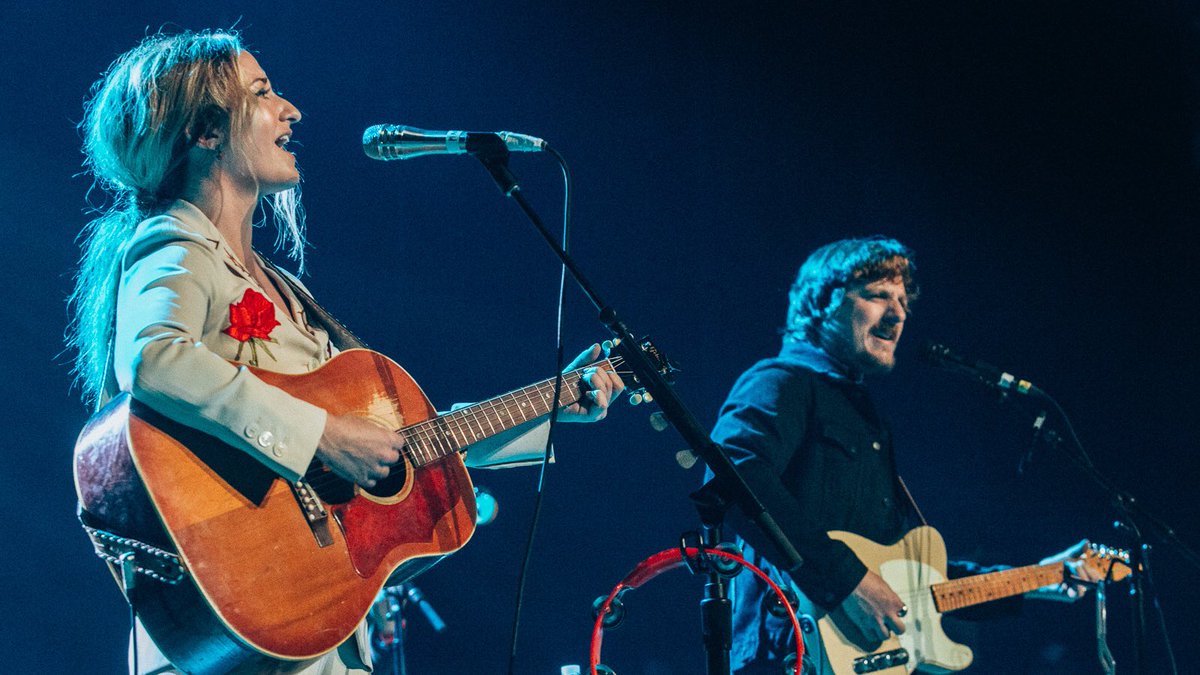 |
| Margo Price and Sturgill Simpson at the Ryman Auditorium, in Nashville. |
Published 5/24/18:
Margo Price & Tyler Childers
@ The Ryman Auditorium in Nashville Tennessee
w/ Jack White and Sturgill Simpson
The decline of show review on this blog is directly attributable to the fact that I'm usually going to shows as a plus one of someone who either manages or works for or with the manager of the headlining artist. I now know that rare is the artist who doesn't keep track of their mentions on the internet, particularly when it's a long form/think piece type, even the writer is far from being popular or affiliated with a prominent news source. There has also been a recent decline in the number of such articles- music blogs have been dead for almost as long as they were alive, and those that survived have morphed into Tumblr style post and link style sites that rarely bother to include critical writing.
For example, I went to the Jack White show at the Mayan earlier this year, but I wouldn't write about it for fear that he would read the review and not like something about it- even something that was not intentionally negative, and it would get back to my boo. That's bad form. Margo Price I consider a friend. I loudly take credit for being the conduit being Price and her current management team at Monotone on the basis that I saw the first posting on Spin.com about her debut record on Third Man Recordings (Jack White, managed by Monotone) and told my girlfriend, fan of the Stagecoach Festival and the first five seasons of Nashville, the television show. She drew the attention of her boss, the rest is history.
It's flimsy, sure, but fortunes are made on less in this town(Los Angeles), where providing an introduction is a way-of-life as specific as court etiquette in 18th century France. My original thought is that Margo Price had the potential to be a country artist with an audience beyond the traditional country music audience. At the time I heard of Margo, I had already seen Sturgill Simpson in Los Angeles and so I was far from surprised when the success of Margo played a role in the description of a new movement of Outlaw Country/Americana artists. Margo herself hates the label, "Outlaw Country." She uses "Modern Traditional County" on her Facebook profile, but there is no denying the wave, led by Chris Stapelton at the very pinnacle, and followed by Sturgill, Jason Isbell, Margo, Tyler Childers, Nikki Lane and a host of others, many of whom have lengthy ties to the East Nashville neighborhood.
For those and many other reasons, Margo Price's three night stand at the Ryman Auditorium, the hallowed "Mother Church" of County Music, and long time home of the Grand Ole Opry, was a special show. I can't think of any other musical event that I've observed that has been so triumphant. It certainly dwarfs any of the achievements of my Zoo Music days- with the possible exception of the Dirty Beaches Best New Music designation on Pitchfork. It also surpasses any of the achievements of the bands that I followed but wasn't involved with- the Best Coasts and Wavves of that time period. Midwest Farmer's Daughter was released on March 16th, 2016- before that moment, barely more than two years later she was selling out a multiple night engagement at the most hallowed venue in county music- which itself was thought to be improbable down to the moment the second show sold out.
Night one featured guest spots from Lukas Nelson and Sturgill Simpson, night two featured Jack White. Both nights featured Tyler Childers, who himself was making his first appearance at the Ryman Auditorium. Childers an amazing story- according to Ben Swank, the head of Third Man Records, his opening night reception was as raucous as any at the Ryman for anyone, opener or headliner. Childers has a large and enthusiastic fan base, even though it would be hard to know it from reading the national media press. His most recent record, Purgatory, produced by Sturgill Simpson, had at least one genuine hit (White House Road) and a half dozen gems. His half million monthly Spotify plays surpasses that of Price herself.
The only thing missing from Childers is any kind of acknowledgment of modern music celebrity culture, where artists are supposed to dress up and prance around the stage in an attempt to engage the audience. None of that bullshit from Childers. The Sturgill Simpson guest spot on night one was good but not great- as supposed to the Lukas Nelson duet- which sent chills down my spine.
Night two was a more relaxed affair- the crowd was more sedate, and more attentive. Jack White and Margo did an excellent duet, again, chills, and raucous audience response, and over all the night two vibe was preferable to night one, in my mind. Hanging back stage at the Ryman was an absolute treat- the only other time I'd been backstage there was literally on the tour, two years ago. As the kids would say, "Great vibes."
Truly, a triumphant episode for Margo Price, and surely a rebuttal to any who would claim that Margo Price is anything BUT a mainline country music star in the making, outlaw and americana tags be damned.
@ The Ryman Auditorium in Nashville Tennessee
w/ Jack White and Sturgill Simpson
The decline of show review on this blog is directly attributable to the fact that I'm usually going to shows as a plus one of someone who either manages or works for or with the manager of the headlining artist. I now know that rare is the artist who doesn't keep track of their mentions on the internet, particularly when it's a long form/think piece type, even the writer is far from being popular or affiliated with a prominent news source. There has also been a recent decline in the number of such articles- music blogs have been dead for almost as long as they were alive, and those that survived have morphed into Tumblr style post and link style sites that rarely bother to include critical writing.
For example, I went to the Jack White show at the Mayan earlier this year, but I wouldn't write about it for fear that he would read the review and not like something about it- even something that was not intentionally negative, and it would get back to my boo. That's bad form. Margo Price I consider a friend. I loudly take credit for being the conduit being Price and her current management team at Monotone on the basis that I saw the first posting on Spin.com about her debut record on Third Man Recordings (Jack White, managed by Monotone) and told my girlfriend, fan of the Stagecoach Festival and the first five seasons of Nashville, the television show. She drew the attention of her boss, the rest is history.
It's flimsy, sure, but fortunes are made on less in this town(Los Angeles), where providing an introduction is a way-of-life as specific as court etiquette in 18th century France. My original thought is that Margo Price had the potential to be a country artist with an audience beyond the traditional country music audience. At the time I heard of Margo, I had already seen Sturgill Simpson in Los Angeles and so I was far from surprised when the success of Margo played a role in the description of a new movement of Outlaw Country/Americana artists. Margo herself hates the label, "Outlaw Country." She uses "Modern Traditional County" on her Facebook profile, but there is no denying the wave, led by Chris Stapelton at the very pinnacle, and followed by Sturgill, Jason Isbell, Margo, Tyler Childers, Nikki Lane and a host of others, many of whom have lengthy ties to the East Nashville neighborhood.
For those and many other reasons, Margo Price's three night stand at the Ryman Auditorium, the hallowed "Mother Church" of County Music, and long time home of the Grand Ole Opry, was a special show. I can't think of any other musical event that I've observed that has been so triumphant. It certainly dwarfs any of the achievements of my Zoo Music days- with the possible exception of the Dirty Beaches Best New Music designation on Pitchfork. It also surpasses any of the achievements of the bands that I followed but wasn't involved with- the Best Coasts and Wavves of that time period. Midwest Farmer's Daughter was released on March 16th, 2016- before that moment, barely more than two years later she was selling out a multiple night engagement at the most hallowed venue in county music- which itself was thought to be improbable down to the moment the second show sold out.
Night one featured guest spots from Lukas Nelson and Sturgill Simpson, night two featured Jack White. Both nights featured Tyler Childers, who himself was making his first appearance at the Ryman Auditorium. Childers an amazing story- according to Ben Swank, the head of Third Man Records, his opening night reception was as raucous as any at the Ryman for anyone, opener or headliner. Childers has a large and enthusiastic fan base, even though it would be hard to know it from reading the national media press. His most recent record, Purgatory, produced by Sturgill Simpson, had at least one genuine hit (White House Road) and a half dozen gems. His half million monthly Spotify plays surpasses that of Price herself.
The only thing missing from Childers is any kind of acknowledgment of modern music celebrity culture, where artists are supposed to dress up and prance around the stage in an attempt to engage the audience. None of that bullshit from Childers. The Sturgill Simpson guest spot on night one was good but not great- as supposed to the Lukas Nelson duet- which sent chills down my spine.
Night two was a more relaxed affair- the crowd was more sedate, and more attentive. Jack White and Margo did an excellent duet, again, chills, and raucous audience response, and over all the night two vibe was preferable to night one, in my mind. Hanging back stage at the Ryman was an absolute treat- the only other time I'd been backstage there was literally on the tour, two years ago. As the kids would say, "Great vibes."
Truly, a triumphant episode for Margo Price, and surely a rebuttal to any who would claim that Margo Price is anything BUT a mainline country music star in the making, outlaw and americana tags be damned.
Published 5/29/18
Lonely Island
@ The Rose Dinner Theater in Pasadena
When I received word that the Lonely Island would be playing a warm up show at a Pasadena Dinner Theater (The Rose: Where Music Meets the Soul (TM)) over Memorial Day Weekend, I leapt at the opportunity to attend. I've driven or walked past this venue, formerly a Gelson's Grocery Store stuck in the bottom corner of a movie theater/restaurant/shopping complex in Pasadena, across from the convention center, twenty times in the past several years, and always wondered what a venue located in a grocery store would be like to experience.
The answer is, perhaps predictably, "Laughably terrible." To accommodate the legions(!) of excited Lonely Island fans the normally present dinner tables had been removed from the floor, leaving the lines of sight of a space not made for standing crowd viewing, and a hugely over crowded, non ADA accessible "VIP Platform," featuring luminaries like JB Smoove and failed sitcom star John Mullaney. Adding to the moderately oppressive atmosphere was the omnipresent security staff, behaving like the artist performing was Chief Keef or Takeshi69 and not a joke-rap trio featuring three adults from the San Francisco Bay Area.
I don't have any prejudices against joke-rap or novelty music in general. If you take a look at the history of the Billboard pop chart, novelty numbers were charting number ones before rock and roll existed as a chart phenomenon. Acts like Alvin and the Chipmunks and Sheb Wooley (Purple People Eater) have just as much to tell us about the history of recorded music in America as Elvis Presley or The Beatles, maybe more, since the novelty numbers preceded rock and roll.
The upcoming Lonely Island appearance at a comedy festival in San Francisco, billed as their first live performance, had puzzled me, since I distinctly remember seeing them perform at the Festival Supreme in 2013. Here is a review of that show from Spin.com. At the time, Spin said, "Lonely Island snuck a tight mini-set inside Tenacious D’s climactic performance, which included the duo’s giant robot, the Metal, and an oversized alien." After reviewing the poster for that edition of Festival Supreme, I see that Lonely Island was not billed. The 2013 appearance was a "surprise" and unbilled, and so, in conclusion, I see why they are billing this performance as their first ever.
Fans of Lonely Island are sure to love the show, which features bespoke animations for almost every song. They handle the absence of the numerous guest singers using a variety of techniques. Sometimes the accompanying visual simply displayed the missing artist. Other times, one of the Lonely Islanders would take the place of the missing performer. For the Justin Timberlake triptych performance, Asa Taccone used a Justin Timberlake puppet- acquitting himself quite well on the puppetry. As befits their origin as a viral video phenomenon, the bespoke visuals were themselves an attraction of the live performance. Considering the awful sight lines of The Rose Dinner Theater in Pasadena, watching the screen was more rewarding then watching the stage itself.
The group itself was, as the saying goes, "tan, rested and ready." I'm not at all clear at what they've been doing besides Andy Samberg starring on Brooklyn 99. My understanding is that they have "a deal" with Fox, of the sort where one can sit around and not do anything. Clearly, some of that time was spent making the videos for this performance, and I suppose puppetry lessons for Taccone. Only one of the songs came from their succesful(?) movie Pop Star, with Samberg as movie protagonist Conor 4 Real.
Much of the material reprised their greatest SNL hits, Jizz in My Pants, Lazy Sunday. Less of the material drew from their non-SNL albums, of which, amazingly, they have two, plus the Pop Star sound track. A highlight was a new song, about the "Bash Brothers," Jose Canseco and Mark McGwire, which has seemingly been written for the San Francisco audience of their upcoming comedy festival. In Pasadena, in front of a sea of Los Angeles based comedy nerds, the song only got intermittent laughs, but I was hooting.
The end of the set, about an hour long, had a surprise guest, but I won't ruin the surprise here. The Rose Dinner Theater in Pasadena is a crazy place to have a show. Wild.
 |
| Tyler Childers performs at legendary Los Angeles venue, the Troubadour. |
Published 11/9/18
Tyler Childers
@ The Troubador
It must be hard for middle aged major label record label executives these days, especially those from the rock era. I'm not saying that I feel sorry for them, but you can't help but wince on their behalf when you look at the artists who have captured the pop star/rock star label in the internet era. Take, for example, the micro genre turned chart topper world of internet rap: drug addicted young adults, funded by gang money, topping the charts without a physical record, let alone an album or a major label backed album campaign.
I'm pretty sure that there is no coming back from the precipice opened up by the streaming era. Soundcloud rap provides strong evidence that if one is simply popular enough, you can leverage the rest of it. I'm not sure that really was the case before Soundcloud rap started storming up the actual charts, the model was more that one would bring oneself to the attention of the "real" music industry via promotional tools like Soundcloud, not that one would actually use those formats to become a top 200 most popular artist in the world type person.
The thing is though, is that all those rock and roll guys are still around. The way the cultural industrial complex works, if you make a lot of money for a large corporation over an extended period of time, you get to stick around. If you don't make anyone money, you are out, but if you do, you get to become one of these guys (very few are women). My point being that there were a LOT of these guys there.
Specifically, Ian Thornton, the Huntington West Virginia based manager of Tyler Childers. When I walked in with Amy (Monotone) he was with Bill Bennett, former Warner Bros Nashville exec and current Hollywood/country fixer. They were shortly joined by others from Monotone, and label executives from Interscope, RCA and Sony. zero mentions on Stereogum Also present was Jeffrey Azoff, son of Irving Azoff. So, to be clear, Ian Thornton manages Tyler Childers. Tyler Childers does not have a record contract. Many people are both interested in managing Childers and signing him to a record contract, and it is clear that he a) has a manager and b) perhaps isn't that interested in signing a record contract.
All of this took place in the front bar of the Troubadour, during the set of opening act Blank Range. There was also a description worthy mix of fans, guy in an NRA shirt under his denim vest, Ezra Koenig of Vampire Weekend, a guy wearing a "Make Nashville Rock Again" hat. And women! It was not the sausage fest of a Jamey Johnson or Sturgill Simpson concert. I honestly don't know if Ezra Koenig of Vampire Weekend is a fan or if he just decided to hang out with his manager Ian (Montone, not Thornton).
It was a lot of what might be called "feeling out," but there is no question that Thornton is running that ship. The show itself was a triumph. Not the immortal triumph of his first appearance at the Ryman Auditorium, opening for Margo Price, earlier this year, but a triumph. The buzz in the audience was palpable. Childers opened with his hit, Whitehouse Road, which seems like something he didn't have to do. I sensed that he was nervous, and a little bit unsure of the crowd. It was different at the Ryman Auditorium, which he owned like he was born to play there. If I had a chance to say something to him, I would have told him not to worry, that the crowd was with him and that he could do no wrong.
I would say that his live show is not quite as developed as Stapleton or Margo Price, but that he is better life than Sturgill Simpson, who I've now seen in "jam mode" twice. I think ultimately it is the quality of his voice, as supposed to his lyrics- which are really good- or the band- which is just ok, that has given him his viral quality. He is an astonishing internet era story of an artist from the most outsidery of outsider places, who has developed outside any publicized "scene."
Even more astonishing that he nets a total of zero mentions on Pitchfork, zero mentions on Stereogum, only Brooklyn Vegan has been tracking his unlikely rise. It is both shameful and embarrassing that Pitchfork has slept so long on Childers. Certainly, if you are going to cover artists like Willie Nelson, Chris Stapleton, Margo Price and Sturgill Simpson, you have to include Tyler Childers on that list. He belongs there, unquestionably, beyond debate.
How incredible, also, that, like Price and Simpson (but not Stapleton) he has come from wholly outside the formidable Nashville music industry. This really is THE indie/local music scene story of this decade, in my mind. It is something that is really happening, generating interest among audiences and professionals/corporations alike. That is the succesful combination that you need.
 |
| The Serfs debut in Los Angeles |
Published 2/27/22
The Serfs in Los Angeles, CA.
February 26th, 2022
Well, it's been a pretty grim past decade for my record business. Making a business out of releasing independent bands is difficult/impossible, so keeping things on a hobby level if necessary is required if you are looking for some kind of long term survival. The grimness of my own experience releasing bombs for the past decade was tempered by the experience of my partner, who I started dating just in time to witness the rise of alt-country star Margo Price- it wasn't my business, but I was there to see it happen. And the world she lives in- which is the Music Industry proper, just made me laugh at myself and pretensions. It's really something to experience some kind of limited, local success in an area like independent music only to immediately be immersed in a world where people laugh at such experience and don't consider it success at all.
One of the cardinal live music experiences is seeing an artist for the first time before they have large audience for their music. I can remember a handful of such experiences- seeing Grimes open up for Prince Rama in the basement of Buddhist Temple in Toronto during North by Northeast before Visions came out. The first Best Coast show in San Diego at the Whistlestop- Bobb and Bethany were selling tapes out of a cardboard box in front and that tape stayed in my car for the best part of a decade. The first Dum Dum Girls show at the UCSD Che Center in San Diego. The Dirty Beaches show at the Whistle-stop before Badlands was released.
Anyway The Serfs- from Cincinnati- just put out their new record on Dream Recordings, and let me tell you, the sales are amazing. They are a genuine sales phenomenon. And I'm asking myself, leading up to this show, "But are they good live?" Because even though I've been working on putting this record out for over a year and a half, I've never seen them live. So I was nervous, but most of the nerves dissapated when I saw the crowd- which I believe was in excess of 150.... which- I mean- this band hasn't had NO press, but it's been close to no press. Like, there are no reviews posted for this record that they just out out. And they sold 150 tickets.
Part of that is the bill-mate, Aurat, who are local to Los Angeles and have their own vocal fans who turned out and stuck around after. But there is no denying that people showed up to see The Serfs, and boy did they deliver. I mean look, yeah, I'm biased, but I also don't through around compliments lightly- I haven't even written about music on a regular basis for the past decade. But here is my elevator pitch for The Serfs, "It will make you feel like you are watching Joy Division at the Factory on July 13th, 1979."
Now, let me answer some questions a bold statement like that will raise:
1. Are you saying The Serfs are as good as Joy Division: Possibly so.
2. Are you saying The Serfs sound like Joy Division: Obviously they are an influence but I would describe it as a pan-Factory Records sound, the musical DNA is exquisite and varied.
So if you are reading this and trying to decide whether you need to learn more about The Serfs, possibly listen to their music, possibly see a live show, the answer is yes, all of them- if you are reading this- in other words- if you find yourself here because you were LOOKING for information about this band, you need to pursue it yes you do because the live show is incredible.
Here are the upcoming live shows, all opening for VR SEX:
4/11 Austin - Hotel Vegas
4/12 Dallas - Cheap Steaks
4/13 Houston - Secret Group
4/14 New Orleans - Santos
4/15 Atlanta- The Earl
4/16 Nashville - The End
Published 3/7/22
Mvtant
in Los Angeles, CA.
It is crazy how much Spotify monthly listeners serve as a proxy for audience size for artists trying to make a living publishing and performing live music. When one consider to what extent guess work was involved BEFORE Spotify certified as a handy proxy for world wide audience size, the ability of Spotify to now directly quantify every artist in the world on the same scale is quite breathtaking. And, I might, add leveling, in that now any human can just open up Spotify and see how many monthly listeners every artist earth has updated on a daily basis.
And of course it isn't perfect and it's not like, a good thing, but is it accurate? Yes. This requires, again, taking Spotify monthly listeners as a PROXY for TOTAL audience size, not saying that artists make a living from Spotify streams because it doesn't seem like they do. But it does mean that if you have a certain number of monthly listeners, you should be able to make a living from royalties, touring etc. Here is how it works:
0-10 monthly listeners: Artist has no audience.
10-100: Artist has an audience of friends and acquaintances.
100-1000: This is the most second most frequent level for artists who have released songs on Spotify but who do not have a large audience.
1000-10000: This is a really big move up- and the start of what I would call a viable artist in the Spotify/streaming era. At the start of this range, 1000, you have Artists who have gone from 100 to 1000, meaning that there are likely total strangers and/or people who have paid to see or listen to their music. Or they've managed to generate some interest on the internet without releasing records or playing shows, which is fine. Artists who make it to 10,000 monthly listeners are at the threshold of viability.
10000-100000: This is the range where the biggest shift takes place. Artists at 10,000 monthly listeners might be touring regionally or playing lower capacity rooms on tour. They may be selling physical copies of their recordings at a steady clip. Artists at this stage may enter without some of the professional accruements of a professional music career: Label, booking agent, manager, business manager, etc, but by the time they reach 100,000 monthly listeners they probably have all of them or have made a conscious decision to NOT have some or all of those folks around.
100000-1000000: This is upper indie or major label level. Any artist with over a hundred thousand monthly listeners is going to draw intense interest from labels, managers, booking agents, etc. Because of the vagaries of audience composition in the internet era, they may not be able to succeed as touring artists and they may not sell any physical copies of their music. Bands that do tour and sell actual record/copies of their music can be at the lower levels of this tour and do quite nicely.
1000000-10000000: Almost inevitably going to be major label, internationally known artists, particularly once you get above 1 or 2 million monthly listeners.
10,000,000-100,000,000: I'm not exactly sure what the 100th biggest artist in the world has in terms of monthly streams but The Weekend, number one, has eighty million monthly streams.
So, like, my basic idea for a record label is, first of all, any independent label has to expect to start with artists that either have nothing on Spotify or have something but less than 1000 listeners. Any artist with more than that is spoken for or they don't want a label. The idea is just put something out, anything, a tape is great, a 7" is great. A 12" is not as great but doable, a CD even- just something. You don't have to make that many, because, if a band can sell 100 of ANYTHING it's worth pursuing. And then you put that on Spotify and just watch it. If it just sits there for years and the artist never climbs above 100 monthly listeners, that's bad. That means no one cares and probably that the artist hasn't been active by playing local shows let alone touring. If the Artist gets into the mid hundreds from zero then that is good but not great, worth putting out another physical product if the artist is enthusiastic about it but no loss if they aren't. If, after one release an Artist makes into the thousands of monthly listeners, even if it's just a thousand, that's a great sign. I'm pretty convinced that the majority of independent artists, maybe upwards of 60 to 70 percent, never do this.
Once an Artist breaches that barrier of a thousand monthly listeners, touring becomes increasingly important. I think if a band wants to go from one thousand to ten thousand monthly listeners, playing live shows is the most familiar and familiar route. Going from ten thousand to a hundred thousand monthly listeners begins to involve bigger tours, record labels spending tens of thousands of dollars, a booking agent who can get the Artist onto festival bills and of course releasing additional music. From a hundred thousand to a million it's most likely to be the lower levels of the music industry proper or the higher levels of the indie world.
Which is all a way to say that I was excited to see Mvtant live last night, like, two years after the record came out. Obviously, he hasn't been able to tour, but now he is opening all the dates on this massive Author & Punisher tour so I was excited to see him at Resident in downtown LA. I was just anxious to know how good his live show was, because while his sales have been pretty good, his streaming numbers haven't been great- which like- if a band can't tour- it's not fair to judge their streaming numbers. But man- the Mvtant live show is incredible- great energy, bouncing around on stage, and the songs are really good. Like early Nine Inch Nails before Trent had a band around him. If you have a chance to see Mvtant life you should take it you won't be disappointed!!!
Published 1/16/23
Secret Attraction, CD Ghost, Soft Vein
@ Rubycon Records & Tapes in Los Angeles CA.
When it comes to my current record label project, Dream Recordings, I take a decidedly and avowedly hands off approach to the creative side of the project- picking the artists, interacting with the artists, etc. That is because if you look at the unmitigated economic disaster that is the history of independent record labels it is quite clear the faculty for selecting artists and that for running a record label as a business only rarely reside in the same person. It was clear to me- long before this project- that my main faculty would be running an independent record label as a succesful and ethical business, which meant that either I was that one in a million person who could do both OR I would have to rely on partners for the creative side. That doesn't mean that I'm culturally unsophisticated or some kind of barbarian, only that I choose not to make MY taste the criterion for whether an artist is worth releasing or not.
I went to Rubycon Records and Tapes in Los Angeles, CA. on Saturday night to see the latest signee to Dream Recordings, Secret Attraction, from Phoenix. I try not to listen to bands before I see them- it's been next to impossible over the past three years of course- and also, if a band is part of my label, I try not to listen to much to their prior recordings, first, because it's not really my business if my partner think's the artist is a good bet, and second, you can't really judge the value of a particular artist on your label until you actually hear the recordings that you yourself will be releasing.
My initial impression of the venue- Rubycon Records and Tapes was very positive. I've been following the owner's content on social media (mostly instagram) and I identified with his quest to force-feed the music of his taste the greater Los Angeles record and tape shopping community since we have similar tastes- his being finely tuned and exquisite, mine mostly limited to the music of the bands I put out, their influences and whatever pops up on my post-punk spotify genre mix. The venue had light drinks available- beer and coffee. Tickets were 20 dollars and the show was sold out.
The sound and lights were both the best for any record store show I've ever attended. I was expecting some variation on the standard record store show vibe- awkward standing around etc, but instead this was a show-show DJ Malvada was Djing when I arrived- her pre-band set was itself revelatory, particularly with the sound system. I'm actually planning to just go see her DJ around town because she seems really active (she had 3 shows that night) because she was that good- it was all EBM/Industrial dance type stuff, which I like but am utterly unfamiliar with because, well, I know nothing about it.
The opening band was Soft Vein- from Sacramento. Two guys with one singing/playing guitar/synths and a guy in the back doing more synths and what I presume are triggers. The crowd was completely into it for an opening act, which, in all my days of going to indie/diy shows, is practically unheard of. Back when I went to shows more frequently, I always believed that you could just the strength of a specific scene by the intensity of response to an opening act in front of the first 50 crowd members, and by that standard, this particular scene (LA dance goth let's call it) is ready to blow. I hope so anyway, because that is what Dream Recordings is betting on heavy. I texted my partner during the set and it turns out this band had already enquired about working with Dream last year, so I was like, "Yeah!" Bought his t-shirt- anyway, they were great and readers should def. check out his next LA area show in March where he's opening for some weirdo who never plays or does social media- more on that show next month.
The second band- CD Ghost- came highly recommended by my partner, Mario- they have a record label so there was no professional interest there but I wanted to see them- really to see any live show of a band these days is interesting to me after the past three years. CD Ghost had a heavy synth vibe and none of the harder EBM sounds of Soft Vein. Layers of synths and a distinctive vocal. Crowd response was again fantastic. The live show didn't seem as developed as that of Soft Vein and Secret Attraction but you can hardly blame an indie band for that these days. Would again recommend seeing this band the next time they make it through LA.
Last band, Secret Attraction- signed them to Dream Recordings late last year. The way it works is that Mario describes the attributes of the band- so it goes with out saying that he thinks the music is outstanding and then we talk about the overall profile of the artist and various risks involved. I had remembered that Secret Attraction sounded like a slam dunk to me so I was looking forward to the live show. The perform as a two piece, with Derek singing playing up front and then a woman in back playing synths and hitting triggers etc. The live show was great- crowd loved it. heavy synth vibes and actual song structures etc. Very very much looking forward to hearing the completed record after this show and highly recommend it to anyone who is a fan of synth forward music- starting from Manchester/New Order up through Phoenix and whatever "vapor-wave" was or was not- but his strengths are the songwriting, the song structure and the charisma of the live performance itself, so I'm thinking that Secret Attraction has all the tools to go far, especially now that live shows are back.
Great show! Great scene! Really vibrant and I feel like it will be breaking out for more mainstream attention (yikes I'm sure) once people get going this spring and paying attention again to subcultural rumblings from the underground. Secret Attraction and CD Ghost are playing New York... next month? That is a must for NYCers. Don't sleep on either band.
Published 2/4/23
Trit95 & Shanghai Beach
@ Rubycon Records
Los Angeles, CA.
I wanted to see Trit95 (from San Diego) last night because I'm hoping to put out their record. Negotiations have been slow. Despite interest on both sides, Trit95 have done pretty well distributing their own music digitally- 47k monthly listeners- which is pretty incredible for a fully self-distributed act, and not bad for a fully established indie artists with national and international tours as well as several albums under their belt. As I've told Mario, my partner, many times, maybe Trit95 don't want or need a record label. I run into those sort of folks all the time in my job as a criminal defense attorney. People will call about hiring me for a case and ask me whether I will promise to get the case dropped or whether I can guarantee a win after a jury trial. Frequently people will ask me, a criminal defense attorney, whether it is "worth it" to hire a criminal defense attorney.
Something I've noticed about artists and bands is that they ALWAYS know better than the labels etc they are talking to. Not just unsigned artists, all artists, all bands, all musicians. I have observed that essentially all artists/bands/performers believe that they are entitled to be succesful, so any help in that direction is simply taken as something that is due them, and any potential impediments are the fault of others. How can a label/manager/booking agent respond? Three ways: First, you buy compliance. This is the major label route. Second, you lie. This is the traditional route for indie labels, who seek to obscure their lack of resources by offering fulsome promises. Third, you offer a partnership with transparency- this is the typical "DIY" approach- which obviously works better in theory than in practice. The essential problem is that 90% of records that get released by record labels lose money, and the 10% that do make money invariably subsidize the 90% that do not, and the 90% also do not make any money. That is not a recipe for a happy business relationship and it never will be.
Last night I didn't get to Rubycon till 10 PM, missing the opening act- also a touring artist- sorry. I saw Shanghai Beach- from Brooklyn. It was one guy with a sequencer/keyboard/drum machine type set up. The vocals were strong, he reminded me of John Maus but the backing music was more upbeat. It was crowded but not sold out and people were definitely into it.
The crowd thinned a bit for headliner Trit95. They were playing as a three piece with live guitar and bass (I think?) and a drum machine. The mix was off- I'm pretty sure the Rubycon sound system has trouble with live instruments. About four songs in an announcement was made that the wife had broken and the show was over. I didn't stick around to see what happened after that. Trit95 was good- the first real "band" I've seen since The Serfs show last fall. I'm surprised that they haven't already been snapped up by a record label, but everyone has been pretty dormant for the past couple years, so I probably shouldn't be surprised by anything as it relates to bands getting signed to record labels.
It would be great to see these acts at more established venues in town- clearly they meet all the criterion for opening for larger, touring acts in that they are good and have their own local fans who might buy tickets. I'm talking about Trit95 and Secret Attraction here.
Published 2/8/23
Marog Price & Lola Kirke
@ The Observatory North Park
San Diego, CA.
I remember the initial renovation/re-opening of the North Park Theater. After that, I remember it was sold to the people who own the Observatory in Orange County- that happened at the beginning of 2015. Since then I've been to a couple shows in my +1 capacity- I saw Autolux play there and saw Christine and the Queens and Marina and the Diamonds and then the first/last time Margo Price played in San Diego she opened here for Jamey Johnson.- that was in April of 2017.
So it's kind of crazy that 'pon her return to San Diego she was headlining the Observatory- exactly the kind of progression I was talking about in my event preview for this show. She opened for Jamey Johnson here in 2017, in 2023 she headlines, with zero plays in San Diego between the two dates. I think, in 2018, when she played the Arroyo Seco Festival and maybe San Diego was within the radius clause. In 2019 she just didn't get out to the west coast. I think the idea that 2019 was supposed to be a quiet year and then there was going to be a big tour in 2020. Of course, things did not pan out that way.
Besides being my home market for over a decade, the San Diego-Chula Vista-Carlsbad is the 17th largest MSA with just under 3.3 million people. Usually, touring acts hit San Diego, Los Angeles-Anaheim-Long Beach- #2 market and San Francisco-Oakland-Berkely #13. The problem with San Diego is that the only other MSA within easy driving distance is LA. Besides Los Angeles you are looking at a day to the next show, usually a day to the next show after that and then a day plus to get somewhere like Denver or Albuquerque before you can get to a really good market like Austin or Chicago, which are themselves close to a half dozen other places within a couple hours.
Touring bands frequently end up playing San Diego on a Tuesday because of the vagaries of touring schedules. I always used to joke, in my local music days that Tuesday night was "death night" because nobody wants to casually go out on a Tuesday night and stay up till 1 in the morning listening to three bands play in a bar or what have you. Margo sales in San Diego reflected this reality, and I think, the fact that this was literally her first headlining show in San Diego ever. Certainly, San Diego came in a distant third to the ticket sales in Los Angeles and San Francisco. Still, it was a respectable turn out all things considered and the crowd was enthusiastic.
Her live show was outstanding- it always is. She is a remarkable live performer- I think other artists like Willie Nelson, Chris Stapleton, Tyler Childers, etc. recognize it which is why they want her around. I think the Belly Up (capacity 600) would have obviously been a safer booking than the Observatory (capacity 1100) but the venue in Phoenix, The Crescent Ballroom (capacity 500) was also a smaller venue and like I said, I think the goal is to prove that she can sell 1000 tickets in 10/15/20 markets. But like, the Belly Up show would have been legendary. I don't blame Margo and her team for going big in San Diego and it was fine.
The Observatory staff had quite improved since my last, pre-pandemic visit. They used to be just the worst- I remember them confiscating a ball point pen from my girlfriend the last time we were there. Ridiculous assholes. This time everything was more laid back, perhaps due to the fact that Tim Mays was co-promoting this show alongside Live Nation. How does that work?
Tomorrow is Los Angeles and Sharon Van Etten and Mike Campbell are guesting. It should be a good show! Tickets are still available but San Francisco is sold out!
Published 2/13/23
Margo Price & Lola Kirke
@ The Fonda Theater, Los Angeles, CA.
Margo Price & Lola Kirke
@ The Fillmore, San Francisco, CA.
February 2023
As I told Margo's manager ] I have no doubt that when Margo is looking back in the process of writing her second book, she will the show she played at the Fillmore in San Francisco this past weekend as a turning point SPECIFICALLY as the turning point where it became clear that Margo Price, can, in fact, play for an audience that numbers in the tens of thousands (vs. the single thousands) and pull it off, in other words that she, is, in fact, a festival headliner in waiting.
What is the difference between an artist who can sell out the Fillmore (listed 1300 capacity) and one who can headline a festival with an audience of 10,000 plus? Here are some of the qualities:
1. Native fan-base or potential for such in festival market of over 10,000. This is the easiest qualifying criterion, though there is always the issue of why a band in this category would need to play a festival vs. just playing their own show.
2. Ability to Play a Headlining Set of 2 hours. This is a big one- many bands/acts just don't have it in them for play for two hours straight let alone the ability to hold an audience for that long.
3. Ability to Generate "Wow" Moments. Usually for a festival headliners there are guests and other kinds of stunts and tricks that elevate the performance beyond that of a regular show, to make the festival more of a special occasion.
I have come to the conclusion after watching the shows in Los Angeles and San Francisco this past week that Margo Price does meet the necessary qualifications; that she does have what it takes to headline a rock festival, whether people know it yet or not.
Los Angeles, CA @ The Fonda Theater
Ticket sales were weak in Los Angeles. I would attribute that to the lengthy gap between headlining events, Margo was essentially starting over in terms of her live audience in Los Angeles. Also, the set started late- 10:15 PM- which has nothing to do with ticket sales, but certainly impacted the vibe. San Francisco made clear that the proper starting time for a Margo Price headlining set is 9 PM in our post-pandemic world. Despite the absence of a sell-out it was an excited crowd. I thought the significance of this show was the ability of the band to generate at least two and maybe as many as four "wow"/festival type moments. First, there was the performance with Sharon Van Etten, who sings on Margo's song Radio. They did that song together as well as a smoking hot version of Van Etten's own hit, Seventeen. I've included an uploaded video where the chemistry comes across:
Another strong candidate for Wow moments involved one of the other guests, Mike Campbell from Tom Petty and the Heartbreakers. First, their was their performance of the Strays album track, Light Me Up, shown below:
The second was their performance of the Tom Petty song- which Margo actually recorded for a Big Machine Tom Petty tribute compilation that is yet unreleased:
At the same time, Margo's own songs show a growth in her sound that position her to be a force in mainstream, festival level rock and roll. Even as a huge fan and fringe watcher of her career, I found her live performances of her new material, particularly the Strays album tracks Hell in the Heartland and County Road to be nothing short of revelatory.
Despite the absence of a packed house, the Los Angeles show gave me an inkling that this was Margo in her final form- this inkling would develop into a full-blown revelation the next night in San Francisco.
As supposed to the non-sold out Fonda, The Fillmore sold out weeks in advance of the actual date. When I arrived towards the end of opener Lola Kirke's set, the house was already packed and there was an almost electric sense of anticipation from the audience which was filled with adults. For me, San Francisco will always be the show were it all came together for Margo Price and her band. In addition to new wow moments her own songs from the new record were performed with an energetic commitment to getting the point across to the audience, and the results were manifest in the rapt attention paid by the audience and the thunderous applause which greeted each break in the action. In particular the renditions of Hell in the Heartland and County Road really brought both tracks home to me- since this show I've listened to both on repeat and eventually created this playlist.
As far as "wow" moments go- her rendition of White Rabbit by Jefferson Airplane qualified for sure:
I left convinced that Margo Price, does, indeed, have what it takes to make it to the next level- which in her case would be performing in front of a live audience of greater than ten thousand people. She can do it, for sure. Don't miss her remaining tour dates if you are contemplating attending- they will be worth the price of admission. Those remaining dates are below:
2/14 - Vancouver, BC - Commodore Ballroom $
2/15 - Seattle, WA - The Showbox $
2/17 - Bozeman, MT - The Elm $
2/19 - Minneapolis, MN - First Avenue $
2/20 - Madison, WI - Majestic Theatre $
2/21 - Chicago, IL - Vic Theatre $
2/22 - Indianapolis, IN - The Vogue $
2/24 - Toronto, ON - The Phoenix Concert Theatre #
2/25 - Detroit, MI - Majestic Theatre #
2/27 - Burlington, VT - Higher Ground Ballroom #
2/28 - Boston, MA - Paradise Rock Club #
3/2 - Washington, DC - 9:30 Club #
3/3 - Philadelphia, PA - Theatre of Living Arts #
3/4 - New York, NY - Webster Hall #
3/9 - Nashville, TN - Ryman Auditorium !
# w/ Tre Burt
! w/ Jessi Colter
Published 6/17/23
Madeline Goldstein
Secret Attraction
@ Zebulon in Los Angeles
It has been a weird couple of years for local indie music scenes. How are you supposed to develop as an artist if you can't play live shows? It's essentially impossible. Live shows are so important in the digital era because literally anyone can be a streaming artist with a billion streams but very few have what it takes to tour, sell tickets and create a real world fan base that the music industry actually respects.
For me, every band that started in 2019 or after (or was brand new in 2019) gets a pass, all of them, starting THIS year, 2023, can act like they are a "new band" for local music purposes. In other words, there can be no demerits for failing to advance ones career in the years between 2019 and 2023. Fortunately, the fog has begun to lift and I can see the return of lives music at the local level here in Los Angeles. Take last night, a free record release party for Madeline Goldstein and More Ephemerol at Zebulon, which is one of the coolest venues in Los Angeles right now. Maybe the coolest. I'm biased, of course, because I live about 10 minutes away but I really do think they have got it going on at the Zeb- located on the edge of Frogtown near Silverlake and Atwater Village.
I've been going to Zebulon for years for special events- world soccer matches actually have been the occasion the last couple of years. I talk a lot about going to shows there but rarely do because they are typically booking either super-legacy type acts or niche stuff that isn't my niche. I'd like to see them booking more bills like the Echo used to before it started sucking after Live Nation bought it- more local scene bands and middle-of-the-road indie rock type stuff. Yes, I get it, they are too sophisticated for that stuff, but there is a need and I'm sure it would make money for them.
Secret Attraction opened- they are on my label Dream Recordings and Mario wanted to sign them (Derek, writer, Rachel, band member) because the songs are great. I agree. The live show is also very good- I saw him at Rubycon Records a couple months back but this was the first viewing in a club with a real sound system. They sounded great and it was a big crowd for a Friday night in LA at 8:30 PM- an almost unconscionably early time for an opening act to play but the crowd was very much up for it.
It was a free show so the large turnout isn't entirely surprising- I'm guessing that any random Friday night at Zebulon would be moderately busy these days. The crowd was very goth-scene heavy- though not quite as young as the kids who were coming out to the Rubycon shows. Plenty of black leather and severe make-up on the ladies, black for the men. Goth crowds always make me giggle, but there is no denying their dedication to the scene.
It's funny, because Secret Attraction doesn't actually have a goth sound but I guess close enough. The sound at Zebulon was really good- I think this was the first time I'd heard it full blast since before the pandemic. I missed More Ephemeral because I was hanging out on the patio- sorry, if the band or fans is reading this, I apologize for missing the set.
I was intrigued to watch a few songs from Madeline Goldstein, I'd seen her name here and there, and she played a show down in San Diego that Mario, my partner in Dream, booked at the Whistle Stop.
The live show was very engaged- she is an eminently watchable performer. I didn't love any of the songs I heard- and I'm listening to her new EP right now to confirm that. Again, there is nothing wrong with not having amazing songs- I'm sure Madeline herself would disdain the idea of writing a "hit song," that she views herself as a member of an artistic avant garde, etc. Which is great! She had plenty of fans there last night- I don't think the phrase "sold out" really applies because it was a free show but the place was packed with fans- fans of all three acts- I might add.
Also worth noting that she couldn't find the right label to put out this record- I know she talked to Mario about it but were committed through the end of the before she reached out. But, the local record industry is in shambles. Like, who is even putting out records right now in LA. It's a wasteland out there BUT at least the local show scene is coming back.
The next local event I've got on my calendar is this Rubycon Records 2 year anniversary show on July 15th at the Lodgeroom (Los Angeles). Dream Recordings own Mvtant is second on the bill behind Plack Blague, who are a band from Lincoln, Nebraska (!). Tickets to that show are twenty two dollars and it should be a real blast! Viva Local Music!
Published 7/15/23
Panda Bear x Sonic Boom
@ The Bellwhether
Los Angeles, CA.
I was excited to visit The Bellwhether "Los Angeles' Newest Mid-Size Venue"(1600 capacity) to see the poorly named project Panda Bear x Sonic Boom plays the hits from their extremely poorly promoted 2022 record Reset, which has to be one of my favorite albums of 2022 even though I didn't listen to it for the first time until this year. I've never had the energy to get deep into Spaceman 3 and its progeny. Yes, I've seen Spiritualized several times. I listen to Spectrum on Spotify frequently. I hate Animal Collective and I've never listened to a Panda Bear solo record, even one produced by Sonic Boom, because I hate Animal Collective so much. I didn't listen to the MGMT record Sonic Boom produced. Generally speaking, I highly approve of the "pro-drugs" philosophy expressed in the music and the music itself but I didn't listen to them during the period I was involved in that kind of scene with the exception of Spiritualized, Ladies and Gentleman We Are Floating in Space (1997), which came out when I was in college.
But the fact is, I did start listening to Reset earlier this year and I do believe it is an amazing record, and that it would be great to see live, and it was, indeed, all that. Lennox and Kember performed silhouetted on the stage against a highly psychedelic, constantly changing video back drop that was more video art than concert backdrop. They both had an array in front of them- a keyboard, triggers and probably some stuff Kember uses to obtain his patented circuit-bending sounds. Kember also had various flute and whistle type devices that were deployed at various times for maximum impact. In between songs from the Reset records they had distinct drones that sounded like Animal Collective/Panda Bear type improv- with Lennox sometimes wordlessly emoting over the sound of birdsong or ambient style drone.
Even for the most sober viewer, as indeed I was last night, coming in at the tail end of day that saw me wake up at 4 AM, drive to San Diego, back and then go out in Echo Park beforehand, Panda Bear x Sonic Boom will provoke feelings similar to what you get during a mild psychedelic trip: the visuals, the lighting, the songs. It was a total blast.
The venue was very nice as well. It seems like all shows are done and dusted by 10:30 PM, so make sure you get there early. The available public parking lots within a block are 10 dollars and they both filled up slightly before showtime, so keep that in mind. It's an easy location (just east of the freeway cutting through DTLA) to get to and from with rideshare so that is an option worth considering. The surrounding neighborhood is unhoused heavy so take that into account particularly if you are parking outside the two lots within a block of the venue.
I did park in the lot around the corner from the entrance and on the way back I had to walk out into the street because an unhoused fellow living in a tent on the sidewalk arrived home and started unloading his possessions into his tent, his bicycle and person fully occupying the sidewalk. It doesn't bother me, but I know plenty of Angelenos who would not fully appreciate such an experience.
Published 12/17/23
Secret Attraction (not seen)
Deceits (not seen)
Past Self
Trit95
@ CLUB FLESH in Catch One
Los Angeles, CA.
I was excited to see Dream Recordings signee Trit95 for the first time in a few months- when last I saw him he was performing solo at the Permanent Records Roadhouse. This time he was in town for CLUB FLESH which is hosted inside Catch One down there in the heart of Los Angeles. Headliner Secret Attraction was going to be on Dream Recordings but the relationship did not work out and we gave them their record back.
Catch One has a spotty reputation as a venue for live music, but as I said before and I will say again now, it's a good place to see a show. There are multiple events at Catch One every/most nights- from the Courtyard I could see the entrance for BRATZ PARTY (2000s) and as I left the front/main venue had a line down the block for a 100% gay(cis gay men) dance party. That's the kind of cross pollination that I associate with creative fecundity, though of course it would be too much to ask to be able to go from show to show within Catch One, which I would desperately like to do.
Another observation worth mentioning is that a show like this could have very easily, once upon a time, been hosted at the Echo, but the Echo has fallen so far since its purchase by Live Nation that it is almost impossible to contemplate- like the vastness and depth of the fall. The fact that it was being held at a Club Flesh which is technically a BDSM club is a testament to the acuity of the promoter ("Electric Eye Presents"- and if you have a search set up for your name, greetings). There are multiple promoting entities working out of this space- Das Bunker is another one that is here on the regs with different kinds of live music.
Even though I'm not a goth I do love a good goth club, it's always a vibrant sub-culture with a firm commitment to live music- going back half a century now in places like London, NYC, SF and LA. You couldn't ask for a more polite, attentive audience. And clearly they aren't overly fussy about genre since neither headliner Secret Attraction now Trit95 are what I call "goth".
After a brisk conversation between by friend Rabbi Dave and I about the roots of gothic as an idea in western culture- from Ruskin and the Stones of Venice, to the architectural qualities that gave rise to the term, to the rise of Goth novels in the late 18th century- ghosts with clanking chains in remote castles in southern France, the wilds of Italy and Spain, to the Gothic revival of the 19th century- with writers like Wilkie Collins and Edgar Allan Poe drawing on a shared culture of gothic culture but adding their own themes, to the emergence of the contemporary sub-culture out of the stew of English post-punk in the late 1970's and early 1980's- Trit95 took the stage.
They performed as a three person band- it was a tight 20 minute set- crowd response was outstanding, this is the outfit that Trit95 could tour- they could play SXSW tomorrow and turn heads. I personally told five people in the Audience the name of the artist. The crowd was not that of an opening act at a rock club- everyone was there, and interested in the show. Trit95 was just great last night- this was my third time seeing him/them play live but the first time I'd really witnessed the magic- the potential star quality, if you will. Mario has been Trit95's biggest booster and I trust his aesthetic choices- that's his job- I don't have anything to do with picking the bands that Mario selects- but our conversations over the years have fed into his decision making process and it was cool seeing what he had seen.
Stuck around for a couple songs of Past Self- a more avowedly goth act complete with matching white and red face paint. They had two synth players and a guitarist and boy/girl vocals- I surmise they are on tour from their base in Washington states.
Something that came up with Secret Attraction is an inability of label and artist to understand the point of the relationship. Most of the issues arose from questions of timing- which is the same for every artist and label, in my experience- going up to and including the major labels. It's easy for DIY artists to wonder what the point of a label is in an era where you can get your own music online, sell your own music digitally etc.
And the answer to that question is that is an issue of Audiences. Subjecting ones artistic career to the timeline of the post-TikTok internet is a recipe for burnout and failure. On the other hand, if a DIY artist just takes the time to work with a label that has SOME kind of a track record, that serves as a notice to EVERYONE in the music business: other labels, managers, booking agents, publishers, that this is an act perhaps worth looking into.
Whereas if these same people are looking into an entirely self promoted/DIY artist, the ONLY question is "how many likes," "how many streams," "what is the artist produced content." Artists with a label don't have to always be doing that- they can focus their energy into building up the release of a full album physically and digitally and then touring that record- this is what serves as a sign to the music professional class that this particular artist is different from the dozens and hundred and thousands doing the DIY thing.
Secret Attraction didn't want that- something I recognized pretty early on- they want to be on the Tik Tok self-released content rich timeline, which- more power to them, but if I was an artist, or advising an artist in 2023 I would say look, you want a label to make and distribute a physical record, and you want to focus all your energy on first promoting and touring the record, because that is what professionals care about, that is what they think about.
In my experience, most DIY musicians have little or no idea about how the actual music industry works. They may BELIEVE that they know how it works, but they do not. Ask a DIY artist you know about music publishing and the ways one is compensated from a license of a song on a network television show, see what they have to say.
 |
| Zzzahara |
Zzzahara &
Cold Gawd
@ El Cid
Goldenvoice promoting
I know this sounds totally nuts for a blog that averages under 100 page views a post, but sometimes I feel like promoters book shows specifically for me to go, and if I don't go, and if I don't write up a little review, someone, somewhere will be disappointed. I'm not saying that's true, in fact, I'm sure it's not, but it just feels that way, which is how I found myself at an early show (Doors 7! Headliner at 8!) at El Cid featuring Zzzahara and Cold Gawd.
I simply had to see Zzzahara (Pronouns: They/Them)- Mario, my partner in Dream Recordings, has been booking her for a while now down in San Diego and her manager, Gary Walker, works with Amy (my girlfriend) at Monotone. I genuinely like Gary and his wife Chantal- who is a force in her own right, and Gary has genuine deep roots in the DIY scene in London. This show was, I found later, sold out- it felt sold out during Zzzahara's set. So anyway I've been hearing about Zzzahara for months and I was anxious to see the live show. I was also interested in seeing Cold Gawd (Dais Records), they of the "ABOLISH WHITE SHOEGAZE" t-shirt.
Both bands were fun to watch- Cold Gawd put out quite a vibe and I was impressed at their professionalism, cranking out a hot set at 730 PM on a Friday. They are obviously part of the Shoegaze revival that Pitchfork saw fit to comment upon last month. Cold Gawd also has a dude who does nothing by plays tambourine (the meanest tambourine I ever did hear- clearly audible in an already noisy mix) and scream which made the overall sound more of a shoegazemo (copyright me 2024)- and I was struck, more than once, that this band is one gig away from getting signed to a major label- that's not a good or bad thing, I'm just saying, based on my prior experience, that this is the kind of band that gets signed to a major label when a trend resurfaces (shoegaze) because they have a good vibe, an interesting look and a definite sound. I'm interested to now go back and listen to their records.
Zzzahara is a genuine phenomenon- an artist Pitchfork has managed to ignore while she is signed to a cool label (Lex Records UK), has close to a million monthly listeners. She's Eyedress adjacent- another international phenomenon that Pitchfork ignores- with 16 million monthly listeners- I surmise that they may have grown up together. Anyway- she put on a great set- her fans love her- she plays the kind of goth inflected bedroom pop that is super scalable- an artist like her could go from 800k monthly listeners to 8 million overnight if I understand the dynamic properly, because she sings about topics that young people can easily relate to. And let me tell you, Lex Records knows exactly what they are doing. As a 45 year old dude I don't exactly relate to the life is tough here in my bedroom lyrics like I used to when I was a kid, but the appeal is easy to understand, and I saw plenty of their fans and I can see them having tons more fans. They both sound like winners to me, well poised to take off in the revival of the indie scene post-covid.
I'd never been to El Cid before in 20 years of going to shows in LA and close to a decade of living less than 20 minutes from the venue. I was intrigued that Goldenvoice was promoting this show, and that was part of the reason I came- to see the venue. I loved the early start time though I understand it's not typical- El Cid has early and late shows, I was told. I though the sound was great but the vibe was a little strange- the preshow music was a 2019 dubstep compilation which is fine but not in keeping with the sounds of the artists. The staff was just the regular El Cid staff- they obviously were flummoxed by these sort of bands and it showed on their sour faces. Which, you know, is fine- it didn't bother me or anyone else, but I noticed. I would come back- though dress warm- this is basically an outdoor venue.
Published 2/6/24
Gamma World &
Total Pleasure
Total Pleasure
(Wisteria Residency 1)
@ Zebulon LA
Man, I would go to Zebulon more if they booked more shows that weren't the indie/underground equivalent of legacy acts. I mean, I get it, they are going for diversity in their programming, not trying to replace the Echo. But the regular shows are so good at Zebulon! So I found myself at night one of the Wisteria Residency in February- every Monday night!
The bill started with Gamma World- they were cool- a two piece with a drum machine- that's all you need! They had some anthemic song writing, some political lyrics. It was fun- I can see a path to a real career for those two, but they've only got one release on Spotify and its "Demo" from 2019 on "Unsigned" so there is work to do there. Every act needs to make a physical product, tape, cd, vinyl, whatever and then sell it at live shows. When I looked up their socials I saw my like minded contacts in the world of music were already following these guys, so I would say, worth checking out, hope they do more shows. Didn't love their look! I bet they don't care!
The second band was Total Pleasure. This is a trad post punk outfit, with a rhythm section that sounded like the Cure, a pair of guitarists that sounded like the Smiths and a normcore singer who looked like one of the neo-shoegaze front men you see out there in recent times. It didn't quite hang together- the rhythm section sounds like it needs to play more shows together and the songwriting was uneven- some of the cuts really jammed, others felt awkward and flat. But you know, ever since the pandemic, I've really begun to appreciate EVERY local band- god bless them all, each and every one. Just the fact that they are playing shows on a Monday night- god bless them.
Didn't stay for Wisteria- I was curious to see whether Zebulon was mighty enough to keep a three band Monday night bill on schedule and the answer, sadly, no. Gamma World didn't play till after 9 PM, and I left at 10:30 with Wisteria's set no where in site (they were supposed to take the stage at 10:20 PM). Here's a tip for Zebulon, or Wisteria- don't book a three band bill on a Monday night if the first band isn't willing to take the stage at 8:30, as was the case last night. Still was a good time and looking forward to next week.
Published 2/14/24
Wisteria Monday February Residency Night 2
w/ CD Ghost &
Active Decay
@ Zebulon Los Angeles, CA.
Back for night two of the Wisteria residency- since it wasn't in the middle of the biggest rain storm in a generation, this night drew a bigger crowd- maybe also down to the fact that this line up could have just as easily drawn a paid crowd with the same bill (maybe not on a Monday night, but on a Friday for sure). After 15 years of going out in San Diego, where Monday night bills are a mark of death unless you are a legit touring act (and even then they are rough), I've been astonished at the size of the Monday night crowds in Los Angeles. Los Angeles is, by every indication, a much more fertile ground for local bands trying to put together a following.
Openers Active Decay put out a record on local indie Lollipop Records- who got Crocodiles an NFL wear sync that made it all the way to the Super Bowl broadcast- opened. I would say they are a work in progress. They performed as a three piece with a dude in a tank top playing bass, a lady singer and a guy who sang and played guitar. There was a drum machine, and a pretty big sax element that was done with backing tracks. The guy and the girl both performed songs, sometimes backing one another, sometimes not. I think the crowd reacted more positively to the songs sung by the dude, but the set was politely received by the already voluminous crowd. The sound was gothy/romantic/new wavey with definite songs and lyrics, though said song writing and lyrics varied in quality from song to song. I can certainly see where they are headed, and I'd wager it comes off smoother on record. Anyway, all local bands are blessings, and all local bands deserve fervent support for the very fact of their existence and artistic will.
Thankfully Wisteria played second tonight, sparing me the conflict of wrestling with the prospect of Tuesday's 4 AM alarm. Finally! Wisteria. I feel like I've been trying to see them for years. They had a really striking visual set up- performing with no lighting in front of a bright white screen, which gave them the appearance of silhouettes. A neat way to play off the fact that neither one of them are going to win any beauty contests. I thought the singer had a really interesting voice, like I'm going to go and listen to their records on Spotify now because I was so intrigued. I thought having the other guy play drum pads on his synth set up was a good move- that should be a requirement for synthy two pieces- either you are singing or playing a guitar/bass or doing a drumming thing to break up the visual monotony of two guys behind matching synth arrays.
But my thought is that there is songwriting talent worth developing and that the live show backs it up- nothing stopping Wisteria from being a full-on national indie touring band if that's the direction they want to go.
It was my second time playing CD Ghost- they were outfitted more formally from the last show at Rubycon, where they looked like they had fallen out of a van fifteen minutes before show time. The crowd was packed. I respect the fact that they are self-released but I think a label with a good vinyl reputation could really help them get national level attention. Looks like they have a national tour lined up and booking here and in the EU, so, if you are thinking about going to catch a show of theirs you should.
Published 2/19/24
Topographies,
Secret Attraction &
Trit95
@ Genghis Cohen (Los Angeles, CA)
Another night where I just felt fortunate there was a show- any show- to go to in Los Angeles. Recent months have had me nostalgic for pre-pandemic local music, even though back in 2019 I was totally over local music and couldn't be bothered to go to a single show that could be described as "local music show." Technically, last night was a bill with three non-local bands, though I would count Secret Attraction (PHX) and Trit95 (SD) as "local" based on my theory that Southern California: Los Angeles, Orange, San Diego, Riverside, San Bernardino, Imperial and Ventura all represent one market, in that you can get to any point to any other point in the are within a couple hours if you time your drive right. Topographies was down from San Francisco for their album release party. Dream put out an ep by Topographies and we have some kind of limited tape coming out. Secret Attraction had a deal with Dream but it was cancelled by mutual consent over timing issues (Derek was impatient AF to put the record out). Trit95 has two records- a compilation of his prior releases that we mixed and mastered that is at the test pressing stage and a record of new material that hasn't been recorded (or written? I don't know.)
I'd never been to Genghis Cohen- which is both a fully functional "East Coast Chinese" food restaurant AND a venue that hosts both live music and stand-up comedy. I still haven't been to the restaurant and this was my first time at the venue. I was excited that the show was a sell-out, though I simply can't imagine that the capacity is over 50- it felt like maybe 35-40. Also the show didn't sell out far enough in advance, which is something I now know "real" music industry people take into account. You want a show to sell out quickly, not the night before the concert. But at the local music level, a sell out is a sell out, because there are plenty of local music shows that don't even come close to selling out, or are free. So the show sold out, which was great.
Trit95 took the stage at 8:30 PM. I may (and in fact am) biased, but Trit95 has the biggest Spotify listener ship of the three acts, and I felt like the room was the most crowded for his set. This was the second or third time I've seen his 20 minute opener set with the three piece arrangement. I thought it was, again, great, even though the lighting arrangement was inferior compared to the two bands after. The three piece/no drummer look is a good vibe and I actually told the band after the show they really do NOT need a drummer. Maybe the keyboard guy can hit a drum pad in his set up- because that it was a good look- but a live drummer is 100% superfluous in 2024. This is a battle I've been fighting since 2008, but I think in 2024 there is no argument at any level of the music industry that you only need a live drummer if you are a full on professional touring band.
Personally, I'm anxious to see a full headlining set, how many tickets he could sell etc. We had a conversation after the show which indicated he needs to get signed up with a PRO- ASCAP, BMI, SESAC right away. He mentioned he has a song coming out with EYEDRESS (16 million monthly listeners) and of course, the compilation LP I'm putting out.
Secret Attraction was next up. Derek had the lighting situation figured out- they played with a blue wash that gave the velvet curtain in back a literal David Lynch vibe. It was another solid set from Secret Attraction. I saw on their social media that they were recording new material the other week- Derek is obssessed with being productive as possible, so I'm ready to start hearing new material. Also interested to hear about their next LA area show- I know there will be one soon, knowing Derek, and having established a sell-out at any level means there will be interest from other venues. I would love to see a similar bill at Zebulon or El Cid, to see how many tickets would sell etc. Any of these bands by themselves would be worth booking just to get a read on the interest level.
Topographies headlined- they have a new record out as of Interior Spring- although I haven't seen a single mention of it anywhere. Like all bands who have put something out on Dream and then moved on, I'm always puzzled that they just didn't see how great Dream is, but understanding that for an individual artist, all they see is what Dream has done for THEM and they certainly don't have any interest or knowledge of the pre-Dream history. So, I get it, but I can't help but be a little critical. Mostly what I observe is that these acts have an opportunity to work with a label that has been there for close to a dozen artists making it to the pros over a fifteen year window, for some label that has been there for exactly zero artists making to the pros. I know Mario doesn't talk to the bands like that, but that is what I'm thinking.
Anyway, Topographies was good- they've got a UK/EU tour coming up which should be fun and the new record is out and available for sale in bandcamp. Like I said, I think Dream is making a tape but don't have any details beyond the back and forth emails about production and the invoices. If you have a chance, go see Topographies on tour and buy the vinyl of the new record.
Published 3/13/24
Angie McMahon
@ The Crocodile
Seattle, WA
Seattle, WA
3/11/24
It used to be there was lots of mystery about the path from local band obscurity to stadium headliner. Most artists started by playing local shows in local venues, then you would record a "demo," then you would look for a label or manager or both, then hopefully a booking agent, put out an album, do a van tour of the US, maybe a van tour of UK/Europe, then another record, professionally done, with a record label that has pr and def a booking agent, a second van tour as a headliner, hopefully a festival or two, then by the third record hopefully you were on a bus and playing theater size venues (1000+) and selling them out. You would be judged by actual record sales of physical cds or records, the crowds you drew at your shows, and the press you got. Obviously, the vast majority of bands/acts never made it past the first or second step, but plenty of artists fall off at each point, and the most succesful acts skipped one or many steps.
Now, that has all changed. Artists are essentially measured by two numbers: 1) their monthly Spotify streaming number, which updates daily 2) tickets they can sell to their concerts. If you are low by the measurement of (1) you have to show that you have the power to sell concert tickets. If you have great streaming numbers but can't sell tickets you can play festivals, but ultimately it is the live show on a big stage that is the only check on streaming era artists who have demonstrated their worth by (1). These days, few if any artists start by playing live, rather they will record music and publish it themselves, either on bandcamp or, straight to Spotify and the other big DSP's. I couldn't even tell you the last time I went to a local level show and saw an artist who didn't have a Spotify monthly streaming number already.
This shift has certainly taken much of the mystery out of the lengthy process I described in the first paragraph at this post. Now, every label, from the lowliest indie to the biggest major knows how many monthly streams you get and most of them know how many tickets you have sold (or whether you have sold any). The biggest loser in this shift has been the press/music critics. They used to play an important/critical role in helping artists get from the bottom to the top. Today, literally no one gives a shit and if you have good streaming numbers and sell tickets to your shows, you don't need critics to pay attention.
Take Angie McMahon. I just got back from the first show of her sold-out US tour- in Seattle. Angie put out her record last fall. People said nice things about the record but she isn't a Pitchfork artist, and generally speaking, not much was said about her or the record, even though it was amazing. Her streaming numbers are fine but essentially flat. BUT- there I am watching her sell out a Monday night show at an 800 cap venue in Seattle, watching her evoke the kind of Audience response that most artists never obtain and hearing second hand about her being seriously considered for arena/stadium/big theater tours on three continents.
It was an astonishing performance and the crowd was incredibly diverse and enthusiastic. Truly a dream start to a US tour that promises to be the first step on a path that promises to follow that older path in an era of an obsession with streaming figures. I think this summer is going to be interesting for many acts who built up their streaming figures over the past four years of pandemic-time with no pressure or opportunity to build up their live show. I'm fully expecting some festival level disasters as these artists take the stage in front of big audiences for the first time, but that won't be Angie McMahon- she is going to be out there on the road slitting throats. Watch out!
Published 11/21/25
Chappell Roan & Angie McMahon
@ Corona Capital CDMX
I knew, after Chappell Roan drew 80,000 people to Pasadena and I didn't read a single complaint, that she was for real. I'm not a Chappell Roan fan in the way I'm a Charli XCX fan- a topic which has gone unaddressed on this blog, but I, like everyone even tangentially aware of the market for popular music in America/UK/EU, have witnessed her rise in awe. It's helped that Chappell shares a booking agent with Margo Price, so I've seen the Instagram stories and had conversations about it as it's been happening. Surely, I would have gone to the Pasadena shows but my partner was travelling.
This was my first time in CDMX, and I'll spare readers the details. Angie McMahon, who my partner manages, was on the bill and it was my partner's birthday week, so I was there. The festival was top to bottom impressive, just as well run as anything in the United States. The obvious comparison is with Coachella, if Coachella was the ONLY festival of its kind in the entire country. The crowd was incredible- something I'd heard many times in the past but was witnessing for the first time. Specifically, Angie McMahon, playing an early time slot that would have been a classic Coachella death trap, drew a respectably sized, rapturous crowd that left everyone feeling great.
After her set I caught some of Mogwai and half of the Alabama Shakes- a rare instance where insight gained from the 1,001 Novels: A Library of America project gave me a real-time boost of appreciation for a different artist. We watched the Chappell Roan set from her "family" box- I had a view of her very appreciative Dad for most of the set. I am here to say that the Chappell Roan live show is flat-out incredible, and watching it being well received by a Mexican audience that shares few, if any of the same cultural influences was nothing short of astonishing. The two major comparison I heard first timers making afterwards were to Queen and Lady Gaga....which seems like solid company. All my questions were answered by this performance. All Hail Chappell Roan!



 Instagram