1. Collected Short Stories (1994) by Grace Paley
2. Catcher in the Rye (1951)by J.D. Salinger
3, Night Song (1961) by John A. Williams
4. Call It Sleep (1934) by Henry Roth
5. Bread Givers (1925) by Anzisa Yezierska
6. Bright, Lights, Big City (1984) by Jay McInerney
7. Valley of the Dolls (1966) by Jacqueline Susann
8. Open City (2011) by Teju Cole
9. Breakfast at Tiffany's (1958) by Truman Capote
10. The Price of Salt (1952)by Patricia Highsmith
11. Trust (2022) by Hernan Diaz
12. Native Speaker (1995) by Chang-Rae Lee
13. The House of Mirth (1905) by Edith Wharton
14. Maggie: A Girls of the Streets (1893) by Stephen Crane
15. Heartburn (1983) by Nora Ephron
16. Washington Square (1880) by Henry James
17. Behold the Dreamers (2016) by Imbolo Mbue
18. New York, My Village (2022) by Uwem Akpan
19. The Understory (2014) by Pamela Erens
20. Lipstick Jungle (2005) by Candace Bushnell
21. And Now You Can Go (1993) by Vendela Vida
22. Triangle (2006) by Katherine Weber
23. The Mambo Kings Play Songs of Love (1989) by Oscar Hijuelos
24. The Fortunate Pilgrim (1965) by Mario Puzo
25. The Side of Brightness (1998) by Colum McCann
26. The Last of Her Kind (2005) by Sigrid Nunez
27. Starting Out in the Evening (1998) by Brian Morton
28. Ms. Hempel Chronicles (2008) by Sarah Shun-lien Bynum
29. Fin & Lady (2013) by Cathleen Schine
30. The Ten Year Nap (2008) by Meg Wolitzer
31. The Final Revival of Opal and Nev (2021) by Dawnie Walton
32. Rainey Royal (2014) by Dylan Landis
33. The Dakota Winters (2018) by Tom Barbash
Manhattan minus Harlem is thirty-three books all by itself, which would make it one of the biggest states if you just counted Manhattan as a state. The difference in representation between high volume areas like NYC and Boston vs. town and rural areas is striking, but it obviously reflects relative population (vs. simply representing geographic space on the map, which would dramatically favor rural/town/wilderness areas over cities).
Compared to the prevalence of African-American and immigrant voices in the other parts of New York City, Manhattan has a strong representation of rich white people. Editor Susan Straight has obviously bent over backwards to make economic diversity one of the core values of the 1,001 Novels: A Library of America project, but there is only so far you can go in that direction with Manhattan. This was the first chapter where I felt strongly about some missing titles- American Psycho by Brett Easton Ellis is the most Manhattan book ever and The Basketball Diaries by the poet Jim Carroll. Also I would have picked several books by Colson Whitehead- his Zombie book, Zone One, The Harlem Shuffle, The Intuitionist- all would have been good picks alongside Sag Harbor, which was selected for Long Island.
Catcher in the Rye (1951)
by J.D. Salinger
New York: 27/105
Manhattan: 1/34
I wanted to start the Manhattan category- get on the board- so to speak, and there is no more obvious a choice than Catcher in the Rye by J.D. Salinger. I've heard second hand that this book is falling out of favor in secondary school because it scores a zero on the diversity meter and Holden really is a sullen bitch, but for my generation it was still a classic- I mention in my post about it for the 1,001 Books to Read Before You Die project- which I didn't get around to posting until 2020, twelve years after I started the project- that I still have my copy from freshman year English in my library in my law office and reread it for the project. I don't think there is an Audiobook for Catcher in the Rye because Salinger was such a weirdo. Here is the 2020 post:
Published 5/7/20
The Catcher in the Rye (1951)
by J.D. Salinger Holden Caulfield, the teenaged narrator and protagonist of
The Catcher in the Rye, was synonymous with the phrase "teen ennui" for a generation. When I was growing up it was one of those rare books that was credible both inside the classroom and outside the classroom. Outside the classroom, it was the midpoint in a line of books that leads to the 1960's. Caulfield was the Bartleby of his day, a symbol of the power of "No." The title comes from a Robert Burns poem:
“You know that song ‘If a body catch a body comin’ through the rye’? I’d like—”
“It’s ‘If a body meet a body coming through the rye’!” old Phoebe said.
“It’s a poem. By Robert Burns.”
“I know it’s a poem by Robert Burns.”
She was right, though. It is “If a body meet a body coming through the rye.”
I didn’t know it then, though.
“I thought it was ‘If a body catch a body,’”
I said. “Anyway, I keep picturing all these little kids playing some game in this big field of rye and all. Thousands of little kids, and nobody’s around—nobody big, I mean—except me. And I’m standing on the edge of some crazy cliff. What I have to do, I have to catch everybody if they start to go over the cliff—I mean if they’re running and they don’t look where they’re going I have to come out from somewhere and catch them. That’s all I’d do all day. I’d just be the catcher in the rye and all. I know it’s crazy, but that’s the only thing I’d really like to be. I know it’s crazy.”
Like
The Hobbit, I've owned the same copy of
The Catcher in the Rye since High School- maybe since Junior High, but I haven't reread it since I read it for school. Salinger is of course, extremely reclusive, and there has been a movie let alone t.v. version, making it the rare enduring media-property that has retained it's original form. Compare to Normal People, who many people, including myself, have compared to
The Catcher in the Rye. The TV version on Hulu came out last week, and
Normal People wasn't what you could call a huge seller, being more critically acclaimed because of the Booker Prize win than anything else.
Published 3/9/24
Valley of the Dolls (1966)
by Jacqueline Susann
New York: 28/105
Manhattan: 2/34
Not sure when, exactly, I read Valley of the Dolls, but it was after I saw the film, Beyond the Valley of the Dolls, so we are going back twenty years. Maybe in law school or maybe just after. Valley of the Dolls isn't a particularly good book, but it is succesful- it was listed in the Guinness Book of World Records as the best selling book of all time when Susann died back in the 70's and Wikipedia says it's sold over 31 million copies to date.
The "Dolls" of the title refers to pills, and this book is generally considered to be the first book to launch the pill popping "diet" of uppers and downers into the popular consciousness.
 |
| Audrey Hepburn in Breakfast at Tiffany's. |
Published 3/11/24
Breakfast at Tiffany's (1958)
by Truman Capote
the Upper East Side
New York: 29/105
Manhattan: 3/34
If you haven't started watching The Feud: Capote vs the Swans, this is your sign to start. Capote has endured as an iconic figure in American popular culture based on his combining a couple of monster hits with an early presence in the nascent celebrity culture that has dominated the world in subsequent decades. I re-read Breakfast at Tiffany's back in 2016 for the 1,001 Books to Read Before You Die project- here is the post I wrote back then:
Published 2/19/16
Breakfast at Tiffany's (1958)
by Truman Capote Holly Golightly is one of the original Manic Pixie Dream Girls, she is even
listed on the wikipedia table which contains examples. Audrey Hepburn played in her in her iconic turn in the movie version of the book, and it is fair to say that it some version of the picture above that leaps to mind when I think of
Breakfast at Tiffany's, either film or book version. The book is a novella, maybe one hundred pages long. It's told from the perspective of "Fred" a Capote-esque narrator struggling as a writer in World War II era New York City. His downstairs neighbor is Holly Golightly, who like many other Manic Pixie Dream Girls is both irresistibly attractive to a wide variety of men, but who has more fraught relationships with members of her own gender. This characteristic of hers is manifested in the parties she throws in her apartment, which typically have only one female guest (Golightly).
Breakfast at Tiffany's has a reputation as being a work of light fiction, but the book is darker than that reputation. As is gradually revealed, Golightly is a former child bride from Arkansas, who fled her (admittedly not terrible under the circumstances) "probably illegal" wedding for Hollywood, then wound up in New York City. She is enmeshed in a conspiracy to allow a jailed mobster to run his rackets from inside Sing Sing. In the end, she flees indictment for South America, never to be seen again.
Capote was already famous before the publication of
Breakfast at Tiffany's, but his critical reputation wasn't truly cemented until after his magisterial true crime opus,
In Cold Blood.
In Cold Blood would also be his last decent book. Like his contemporary J.D. Salinger, the lack of finished works turns Capote into another mid century "What If", firmly ensconced in the canon as the result of one masterpiece and another less masterpiece, but not a top flight author for the ages.
Published 3/12/24
Trust (2022)
by Hernan Diaz
Chelsea
New York: 30/105
Manhattan: 4/34
Trust is last year's Pulitzer Prize winner. I convinced my book club to read it before the award was announced. Here is my post about it from August of 2022:
Book Review
Trust (2022)
by Hernan Diaz
There is always a bit of lull for me in the reading year- starting in mid June and running until the Booker Longlist is announced in July. I'm always inclined to wait for that longlist to come out before I venture beyond the books that grab at me from my feed. Americans were strongly represented on this year's longlist- notably Nightcrawling by Oakland's own Leila Mottley, The Trees by USC literature professor Percival Everett and two books that I had already passed on until their inclusion made me reverse myself- Booth by Karen Joy Fowler and this book, Trust by Hernan Diaz.
I'd read reviews when Trust came out earlier this year- I was both ignorant of the author, Hernan Diaz, which reflects poorly on me, not him, and leery of the elevator pitch, "Metafictional text about an extremely wealthy early 20th century Financier and his wife." It sounded interesting but not compelling, but after the Booker Longlist arrived I quickly checked out the Audiobook from the Los Angeles Public Library. Trust is a set of four different texts: The first is a work of fiction a la The Financier by Theodore Dreiser. It's called Bonds, and its tells the ultimately tragic tale of the first and greatest Wall Street operator and his arty wife. The next text is notes towards an autobiography written by the "real life" inspiration for the main character in Bonds. The third text is a New Yorker type article by a woman who served as the personal secretary for said inspiration when he was writing his autobiography. The final text is the pay off, and none of the reviews I've read actually discuss it, leading me to believe its revelation would consitute a "spoiler."
I quite enjoyed Trust, though I'm not sure its a short lister- it might be a National Book Award and/or Pultizer Nominee- vibe-wise Trust reminds me of Richard Powers- a recent winner and author of a book- Gain, that really reminds me of Trust, in that it attempts to convey an economic narrative in a novel. I'm very into that idea, and I wish there were more books that took economics and money seriously- I often have the thought while reading literary fiction from American and the English speaking world, that every writer of literary fiction is a teacher of literature or a journalist. Any novel that takes me outside of that narrow world is a win.
Published 4/15/24
The Understory (2014)
by Pamela Erens
The Ramble, Central Park, Manhattan
New York: 46/105
Manhattan: 5/34
I'm moving north to south across the city of New York and within Manhattan I'm usually going east to west across whatever line of city blocks I happen to be reading at that point in time. The divide between Harlem and Manhattan runs at the Jackie O Reservoir in Central Park with a gap of approximately 20 blocks, north to south, where there are no titles from the 1,001 Novels: A Library of America list. The Understory is a quirky, little (200 pages), novel about Jack Gorse, an ex-lawyer with some kind of mental illness that prevents him from working, who gets evicted from his rent controlled New York City apartment because he illegally assumed the least from his deceased namesake, an Uncle. As a former lawyer, he drags out the process as long as possible, through not one but two suspicious fires.
Gorse is that familiar figure of the New York City eccentric who has enough money (family trust where he only gets 500 a month in interest and can't touch the principle) to avoid abject destitution but not enough to say, survive getting evicted from his rent controlled New York City apartment. Not to spoil the ending, such as it is, but it doesn't end well. New York City is obsessed with rent. half-way through this chapter of the 1,001 Novels: A Library of America and at least half of these books from New York City have rent involved in the plot somehow.
Published 4/17/24
And Now You Can Go (1993)
by Vendela Vida
Riverside Park, Manhattan New York
New York: 48/105
Manhattan: 6/34
This debut novel by the woman who married Dave Eggers (and co-founded The Believer), didn't do much for me. Also, I question the placement in Riverside Park- where the narrator is mugged(?) at the beginning of the book by one of those criminals who only appears in the pages of literary fiction- yes, he points a gun at her, but he also cries and seems to be crying out for human contact. Oh, the whimsy of authors of literary fiction.
This event happens in the first five pages of the book, after that Ellis- the 21 year old graduate student- spends the following 200 odd pages not getting over it. And Now You Can Go was one of those novels that illustrates my complaints about much of American literary fiction- a young character, more or less privileged, who suffers a mild trauma and then absolutely can not get over it for the rest of the book. It also embodies a frequent trope of American literary fiction, which is a whole cast of characters who behave like they've never worked a day in their life and can't actually understand how that happens.
Getting back to the placement of this book in New York City- much of it takes places in San Francisco and the Philippines. Vida, the author, is a Bay Area gal through and through. A puzzling choice for such a rich geographic area for literature.
Pubblished 4/25/24
Call It Sleep (1934)
by Henry Roth
Lower East Side, New York
New York 51/105
Manhattan: 7/34
Call It Sleep is a 1,001 Books to Read Before You Die/1,001 Novels: A Library of America cross-over title. I read it back in 2014 (review below) and expressed concern that I hadn't heard about it before the 1,001 Books project. There is nothing new under the sun!
Here is the review from 2014:
Published 10/30/14
Call It Sleep (1934)
by Henry Roth The 1934 publication date of
Call It Sleep should come with an asterisk, because it wasn't until a mid 1960s revival that this modernist bildungsroman of the Jewish-American experience in the Bronx and Brooklyn was hailed as a classic.
Call It Sleep is also a famous 20th century one off- Roth didn't publish another novel for forty years. The main aspects of Call It Sleep to understand is that Roth was familiar with James Joyce and the tenets of literary modernism, in terms of utilizing stream of conscience narrative and the incorporation of non-standard English into his writing. For Roth, the other languages include Aramaic (the language of the Old Testament), Hebrew and Yiddish(Hebrew and German language spoken by many Jewish immigrants from Germany/Eastern Europe.)
So, the narrative style (stream of consciousness) combines with multiple languages, all rendered phonetically in English, and it tells the important story of what it was like to grow up a Jewish-American immigrant in New York City in the early 20th century. Perhaps Roth's biggest mistake was writing it so close to the time period depicted. What read in the 1960s as a lost modernist classic may have read as a pale imitation of Joyce in 1934. My sense is that
Call It Sleep was probably favorably noticed upon publication but didn't permeate into the general population the way that the work of Hemingway and Fitzgerald did.
I don't believe that
Call It Sleep is widely read these days, certainly I'd never heard of it outside of the 1001 Books project, and I am a Jewish-American myself. I would have expected my parents to have a copy, or for it to have been mentioned by a classmate in school in the context of books like
The Basketball Diaries or
Catcher in the Rye. Henry Roth's status as a one hit wonder has also likely contributed to his general neglect as an Author. I think some Authors obtain classic status with later works and then people go back and look at earlier books and elevate them, but if an Artist only has one major work, that project is impossible and there is no interplay between works. This interplay between various works of a single Artist is something that can contribute to the maintenance of a larger audience years after publication.
Published 4/26/24
Open City (2011)
by Teju Cole
Manhattan, New York
New York: 52/105
Manhattan: 8/34
Open City made the Atlantic Monthly's Great American Novel list last month- I'm not surprised, though this book really does stretch the idea of a novel- that isn't a bad thing. I read this book during the pandemic after an old high school classmate turned me on to him in an email. I didn't have much to say back then because I was reviewing a book that was published in 2011 and wasn't part of any ongoing project. Here is the review from 2020:
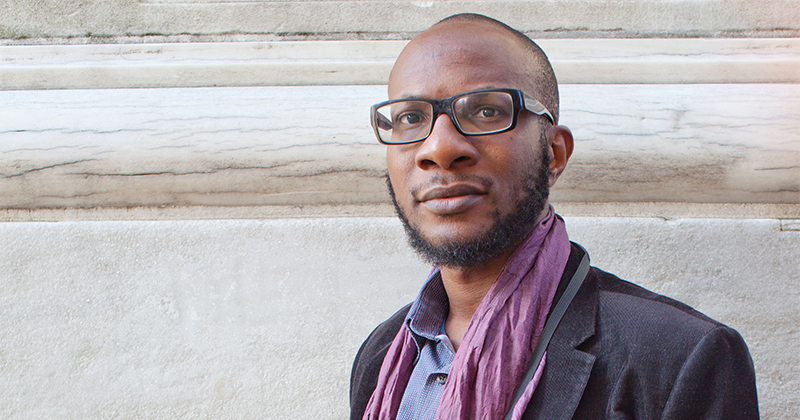 |
| Nigerian-American author and Harvard Professor Teju Cole |
Published 7/22/20
Open City (2011)
by Teju Cole
I recommended W.G. Sebald to a friend and she responded by mentioning Teju Cole, the Nigerian-American writer (and Professor of Creative Writing at Harvard University) and his debut (and only) novel, Open City, which was widely compared to W.G. Sebald when it was published in 2011. The comparison is apt, though there is more structure and character development in Open City than in any of Sebald's work. The combination of observational geography and cultural essay is coupled with a genuinely engaging story about the Nigerian-American psychiatrist, Julius who narrates Open City.
I listened to the Audiobook which was great- I guess the print edition eschews punctuation and paragraphs, something I didn't notice listening to the Audiobook, which flows like you are listening to someone speak to you- not a common quality for contemporary literary fiction.
Published 4/29/24
The House of Mirth (1905)
by Edith Wharton
New York City, New York
New York: 53/105
Manhattan: 9/34
I'm really cruising through Manhattan on the strength of all the books I've already read- mostly for the 1,001 Novels to Read Before You Die project. The House of Mirth is another one of those cross-over titles. I'm not a huge fan of Edith Wharton although it is hard to ignore her status as a fore-runner of our modern, celebrity obsessed culture. Here is the post I wrote almost ten years ago, back in 2013:
 |
| Of course Gillian Anderson has played Lily Bart in a movie version of Edith Wharton's 1905 novel, The House of Mirth |
Published 11/12/13
The House of Mirth (1905)
by Edith Wharton
I read this whole novel under the mistaken impression that the Author was Evelyn Waugh. So.... yeah. Evelyn Waugh is a dude, of course. Pretty funny that. Although the modernity of milieu (upper class New Yorkers around the turn of the century) is fresh, the story is a familiar one, the decline and fall of a young woman with taste and no money, raised to marry, and who fails to marry.
Hard to imagine that Henry James was in his proto-stream of consciousness mode at exactly the same time Wharton was turning out work that could have been published 80 years before without even changing the names of the characters. Frankly, I preferred The House of Mirth to James' dense and near unreadable The Ambassadors. They both document the same people, more or less, but The House of Mirth is a lark and The Ambassadors is a slog, and The Golden Bowl is damn near unreadable. All three books were released within a couple years of one another but the difference between Wharton and James is like the difference between a horse drawn carriage and a car. Some surface similarities, but the car has an engine, and the carriage has a horse.
I rather liked Lily Bart, the Becky Sharp (Vanity Fair) of the book. To read the novel through history is to become intimate with a succession of fascinating, beautiful women who are obsessed with marriage. It's quite the cultural quirk when you stop to think of the specificity and limited life experience of the main characters of all marriage centered novels written until well into the 20th century.
It certainly shows you who the fuck the Audience was for all these novels- the exact same women. These women actually appear in the pages of The House of Mirth, a kind of precursor of the celebrity culture of the 20th century. During her decent into obscurity in the last third of the text, Lily Bart runs into "fans" who read about her set in the society pages of the newspapers. Bart's decline mirrors the later day rise and fall of "celebutantes" today and "it girls" of yesterday. Lily Bart is maybe the first character in a Novel of this nature who comes off as a modern girl.
Certainly her tragic death (at the hands of morphine she took in drop form to sleep) is very contemporary. I can't remember a similar drug od ending any other marriage plot type novel.
Published 4/30/24
Rainey Royal (2014)
by Dylan Landis
Greenwich Village, New York
New York: 54/105
Manhattan: 10/34
Rainey Royal by Dylan Landis belongs to a well established category in 1,001 Novels: A Library of Ameria, a bildungsroman written from the POV of a quirky teenage girl grappling with difficult family circumstances. The characteristics of the protagonist. difficult family circumstances and geographic location change, but not much else. As an example of things that don't change from book-to-book: Use of a first-person narrator with framing from an unnamed third person narrator, a narrative arc that starts just before puberty and ends after puberty, parents who "work" in a wholly unconvincing way and who say things real parents never tell their children.
Here, we are dealing with the white daughter of a single dad who is a jazz musician in Greenwich Village in the 1970's. The most unusual aspect of this novel is that Landis uses a format of linked short stories rather than conventional straight chronological narration. Not that I noticed, I thought she was just skipping forward in time. Rainey and her family weren't particularly interesting, they reminded me of lots of troubled/artistic families I knew in the Bay Area growing up in the 1980's and 1990's. Nor, for that matter, is the author's depiction of Greenwich Village in the 1970's. There just wasn't much for me love about this book.
Published 5/1//24
The Dakota Winters (2018)
by Tom Barbash
1 W 72nd St, New York, NY 10023 New York: 55/105
Manhattan: 11/34
I wanted to dislike this well-observed book about life in The Dakota- famous residence of John Lennon and others- set in 1979/80- right before Lennon was murdered, but I just couldn't dislike it. Whatever the merits of basing your work of fiction on the very real John Lennon, whose murder forms the end point of the plot, The Dakota Winters is an affecting portrait of NYC in the bad 70's. Personally, I don't hold with the good/bad dichotomy that surrounds the narrative of US city life. In my mind, the bad is part of what you should WANT in city living. If you don't want the BAD go live in the suburbs where that stuff doesn't exist. If you do live in a city with some negative energy, learn to embrace it, or at least come to terms with it, and shut the fuck up about it already.
Not that Anton Winters, the narrator sees a huge amount of the bad beyond what is filtered through the screen of his father, Buddy Winters, a Charlie Rose-esque figure who recently had a mental breakdown on the live tv and walked off his highly succesful late night network talk show. Son Anton was in Gabon at the time, in the Peace Corp and has returned home after fighting off a bad case of malaria in Africa. Now Anton is back, and by back I mean he is living in his parent's place at famed building The Dakota. His neighbors include, among others, John Lennon- Barbash/Anton pay lipservice to the others- Leonard Bernstein is mentioned at least a half dozen times but never shows up, but Lennon is front of center. I would say I was surprised that there wasn't more controversy back in 2018, but I suppose his estate must have simply signed off on the portrayal. The Lennon character refers to bad behavior in public in the past tense, but you never see him hitting women or doing drugs beyond marijuana in this book.
The plot is a bildungsroman with influences of Stefan Zweig, Whit Stillman and Wes Anderson- though it is probably more accurate to say that Barbash and Anderson read the same books growing up. Basically, it is the world of a privileged, eccentric extremely nuclear (no grandparents, aunts, uncles or cousins) Upper West Side showbusiness family over this period of time. Barbash does a great job, and especially if you are a John Lennon fan and a Wes Anderson fan- The Dakota Winters will hit a sweet spot.
It makes for a good listen because it's basically just Anton Winter talking for the entire book or having conversations with other people- no challenging literary technique at work here, and it isn't too long- under ten hours.
While I was a considering this post, I also had the insight that the book review rating system that Lithub uses: "Rave"/"Mixed"/"Pan" is really accurate- there only are those three categories since book reviewers rarely if ever assign numbers to their reviews a la music and film critics. The vast majority of reviews- maybe 80 percent? Are in the mixed/respectful category where you might get a heavier description of the plot/characters but the less in the way or endorsement, or a cautious endorsement at the end. Raves usually lead with the Rave and will indulge in hyperbole. Raves also discuss the author and issues outside of the book itself far more frequently as a way to give context to the rave. Pans are the rarest- considering the number of authors who review books it is easy to see why only the bravest/stupidest people out and out pan a new release of literary fiction- karma is a bitch.
Published 5/2/24
Maggie: A Girls of the Streets (1893)
by Stephen Crane
The Bowery, New York
New York: 56/105
Manhattan: 12/34
This is Stephen Crane's first mention on this blog! He was omitted from the 1,001 Books to Read Before You Die List...which... wasn't a surprise exactly, the fact that many schoolchildren for many decades read The Red Badge of Courage in Junior High presumably didn't mean much to the UK based editorship of the 1,001 Books to Read Before You Die project. Maggie is generally an early example of American Realism- if you listen to the Audiobook as I did the "Youse guys" accents will evoke mirthful memories of the Little Rascals. Practically all the dialogue is screamed by the various characters- much of Maggie reminded me of watching a Harold Pinter play: People with working class accents driving one another insane.
I loved the 19th century American dialect- a decent reason to go back and look at other American books from this period in Audiobook format. I felt back for Maggie- her Mother and Brother really treat her poorly for no reason. I wish there were more books from the 19th century in the 1,001 Novels: A Library of America.
Published 5/3/24
Triangle (2006)
by Katherine Weber
Washington Place, Greenwich Village
New York: 57/105
Manhattan: 13/34
The Triangle Shirtwaist Factory fire on Saturday(!) March 25th, 1911 was the deadliest industrial disaster in the history of the city and Triangle is the second novel on 1,001 Novels: A Library of America list devoted to a fire-induced disaster (Masters of Illusion: A Novel of the Connecticut Circus Fire). 146 people died- mostly women working at the factory. Some of them died jumping out the windows to escape the flame. The owners of the factory escaped and were tried for manslaughter but acquitted after one of the few surviving workers gave testimony which exonerated them.
This novel is about the "oldest living survivor" of the fire- living in a Jewish rest home in the Village when the book takes place. The protagonist is her grand daughter, a genetic scientist married to a musician who makes music out of scientific information. He sounds almost exactly like the artists Matmos, though the adulation and acclaim he receives in the book is way beyond the attention Matmos has received.
Triangle functions more as a history lesson than a succesful novel- Weber actually does put together a decent third act twist, but there isn't much in the characters or the plot besides the third act twist- just this lady and the scholar interested in her dead grandmother talking in a room about events that happened a hundred years ago. I can see why this book is included on the 1,001 Novels: A Library of America, depiction of an important historical event and all, but it wasn't a great read and not a book I would recommend.
Published 5/6/24
Bread Givers (1925)
by Anzisa Yezierska
The Lower East Side, Manhattan
New York: 58/105
Manhattan: 14/34
Really feeling like I've passed the hump on the New York section of the 1,001 Novels: A Library of America list. Not a huge number of surprises on the list thus far, and no Manhattan Murder Mystery's as of yet- proof that you don't need filler to paint a literary portrait of the PEOPLE of New York City. Like Triangle, Bread Givers lands us amongst the Jewish immigrants on the lower east side in the early 20th century. It's not exactly my people- who were midwestern Jewish immigrants in the early 20th century, but I'm thinking this is the closest I'm going to get, since there aren't many midwestern Jewish immigrant authors out there.
I call Bread Givers an example of the Martin Eden genre- an American immigrant/first generation native from a lower socio-economic background who struggles against family (or lack of a family) and the indifference of America to create themselves as an educated member of the professional class. These titles blend florid descriptions of urban poverty, working class characters and a burning desire by the protagonist to achieve something more than their circumstances. Here, the protagonist is the youngest daughter of a Russian-Jewish immigrant family. The mother, the daughter of a wealthy Jewish merchant and the Dad a Rabbinical scholar. In the old country this pairing was quite common- the husband being a variety of "trophy husband" who was supported by his father-in-law and not expected to work to support the family.
This was all well and good in Europe/Russia, but America was, as they say, a different kettle of fish, and basically all of the conflict in Bread Givers is caused by the Dad's refusal to work, and his insistence that it is the duty of his daughters to support him.
Published 5/7/24
Starting Out in the Evening (1998)
by Brian Morton
Upper West Side, Manhattan, New York
New York: 59/105
Manhattan: 15/34
If there is one subject, artistically speaking, that I would happily exclude from future reading it would be relationships between much older men and much younger women, particularly those that take place between members of higher income/education socio-economic groups. Haven't we all heard enough about 70 year old men fucking 20 or 30 something women? It's sad, it's gross and there is so, so, so much of it out there already that a book like Starting Out in the Evening- which was made into a feature film a decade later, for pete's sake, now seems out of touch.
I'd never heard of Morton before this book- certainly I hadn't seen either of the movies that have been adapted from his books. The story here is about a semi-succesful novelist- four novels over the course of a lifetime, two good ones and two not so good. He's retired, living on the Upper West Side. His daughter, Ariel is a mess- an-ex dancer who teaches housewives aerobics and spends way too much time thinking about her dad. Enter Heather Wolfe an ambitious young writer-scholar, who wants to write about the novelist. Spoiler alert, they fuck. She writes a not-so-amazing thesis on the author (Schiller is his name) and then he has a stroke. Ariel gets back together with her old boyfriend. Can't imagine how this book made it onto the 1,001 Novels: A Library of America, one of my least favorite books out of New York.
Published 5/8/24
Night Song (1961)
by John A. Williams
New York: 60/105
Manhattan: 16/34
The Manhattan chapter of the 1,001 Novels: A Library of America project has been boring. I think... this stems from the fact that editor Susan Straight is trying to give equal wait to the different cultural and socio-economic groups and books about the lower tiers of the socio-economic scale have a depressing sameness (so do books about the higher tiers of the socio-economic scale, of course). How many times can one reader be subjected to the similar struggles of day-to-day life from the POV of poor, uneducated people. I believe the answer for this project is going to be something like 300 to 400 books. Compare that to the sweep of the 1,001 Books to Read Before You Die list, which has books from all times and places but few that chronicle day-to-day life from the perspective of the working poor. It's so rare that the times and places where it does happen: English Kitchen Sink books from the mid 20th century, the French naturalists of the 19th century- come readily to mind.
Night Song is more along the lines of what I'd like to read- a thinly veiled bio-fic about a thinly veiled Charles "Bird" Parker: musician and prodigious heroin addict. Williams, who died in 2015, had a decades long reputation as an underappreciated writer from the "second Harlem Renaissance," but he rejected those comparisons and put together an iconoclastic career- including a critical biography of Martin Luther King Jr. that was unfortunately published in the aftermath of his assassination. One interesting facet of this book, which is worth reading simply for its portrayal of the Greenwich Village jazz scene in the 1950's, is that Williams includes a white character who has interior thoughts which is extremely rare in books written by African American authors. In African American fiction from New York white people are either absent, present as villains or presented as well-meaning do gooders who are more of an annoyance than a help. My sample here is the 40 or so books out of the 60 books I've read out of New York.
Night Song is sure to be in my top 10 for New York.
Published 5/8/24
Ms. Hempel Chronicles (2008)
by Sarah Shun-lien Bynum
"Manhattan"
New York: 61/105
Manhattan: 17/34
Half-way through Manhattan but with another potential bottom 10 book, Sarah Shun-lien Bynum's dull set of interlinked short stories about Ms Hempel the "cool" teacher at a (private?) Manhattan middle school. I am well aware that editor Susan Straight has selected numerous books set at schools (not so many set at colleges so far) in her 1,001 Novels: A Library of America project. Certainly it makes sense- it is hard to get more bang for your portrait-of-a-community novel than one set in an urban grade/middle/high school- all the teachers, all the parents, all the kids. Why, if you are clever enough you can include a half dozen or more different individual perspectives among the cast of characters. On the other hand you have the fact that every novel set within a school involves characters who live boring lives unless they are sad lives. School teachers are boring people, sorry teachers. I'm glad they exist but I'm not a "teachers are heroes" type.
As far as the Manhattan location goes- I couldn't even tell this book was set in Manhattan. I actually double checked the master list to make sure I was reading the right book. You'd think, at least, they'd go a recognizable museum at some point. Ms. Hempel suffers no indignities from living in Manhattan on a teacher salary, which I believe to be literally impossible. It was all very "why am I reading this book?"
Published 5/10/24
Fin & Lady (2013)
by Cathleen Schine
New York: 62/105
Manhattan: 18/34
Thankfully, Fin & Lady, a comic novel by author Cathleen Schine about a wealthy orphan and his guardian half-sister set in Greenwich Village in the 1960's is neither tedious nor excruciating, and I actually enjoyed the Audiobook listening experience. I've accepted that the 1,001 Novels: A Library of America is about representing ALL Americans without regard to race, religion or economic class, but as I've observed before, books written about socio-economically disadvantaged groups- of all races- has a dreary sameness: The kids wants to escape (or are so downtrodden they can't imagine escaping), the parents are trying to survive, the world around them is limited to a block or two (city version) or whatever local town the action is located (country/suburb version)- no one goes anywhere, no one does anything except suffer and try to survive.
Novels about the well educated at least have characters who can make interesting observations about the world beyond their own immediate experience, and they tend to feature in books that have more than one setting. On the other hand, the problems of the wealthy and educated are far less interesting than the continuous theme of "survival in America" in every book about the poor and less educated. When I'm reading books like this one- about a precocious orphan and his flighty older half sister- I am quite frequently struck by the thought that every problem in the book could be solved by the main characters going to a gym once a week and running on a treadmill for half an hour.
In my experience there is no variety of angst- existential or otherwise that can not be overcome by running for an hour (or half hour). On the other hand, if you don't have enough money to pay rent or buy food for your children, running isn't going to help. In the case of Daughter- it might even get you killed by NYC cops.
Fin & Lady is a decently entertaining comic novel. It will likely rank in the middle tier when I complete the New York chapter of the 1,001 Novels: A Library of America project. Nothing in this book made me want to read more books by Cathleen Schine, but I would be open to the idea if the opportunity presented itself.
Published 5/13/24
Lipstick Jungle (2005)
by Candace Bushnell
"Manhattan"
New York: 63/105
Manhattan: 19/34
I am no Sex an the City hater. I am speaking, of course, of the show/movie, not the book- which was a compilation of columns that Bushnell wrote on the subject of sex and the single girl in New York in the 90's. I watched the original show, more or less, and definitely saw both films in the theater. I'm not at all into the new series, who has the time for a show that is so utterly predictable and devoid of surprise, but I am in no way "above" Bushnell and her books.
That said, this was my first Candace Bushnell novel and I found it all totally depressing in print and spread out over 550 pages. Bushnell adheres to the plot made familiar by generations of girl lit: Three close friends and Manhattan "alpha females" struggle to strive and survive in the concrete jungle (Manhattan). The saddest thing about this book and its characters is the obsession with status derived from working at the pinnacle of a corporate hierarchy. I can't think of a worse way to make a living as a wealthy individual except maybe being a partner at a top law firm. It's just such thankless, meaningless work, and as the characters here are constantly saying to anyone and everyone, it can all go away in a second because you are always being judged by someone further up the chain of command.
Any questions raised about the "why" of it all is limited to either a) complaining about things not working out the way they planned or b) idle musing about escaping it all by abandoning one's responsibilities and running away. That sounds like everyone I know in LA, including my own partner. I was not amused.
Published 5/15/24
The Ten Year Nap (2008)
by Meg Wolitzer
Upper East Side, Manhattan
Manhattan: 20/33
New York: 65/105
I'm firmly into the hardcover library check out/Ebook era for the remainder of Manhattan, having exhausted the ready supply of Audiobooks from the Los Angeles Public Library. My eyes remain in Manhattan even as my ears have moved on to Brooklyn, Queens, Long Island and Staten Island, the last sub-chapter of the 105 titles listed for New York within the 1,001 Novels: A Library of America project.
The Ten Year Nap is actually a perfect example of the kind of book I absolutely hate, regardless of literary merit or popular acclaim. It is ensemble novel about a group of post-9/11 Upper East Side Moms, with a level of diversity that ranges from a WASPY super mom who works and holds down a prestigious job to a Jewish lady who inherited a shitty one bedroom apartment from her merchant parents, where she lives with her puppeteer husband and their kids. The link between the Mom group is a private grade school where their children attend.
Wolitzer weaves together several of these characters and gives each their own voice. Unfortunately for the reader, none of the individual episodes are particularly interesting: An affair! A husband cheating on his expense reports (!?!). A mother who is afraid she doesn't love her adopted Romanian orphan baby, who also might be developmentally delayed. As with all novels documenting the vicissitudes of life for the generally well off and well educated, I can't shake the feeling that none of it is worth reading. Honestly, all these characters and their kids could have died in a private school bus crash at the end of the book and I would have gone, "Huh." and moved on with my life. In fact, such an ending would have been amazing here.
Published 5/17/24
The Price of Salt (1952)
by Patricia Highsmith
Manhattan, New York
Manhattan: 21/33
New York: 64/105
I think I haven't read enough Patricia Highsmith. If I had to characterize my taste in authors I like writers who are sharp, cruel and unsentimental. I've got a fondness for genre- detective/science fiction/fantasy and I'm more interested in unusual perspectives vs. conventional perspectives. Patricia Highsmith ranks high on all these qualities. She's a misanthrope, she's responsible for an iconic character in 20th century crime fiction and she was a pioneering LGBTQ voice.
I was genuinely enthusiastic when The Price of Salt appeared in my 1,001 Novels queue. The endless procession of sad single moms and teenage girls stuck in their bedrooms has been educational but repetitive. This was book was originally published under a pseudonym, and the publication history reminded me of what William Burroughs went through for Junkie- both are works of literary fiction published as pulp fiction because the subject matter was too outré for the literary fiction market. It's crazy how forbidden this subject was back in 1952 since The Price of Salt is basically a lesbian love story with a happy ending.
It was, at any rate, an enjoyable read. I feel like this description applies to maybe half of the books on the 1,001 Novels: A Library of America.
Published 5/28/24
Collected Short Stories (1994)
by Grace Paley
Lower East Side, Manhattan
Manhattan: 22/33
New York: 71/105
Grace Paley is a real discovery for me- I can't believe it took the 1,001 Novels: A Library of America to introduce me to her. Certainly Paley, who only wrote short-stories in her literary career, was decades ahead of her time and published her first collection of stories in 1959 when neither the form nor her perspective, that of a working-class woman/activist from the lower east side wasn't highly valued by the audience for literary fiction. Listening to these short stories in Audiobook format- narrated by the author herself, was nothing short of revelatory- truly Paley was a major talent and she continues to be underappreciated, as witnessed by my ignorance of her existence in 2024 before the 1,001 Novels: A Library of America project.
I loved both the technique and the content of these stories, which give voice to women of my Grandmother's generation. My own Grandmother was institutionalized and subjected to shock treatment as a young Jewish woman in the early 20th century, and she would never talk about it at all, ever, and I feel like women of her generation were actively told to shut the fuck up or else and that getting sent to the crazy house was the or else. Seeing a writer like Paley freely express herself in these stories brought joy to my heart. She didn't get sent to the crazy house and told to shut up, or at least, she didn't listen.
This collection is sure to be in my top 10 for this chapter and it has a shot at being the top book period.
Published 5/29/24
The Final Revival of Opal and Nev (2021)
by Dawnie Walton
Hell's Kitchen, New York
Manhattan: 23/33
New York: 72/105
Unclear how I missed this oral history style book about a fictional rock duo back in 2021. I guess the answer is, "the pandemic," but the New York Times published a rave review and the Amazon listing has over 2000 reviews, which is pretty decent for any work of fiction that isn't an absolute idiot fest AND it's about the music industry which is an area of special interest to me. But miss it I did. I was happy to read it as part of the 1,001 Novels: A Library of American project since it is neither a work of YA lit nor a bildungsroman about a sad girl in her bedroom- that is basically all it takes to get me excited about a title on the 1,001 Novels list roughly 20 percent of the way through.
Despite most of the action taking place in New York City, it isn't much of a New York book since the text is mostly transcribed interviews of people recounting historical events. One of the weaknesses of the oral history format, similar to what you see in epistolary novels, is that the speakers just go on forever about everything, so you don't get the type of editing that might condense an otherwise unwieldly narrative into something more compact.
Walton did a great job of making the fake story of Opal & Nev sound believable. Certainly a reader with no professional knowledge of the music industry would find no reason to poke holes in this book but I found myself wondering if Opal was getting publishing royalties or not, if she was properly credited as a songwriter and how her independent label managed to get promotion and distribution equivalent to that of a major label in the time before punk rock, when indies were a rare commodity.
Published 6/3/24
The Last of Her Kind (2005)
by Sigrid Nunez
Manhattan, New York
Manhattan: 24/33
New York: 73/105
Sigrid Nunez won the National Book Award in 2018 for The Friend, about a writer who takes possession of a Great Dane after the suicide of a friend and mentor. I was surprised when it won- having never heard of Nunez before (to my embarrassment, not to say she was in any way obscure.) I read What You Are Going Through, her 2020 follow-up book, which is about an unnamed narrator who is asked to help her friend commit suicide. After that, I went back read her 2010 book, Salvation City because it had a dystopia/post-apocalyptic setting.
I skipped The Vulnerables, her 2023 offering, because it didn't sound interesting, "Elegy plus comedy is the only way to express how we live in the world today, says a character in Sigrid Nunez’s ninth novel. The Vulnerables offers a meditation on our contemporary era, as a solitary female narrator asks what it means to be alive at this complex moment in history and considers how our present reality affects the way a person looks back on her past."
Hard pass! Now four books in to the bibliography, before reading The Last of Her Kind I would have put Nunez on my "only if I have to" list, i.e. only if a book she publishes is a big hit, is nominated for a major award or is about a theme of particular interest to me. After reading The Last of Her Kind I think I need to re-evaluate that position, because The Last of Her Kind is a genuine killer of a novel. Again, the nature of the excellence of The Last of Her Kind is difficult to explain without major spoilers, but suffice it to say that it is far from the pedestrian 60's era bildungsroman it appears to be from the opening chapters.
I put off reading this book for a month because of what I THOUGHT it was about, and once the plot kicked in I raced to complete it over the course of a single afternoon, like, I genuinely wanted to see how things turned out. I wouldn't describe any of her other books this way, including the book set after the apocalypse. Her other books aren't low stakes, exactly, but adhere more to the style of the European novel-of-ideas than the style of creating a satisfying plot for a general audience reader.
Published 6/4/24
New York, My Village (2022)
by Uwem Akpan
Hell's Kitchen, New York
Manhattan: 25/33
New York: 74/105
New York, My Village certainly qualifies as what I call a "Novel POV" novel, where the perspective of the author is likely a first for a likely American audience member. Here, the POV is that of the non-Igbo Nigerian nationalities who suffered at the hands of the Biafrans during the Biafran war. It is a long, fairly complicated history, but basically the Biafran war was an attempt by the Igbo minority to rebel against the majority-Muslim ethnic groups of the North, who, it was felt, held a privileged position within the post-colonial state. Unfortunately, Igbo territory was not populated solely by Igbos and other ethnic groups, here it is the Anaang, were treated vilely by the Igbo rebellion because of their lack of loyalty to the secessionist cause. These crimes were covered up both inside and outside Nigerian by a generation of Igbo apologists, and because the Igbo themselves came out badly as well. The most notable Igbo apologist is also, arguably, the most famous African author, Chinua Achebe. Achebe never came to terms with the violations committed against the Anaang and other groups.
Unlike many POV novels, New York, My Village doesn't have the typical permanent immigrant struggling to adapt to life in American while dealing with the trauma of the past. Rather, the narrator is a well-off publisher who wins a fellowship to stay in New York City and work on an anthology of Anaang short stories about the Biafran war while working inside a mainline New York City publishing house. Akpan covers some of the recurrent themes of African diaspora literature: The failure of most Americans to have any understanding of one's particular ethnic experience prior to arriving in America, difficulties mastering the social customs of a new land and the difference between people from Africa and African-Americans.
I ended up learning plenty about the Anaang and their trauma, but Akpan is also a funny dude and the subplot involving bed bugs in his illegal sub-lease injects humor and dramatic tension into the narrative.
Published 6/5/24
Heartburn (1983)
by Nora Ephron
Apthorp Building, West 79th Street and Broadway, Manhattan, New YorkManhattan: 26/33
New York: 75/105
The Audiobook edition I checked out was narrated by Meryl Streep! Of course, we all know Nora Ephron as the amazing writer-director who defined the rom-com for a generation (my parent's generation, more or less), but I didn't know she also wrote this novel, about a woman, seven months pregnant, who discovers her Washington pundit husband is cheating on her. I see now that Streep played the Ephron character in the film so the Audiobook makes sense. Heartburn was loosely based on her marriage to Watergate reporter Carl Bernstein. Like you would expect, Heartburn is filled with charm and whimsy, so I found the behavior of the 30 somethings in the book to be despicable- who cheats on his wife when she is seven months pregnant? Journalist Carl Bernstein. But overall it really does hold up over forty years after publication- her observations still evoke laughter.
Published 6/10/24
The Mambo Kings Play Songs of Love (1989)
by Oscar Hijuelos
Manhattan
Manhattan: 27/33
New York: 76/105
Oscar Hijuelos won the Pultize Prize for The Mambo Kings Play Songs of Love in 1990. The copy I checked out from the library said, "The first latino to win a Pulitzer Prize" which sounded insane, but it's true. I think I'm the record re my lack of respect for the Pulitzer. To be fair I've read 11 of the past 13 winners. Before that point in time it's patchy. It was nice to knock this book out under the auspices of the 1,001 Novels: A Library of America, where it represents the Cuban-American experience in New York City. Cuban-Americans join Haitian-Americans, Puerto Ricans, Dominicans and Barbadians in the constellation of represented ethnicities from the Caribbean within the melting pot of New York City. Here is one observation derived from reading these books: Most of the ethnicities hang out solely within their own ethnic groups in the books selected for the 1,001 Novels: A Library of America. The number of genuine cross-cultural experience I've read about in this series is very limited. That also goes for socio-economic status, up and down the board, most novels only deal with characters from a single socio economic group. You would not expect that from New York City but I think it says something about the goal of most of these writers- which is to relate their own or their parent's experience in fictional form.
Or maybe it just speaks to the fact of a segregated society, even in the meltiest of melting pots. One perspective I have not embraced is that of the "macho" which is the name for a set of attitudes embraced by men from all over the Caribbean in several of the titles in the 1,001 Novels list. To be a "macho"- it's not used as an adjective but more like a proper noun- macho as a philosophy. The basic idea is that you have to be strong when you are with women and "show them who is the boss," whether by physical abuse or mental abuse. Obviously, none of these characters are particularly sympathetic, though you do come across women who embrace it a la stockholm syndrome. Today we call it "domestic violence."
The titular Mambo Kings are two brothers- one, shy and reserved, the other boisterous and flamboyant. The whole book is told as the flamboyant brother lies dying in a welfare hotel (presumably the location of the map point on the 1,001 Novels map) in flash-back form. The Mambo King, as he is known after his brother dies (no spoiler alerts for 30 year old books) has a few regrets, but he also has fond memories, mostly of screwing the putas with his big pinga. The sex scenes are frequent and graphic- pretty risqué even today. The Mambo King treats his women like shit, doesn't follow his Doctor's advice and dies alone and in pain in a welfare hotel. He did have some good times along the way! It struck me as a particularly sad existence, whether intentional or not on the part of the author.
I looked through his New York Times reviews- I think it is fair to say that from the perspective of the literary world he was a one-hit wonder. The reviews remained respectful (and he got reviews) but his obituary only mentions his other books in passing. Certainly, The Mambo Kings Play Songs of Love did not interest me in further pursuit of the Hijuelos bibliography.
Published 6/13/24
The Fortunate Pilgrim (1965)
by Mario Puzo
Hell's Kitchen
Manhattan: 28/33
New York: 77/105
Mario Puzo had one of those mid 20th century literary careers that is still recognizable today: Early struggles with works of "serious" fiction, like this book, his second novel, failed to bring him the success he thought he deserved. He decided to write a book that would sell and created a 15 page outline of The Godfather for his publisher. Film Producer Robert Evans got his hand on the outline, recognized the potential, and optioned the finished work- before it was published. Given the circumstances, there is no question that Puzo simply must have written The Godfather with the movie version in mind- I didn't know it at the time, but when I read The Godfather I thought it shared more similarities with the completed film based on the book than anything I'd ever read before.
The Fortunate Pilgrim was Puzo's love letter to his Italian-American mother, who, if the book is to be believed, raised a whole family by herself after her first husband died and her second husband went insane and died. There is no denying the serious intent of Puzo, but it also seems impossible to deny that he was anything more than, at best, a gifted story teller and at worst, a hack with impeccable timing. You might say the same about Francis Ford Coppola as well.
Still, there's no denying the pleasures of The Fortunate Pilgrim. I actually highlighted a bunch of prose that left me enthralled:
On this Sunday afternoon, when everything was still, the abandoned yellow, brown, and black railroad cars made solid geometric blocks in the liquid golden sunshine, abstractions in a jungle of steel and iron, stone and brick. The gleaming silvery tracks snaked in and out. - 62
And the narrow skull turned toward her, the face elongated in the bare-toothed grimace of a wild animal trapped in terror. a face of hopeless satanic madness. -118
The voice was the horrible hoarse voice that some whores have, as if torrents of diseased semen flooding the body had rotted the vocal cords. -253
It might be hacky, but it is also effective prose. The Fortunate Pilgrim does a great job fulfilling its location on the 1,001 Novels: A Library of America map- in Hell's Kitchen. This is a clear snapshot of the "before" when Hell's Kitchen was the breeding ground for Italian and Irish gangsters.
Published 6/17/24
Native Speaker (1995)
by Chang-Rae Lee
Manhattan: 29/33
New York 78/105
Chang-Rae Lee is yet another author who I would have missed but for the 1,001 Novels project- shame on me- Lee is a Professor of Creative Writing at Stanford University and he's written several interesting novels, including a dystopian-climate change type book that I immediately checked out after listening to the Audiobook of Native Speaker, his novel about a Korean-American corporate spy struggling with his current assignment, rooting out the secrets of a Korean-American New York City councilman from Queens while balancing the difficulties of his marriage in the aftermath of the death of his son during a freak birthday party accident.
Whenever a novel features a child recently deceased, I am reminded of the advice Checkov frequently dispensed to young playwrights, ""If in the first act you have hung a pistol on the wall, then in the following one it should be fired. Otherwise don't put it there." The corollary of a world where every writer of fiction, plays or otherwise, knows that proverb is that when a plot element is introduced, you know it is important. No one throws a dead child into the mix of a novel and then doesn't make it a central issue in whatever text follows. Contrast the treatment of dead children to that of parents, who are frequently and flagrantly killed off in the distant past without so much as a full paragraph of explanation and no further role to play in the plot.
And I am certainly not singling out Native Speaker as a particularly egregious example. His dead kid baggage colors the plot with his semi-estranged wife, but it's just one of a number of events (including recently dead parents as well) that emphasize the overall theme of the alienation of modern life as experienced by a non-traditional professional Korean-American. In fact, the most notable element of an otherwise familiar immigrant/family novel is his work, as a corporate spy for a shadowy (is there any other kind) outfit that specializes in non-white operatives.
His target is New York City councilman Henry Park, an implausibly popular Korean-American representing Queens. The plot reminded me of something Paul Auster would write, although in between Lee is heavy with the very culturally specific context of growing up as the son of a Korean immigrant made good father. Native Speaker is ultimately a book about the relationship between a man and his dead Dad, and coming to terms with that relationship, and the rest seemed like window dressing to get people interested in picking it up.
Published 6/18/24
Bright, Lights, Big City (1984)
by Jay McInerney
Manhattan: 30/33
New York: 79/105
I can't believe that American Psycho didn't make it into the 1,001 Novels: A Library of America. How on earth can you create a literary map of Manhattan without the office and restaurant scenes in American Psycho. My sense is that editor Susan Straight is determined to keep things PG unless it involves sex abuse suffered by the protagonist of a POV novel when she is a young girl- there are plenty of those scenes. Instead she has picked Bright Lights, Big City as her stand-in for the coked-out excesses of 1980's New York City.
My impression is that Bright Lights, Big City was part of the 1,001 Books to Read Before You Die list- but in preparing this post I realized it wasn't on that list, and that I'd never posted about Bright Lights, Big City. Certainly I've read it. I still remember of the cover of the Vintage paperback edition I read...it must have been in college or law school. Maybe high school, actually. I know I read Less Than Zero before high school so it makes sense I would have read Bright Lights, Big City as well.
Decades on I can still remember the feverish tone and the difficulties of being a New Yorker fact checker at day and a partying coke-fiend at night. I remember being amused by the idea that in the early 1980's you could work as a fact checker and afford to be a degenerate coke addict at the very same time, which never seemed plausible to me, even as a high school/college student with no practical experience in the work place.
Published 7/10/24
Washington Square (1880)
by Henry James
Washington Square, Greenwich Village, NYC
Manhattan: 31/33
New York: 83/105
It has been a decade since I last seriously read Henry James- 2013, to be specific, when I read What Maisie Knew, The Portrait of a Lady and Turn of the Screw- as part of the 1,001 Books to Read Before You Die project. I followed that up with The Bostonians in 2020 but somehow missed Washington Square. I'm not surprised that 1,001 Novels editor Susan Straight picked this book and the editors of the 1,001 Novels to Read Before You Die project skipped it because it was generally considered his biggest hit by the reading public and James himself didn't like it because it was too straight-forward.
I listened to the Audiobook and I enjoyed listening to James more than I enjoyed reading him, though I did see that back in 2013 I thought he was a real breath of fresh air after slogging through the literature of mid 19th century England. And once again, it seemed shocking that Washington Square was written in 1880, not 1925.
Published 7/11/24
The Side of Brightness (1998)
by Colum McCann
Manhattan: 32/33
New York: 84/105
Ireland is a location that forms authors of literary fiction the same way the pressures of central American cities form great basketball players- if you go to Ireland, the landscape inspires literary musings the same way the Venice Beach outdoor basketball courts inspire show-offy slam dunks during pick-up games. Case in point is Colum McCann- an Irish author and National Book Award winner who I'd never read before I started the 1,001 Novels: A Library of America.
Most recently he published Apeirogon, about the conflict in Israel/Palestine, told from the perspective of fathers on both sides who have suffered loss during the conflict. At the time, I was troubled by the confidence with which an Irish author who lives in New York wrote a book about Israeli and Palestinian characters. Reading This Side of Brightness, his 1998 book about a "sand hog"(workers who dug the tunnels for the New York City subway system) and his progeny, I was again taken aback by his confident depiction of African-American characters living in New York City.
McCann was the first Irish writer to win the National Book award for his 2009 novel, Let the Great the World Spin, which was about 9/11 and that dude who tightrope walked between the twin towers back in the mid 1970's. Anyway, if you read anything about McCann you will learn that he is a huge advocate for writing as an empathy generator- I agree and that almost of all (all of them?) involve writing stories that share little or nothing in common with his personal background.
This book, which flashes between historical backstory about this particular family, and the present, where a man named "Treefrog" lives as one of the Mole People of the New York City subway system. It was nice to see the Mole People represented in the tapestry of New York City but overall I thought his characterization of the experience of this mixed-race New York City family wasn't particularly coherent, and several of the plot points seemed rote or stereotyped.
Almost at the end of the Manhattan sub-chapter, with the rest of NYC and New Jersey also in range for completion. New York City has been rough- it truly is a concrete jungle, and more so for the folks at the bottom of the socio-economic scale. I am consistently surprised, however, by the passivity of he protagonist in many of these books, and how few of them take it upon themselves to leave their dysfunctional surroundings and start anew somewhere-anywhere- else. I guess that wouldn't make for an interesting novel- no struggle, no trauma, no publisher.
Published 7/15/24
Behold the Dreamers (2016)
by Imbolo Mbue
Lehman Brothers Building, Wall Street, Manhattan
Manhattan: 33/33
New York: 86/105
Woop Woop that is all for Manhattan, baby. I won't miss the rat infested apartments and swarthy immigrant families- of all races, genders and socioeconomic status. The immigrant experience has been at the fore of the Manhattan sub-chapter of the 1,001 Novels: A Library of America- I count 9 out of the 33 books located on the island of Manhattan. Fitting then, we finish with a 10th book about the immigrant experience- and one of my favorites, Imbolo Mbue's debut novel, Behold the Dreamers, about an economic migrant from West Africa and his family, and his job as the chauffeur for a partner at Lehman Brothers, just before and during their collapse.
It's not the first time Lehman Brothers has popped up this year. I recently read The American Slave Coast: A History of the Slave Breeding Industry (2017) by Ned and Constance Sublette and the Lehman Brothers were a whole chapter as the example, par excellence, of the links between 20th century high finance and the slave trade in the American South (Lehman Brothers got their start as slave-trading middle men.) I was mildly surprised not to see this fact established by any of the characters, and I was left wondering if it was the author himself who didn't know, or if he did know, picked Lehman Brothers for that purpose, and then decided none of his characters would know about that fact, so decided to omit any further discussion. Anyway, that would be the first thing I would point out in a book about the relationship between an African immigrant chauffeur and a Lehman partner in the early ought's.
Beyond that incongruity I quite liked Behold the Dreamers both in terms the characters and the mechanics of the book which center around the experience of an African immigrant that time and place. I also liked his treatment of the immigration legal system which I found to be sophisticated and nuanced in a book written by a non-lawyer. At the same time, the writing wasn't overly technical or erudite, his portrayal of his aspirational immigrant family, living in a quasi-legal state while they actively try to defraud the US Immigration System (which is just treated as a fait accompli.) was also well executed.
I was just generally impressed by the technical acuity of the prose writing, if not by the characters themselves, who are all morally culpable for various reasons.
Published 8/8/24
Dominicana (2019)
by Angie Cruz
Audubon Ballroom, 3940 Broadway, New York
Manhattan 34/33
New York: 92/105
Looks like I miscounted both Manhattan, which is now at 34/33 and the Brooklyn etc area, which is down to 26 from 28. I was under the impression Dominicana, about a child-bride (15) who is brough from the Dominican Republic as the wife of a Dominican immigrant, was set in Brooklyn or Queens. If I knew more about New York I would have caught my mistake, since she ends up living across the street from the famous Audubon Ballroom, sight of the Malcolm X assassination. I was more inclined to read this book as a horror story than any other genre, though it's clear the author has no such intent in mind. Dominicana is another example of the "dim bulb" narrator problem in the 1,001 Novels: A Library of America. In seeking to present a complete geographic socio/economic portrait of America, one is forced to read about the legions of citizens with little formal education and limited economic/social success. Nothing against Ana, who seems almost overly bright considering her situation: brought to the US at 15 with little formal education and literally locked inside her apartment, where she is subject to emotional, mental, physical and sexual abuse on what is essentially a daily basis.
Clearly, the point is to show Ana as a hero, and she is that, but she is also a young woman who doesn't speak English and is literally locked in her apartment for more or less the entire book. I'll tell you something else, which is that Dominican men come off extremely poorly in the pages of A Library of America. Oscar Wao is a sympathetic Dominican but the rest of them are portrayed almost universally as wife-abusing brutes, obsessed with their code of machismo. I can't believe how matter-of-factly domestic abuse is accepted by the women in these books, and that's speaking as someone who has worked dozens of domestic violence cases in criminal court. I mean these are novels, not real life, can't there be some hope for these poor women?
I listened to Dominicana as an extremely tedious thirteen hour audiobook. Locked inside the voice of 15 year old Ana, the listener suffers along side her in a most unpleasant fashion- and I'm saying that as someone who is 50 plus novels deep into this type of trauma-lit as a result of this particular project. If I could do it over I would have read the book.


 Instagram