Classic, Romantic & Modern
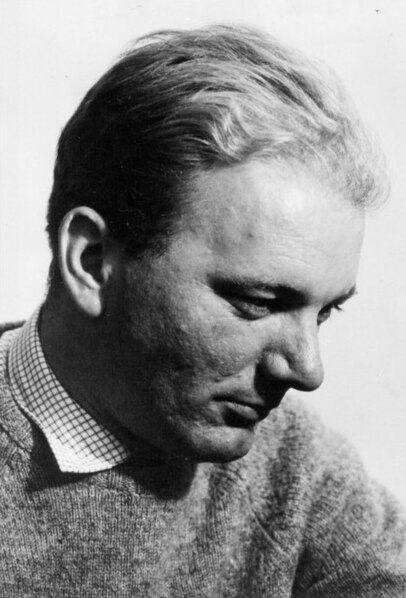
by Jacques Barzun
p. 1961
Little, Brown & Company
Jacques Barzun is a prolific academic/writer- still alive! He taught at Columbia History and is credited by Wikipedia with being a founder of the discipline of Cultural History. Classic, Romantic & Modern is his circa 1960s take on the three major styles of artistic production in the last three hundred years: Classic, Romantic & Modern. Alas, this book was written before Post-Modernism emerged as a stand-alone art style, but my sense is that Post-Modernism bummed Barzun out.
The main point of Classic, Romantic & Modern is to attack the 20th century critics of Romanticism, and, at the same time, to point out that those same critics don't know what the fuck they are talking about. As illustration, he provides a 20 page chapter simply quoting different usages of the term "Romantic" to mean a myriad of different and sometime diametrically opposed qualities.
The gravemen of Classic, Romantic & Modern is to point out that Classicism and Romnaticism extend in time and space to encompass different values, but that their heart, Romantics are motivated by energy to expand definitions, explode conventions and break existing rules. On the other hand, Classicism represents the opposite trend: To create and obey laws and rules, and cabin expectations.
In this way Barzun seeks to limit criticism of the Romantics to their actual, and not imagined traits. Ironically, writing in 1961 he wrote too soon to see the Beat era revival, so his section on Modernism represents a criticism of the same late 50s/early 60s millieu that caused more radical critics to proclaim the death of Art. Barzun echoes that criticism: That mass production and the extension of high art to middle brow and low brow markets entails the death of that Art, but his heart doesn't seem to be in it, so to speak.
Perhaps that because Barzun, with his fondness for detective fiction, had a weakness for middlebrow and low brow- certainly you would expect that from a founder of the cultural history discipline.

DIRTY BEACHES TARLABASI 7" BRONSON ITALY VINYL
one from local Italian promoter Bronson in Ravenna.

DIRTY BEACHES DUNE WALKER 7" GERMANY SLOW BOY
and the other one is from Slow Boy label in Cologne.
Good luck getting copies of either: LET ME KNOW IF YOU FIND THEM FOR SALE.


Published 2/22/12
Colleen Green
Milo Goes To Compton LP
2012
ART FAG RECORDINGS
I'm reading this book by Bruno Latour called We Have Never Been Modern, and without being too much a pretentious asshole, in a record review on a blog, I think his main point in that book is relevant to any review of Milo Goes To Compton, which is, in my mind, a masterpiece of disciplined musical excellence
Latour's point in We Have Never Been Modern is that the critical process of "demasking" or "revealing" self destructed once intelligent people realize that would-be Modernists can destroy any argument by switching their style of argument from one discipline to another.
To illustrate this situation, take the field of popular music and critical responses to "lo fi" or home recorded material. Critics in favor of such music will argue that the purity of the recording process outweighs a relative lack of technical acumen. Critics who dislike such music will argue that Art without technical expertise is impossible to enjoy and fails to achieve the goal of giving pleasure to the listener. Who's right? Both critics. Who's wrong? Both critics.
For me, Milo Goes To Compton brings to mind several different memories:
1. Seeing live performances by Colleen Green, Best Coast, Dum Dum Girls, Pearl Harbor/Puro Instinct in the last five years.
2. College era listening to bands like the Descendants and The Ramones.
3. The songs on the actual album.
The best part about Milo Goes To Compton are the songs themselves. Good Good Things, the first track on the LP, is a classic album opener with a slow start and the characteristic breathy vocals. It's an invitation to the listener, and it demonstrates, right off the bat, that the Artist understands the assembling of the product for the listener. I checked to see the track listening on the Descendent's Somery record, where Good Good Things originally appeared- and it was track 10- moving it up to track one helps to set the table for what comes next.
Track 2 is I Wanna Be Degraded. The tempo quickens, the drum/guitar pairing is familiar to the listeners ear, obviously tracking the Ramones referencing title. Personally, I think this song is an immortal classic. The theme of degradation is so central to modern life, and it also tracks the "degraded" quality of the recording itself. The central lyrics are shocking and clever and introduce an element outside of the realm of "twee" or "cutsey." An edge, if you will.
When I listened to the Milo Goes To Compton test press at M*Theory records (because my turntable was broken by Crocodiles bassist Marco Gonzalez during a festive celebration.) it was GOLDMINE, track 3 on the record, that stuck out because the vocals are layered 3 or 4 times on top of each other, and for the first time, a keyboard is introduced to the basic drums/guitar combination. The Album literally expands in scope, and right on time- without a surfeit of self indulgent songs in between I Wanna Be Degraded and Goldmine.
If Milo Goes To Compton hasn't won you over by track 3, you have no heart and are a soul-less monster. I defy anyone to actually listen to the first three songs of the record and not say it's a great record.
Great Pop Music is about restraint. It's about with working what's available to you and creating a new world. Great Pop Music draws you in, and it uses limitations as strengths. That is the case with the drum machine/guitar/vocals pairing of Milo Goes To Compton- this is pop music stripped down to an essence, so refined and spare that it requires no fillips.
It is also a quality that all of the break-out Artists of the larger Art Fag Recordings/Zoo Music family: Crocodiles, Dum Dum Girls, Best Coast, Dirty Beaches and Colleen Green- possess, as well as non-family member but close in time and space Artists like Wavves, No Age and Abe Vigoda: It's the ability to rise above limited material circumstances by the use of superior song writing and deft deployment of available resources. In that respect, all of these Artists are like all of the other Artists to emerge from any "Underground" anywhere- doing more with less.
My sense is that once people become familiar with this recording, Audience interest in her live performance- which is electrifying in my mind- should increase. I never reviewed Dirty Beaches Badlands on this blog- because I felt like I had a conflict of interest, but I was detached enough from Milo Goes To Compton's creation that I feel like my judgment isn't clouded.
Colleen Green's Milo Goes To Compton is a masterpiece, and I recommend it to my readers- you can still get the first press green vinyl edition if you hurry.
BUY MILO GOES TO COMPTON (REVOLVER/MIDHEAVEN)
Vanished Kingdoms: The Rise and Fall of States and Nations
by Norman Davies
p. 2012
Viking Adult
I was excited to receive this book as a birthday gift. Most of the books I read are acquired because they are cheap, and since Vanished Kingdoms was published last month and is currently the #4 top seller in the Amazon/Books/History/Europe/Western Category, it was not a book I would normally purchase for myself.
However, it's a sad fact that if you want to render opinions about books etc, you are better served by reviewing a book that people are reading. The odds of a critic deriving an audience by making an unpopular thing popular are far better then doing the opposite.
In a very real sense, the most interesting thing about Vanished Kingdoms to me is it's status as a "best speaker" in it's specific sub category. That category: Books/History/Europe/Western is solid. It's not Books/History/Americas/United States/Civil War solid, but close.
The first critical observation I would make is simply that Amazon has it's cataloged in the wrong place. This is a book specifically about ALL OF EUROPE, it shouldn't be in "Western" since a main component of the book has to do with the relationship between Western scholars and Eastern countries. It also spans from Ancient to Modern times, arguably requiring classification in Books/History/Ancient, etc.
Norman Davies is what Wikipedia calls, "a leading English historian of Welsh descent." He studied under A.J.P. Taylor who would probably be called a "popular Marxist historian of the mid to late 20th century." Davies made his bones in Polish area studies, his two volume history of Poland, God's Playground, is from 2005 and it's fair to say with Vanished Kingdoms he's making a kind of Audience size break out from academic press (God's Playground is on Columbia University Press) to the mainstream media- Vanished Kingdom's is published by Viking Press.
Davies has decidedly academic wrotes, but in terms of concept and scope this book most reminded me of Geert Mak's In Europe. Unlike Davies, Mak is a journalist, but both books take a "popular" approach to a vast subject involving all of Europe.
An interesting question for me when I read Vanished Kingdoms, is how a book like this- over 750 pages end-to-end can even exist as a popular work of non-fiction. My sense is it's a calcuated attempt by a major publishing house (Penguin) to bring Authors out of the academic- mostly British- academy and popularize their work. Specifically, I noted that in his Acknowledgments, buried at page 790, he says, "The project was launched by Will Sullkin,..but came to fruition through the combined efforts of my agent, Davide Godwin, and of my literary adviser, fellow Boltonian and publishing director of Allen Lane, the indefatigable Stuart Proffitt."
Allen Lane has also published books by Niall Ferguson and Naomi Klein- clearly they are concerned with publishing hits, within their sphere of serious, academically based non-fiction. That puts them in a pretty enviable position vis a vis the academia houses- since they can essentially cherry pick on reputation establishing material. It's like a record label picking a band after they already put out two or three LP's.
Vanished Kingdoms is not exactly what I would call, "magisterial" but it is pretty solid- especially in light of the sales attention- Davies perspective is revealed in the introduction, where he addresses the meaning of the title "Vanished Kingdoms" and his themes:
Historians usually focus their attention on the past of countries that still exist, writing hundreds and thousands of books on British history, French history, German history, Russian history, American history, Chinese history, Indian history, Brazillian history or whatever. Whether consciously or not, they are seeking the roots of the present thereby putting themselves in danger of reading history backwards...
Our mental maps are thus inevitably deformed. Our brains can only form a picture from the data that circulates at any given time and the available data is created by present-day powers, by prevailing fashion and accepted wisdom. Partial knowledge becomes ever more partial, and ignorance becomes self-perpetuating.
Those two paragraphs one me over, and the next 15 chapters, each detailing a vanished Kingdom/State in three different ways:
1. Personal observation of the present of that place- like a historical travelogue.
2. Discussion of the history of that vanished state.
3. Discussion of the present situation in that state.
The "states and nations" at issue are: Tolosa (modern France/Spain), Alt Clud (modern UK), Burgundia (Western Europe), Aragon (Spain/Italy/France), Litva (Poland/Lithuania/Byelorussia), Byzantion, Borussia (Germany/Poland), Sabaudia (France/Italy/Switzerland), Galacia (Eastern Europe), Etruria (Italy), Rosenau (Germany), Tsernagora (Montenegro), Rusyn (Eastern Europe), Eire (Ireland), CCCP (USSR)
The more I look at the format, the more I feel a BBC documentary coming on- especially since the travel element is written into the book. At the end of the place specific chapters, Davies offers a summary where he classifies four different ways that states and nations vanish: implosion, conquest, merger, liquidation and 'infant mortality.' The popular audience that is the target of Vanished Kingdoms is not unduly burdened with specialist jargon- the conclusion is maybe 20 pages of a 700 page book.
Vanished Kingdoms is at it's best in the chapters dealing with subjects within Davies wheelhouse (all of the Chapters relating to Poland and vicinity (Litva, Galacia, Ruysn), Chapters about the geographical area of the United Kingdom, and category creators like Aragon and Sabaudia. I was more interested in the exotic locations and less in the more familiar subjects- for me chapters on Ireland and the USSR hold less appeal then places I'd never heard of or read about before. However, I'm sure when you look at the popular appeal, you get more readers by doing a chapter on Ireland then Litva.
In fact, it seems appropriate to consider the limited sales appeal of a magisterial two volume history of Poland when considering why this book was written. I'm glad it was written. For every person who buys this book, there is at least a one in two chance that they will actually read it, rather then an airport novel or Harry Potter book. That can't be a bad thing.
 |
| Alexander Pope |
Published 4/7/12
Alexander Pope
by Edith Stilwell
p. 1962
The Norton Library
Alexander Pope was a poet/litteratur/wit in the early 18th century. He kind of straddled the gap between post-Elizabethan aristocrat pleasing verse and the more radical poetic visions of Wordsworth and De Quincey. Pope surely suffers by being a pre-Romantic figure. He is an Artist of the aristocracy, even though he himself was no aristocrat, and I think this biographical detaili provides an indelible taint to modern taste. Also the work itself- famous poems like The Rape of the Lock or his collaborative literary effort Martin Scriberlus does not maintain an Audience outside the discipline of literature of history.
The highest sales rating of ANY Alexander Pope biography is in the 3 millions for 1988's Alexander Pope: A Life by Maynard Mack. The sales ranking for the #1 selling book by Pope is in the 500,000 range- for the 2009 Oxford World's Classic edition of Collected Works. What I'm trying to say is that Alexander Pope has a small Audience.
Before reading this biography I had heard about The Rape of the Lock, but didn't now anything. Basically, it is what you call a "pastoral" or poem about the countryside- published sometime between 1812 and 1814, and a big part of the appeal was that it was "correct" - I suppose today we would call it "politically correct" in that it did not offend any political/cultural sensibilities. This was a big difference between Pope and romantic poets like Wordsworth and De Quincey- who were much more outre in their exercise of poetic license.
Despite the lack of popular appeal, Pope was situated at a time and place: London fashionable society in the early 18th century- which is an objectively interesting milieu, standing as it does on the threshold of modern Art- whether it be literature, painting, architecture. In all ways London in the early 18th century was on the cusp of Modernity, it just hadn't quite arrived.
Pope, along with contemporaries/successors like Samuel Johnson or his bro Richard Gay (1), were transitional figures between art that is wholly pre-modern, and the beginnings of modern art. They were kind of the seat ushers for the Romantic Movement spectacle- the back drop, if you will. All of these transitional figures are characterized by use of forms like play writing, amateur theatrical performance, versifying and writing letters. There is a kind of analogy to the nature of Pope's artistic output and the output of contemporary multi-functional celebrities- Drawing attention in many fields of endeavor! Arguably not producing any good Art!
I guess there are people out there who think that The Rape of the Lock is a classic example of English Poetry from the 18th century and others who think Martin Scriberlus is an important step in the development of the Novel, but I highly out there are very many of either group.
It's easy to see some kind of BBC/PBS/HBO kind of movie/series that deals with this scene. There would be a lot of foppery- A LOT- it would be like glam rock in that aspect. Unlike the Romantic poets- Pope and his circle were much into hanging out with fashionable ladies- who often paid the bills- this is an overlap with "Court Society" portraits of the early 18th century, and later artistic development would be a move away from that scene- a rejection of it.
NOTE
(1) Richard Gay is a book discovery winner. He is like the original fancy lad- here is the description straight from Sitwell's text:
He had a childlike delight in finery and good food. He liked plenty of ribbons and a fine wig, and to stay at Bath where he was surrounded by beauties; and those loves and tastes were a constant source of amusement to himself and to his friends, all of whom loved him with great devotion and laughed at him endlessly.
Published 5/10/12
Fanny Hill
by John Cleland
p. 1749
this edition Fitzhenry & Whiteside - A Godwit Paperback
introduction by George Woodcock
p. 1989.
Along with 120 Days of Sodom by Marquis De Sade, Fanny Hill is the only bawdy 1700s book included in that portion of the 2006 edition of the 1001 Books to Read Before You Die list. The two books are both pornography in the same way that a Vivid movie showing in an airport and a bukkake video are both pornography: One is more or less socially acceptable, the other is truly transgressive.
Fanny Hill tells the story of the eponymous heroine/anti-heroine, who is, as the subtitle proclaims "A WOMAN OF PLEASURE." With the exception of the explicit, graphic sex scenes, the subject matter of Fanny Hill isn't that far away from early 1700s novels like Moll Flanders or Roxana (both by Daniel Defoe.)
Make no mistake though, herein lies pornography. NOT FOR THE CHILDREN!
Published 5/23/12
Crowded With Genius
The Scottish Enlightenment: Edinburgh's Moment of the Mind
by James Buchan
Originally published in 2003 as Capital of the Mind: How Edinburgh Changed the World (John Murray)
This edition 2003 by Harper Collins
The Scottish Enlightenment was a "scene" in what Randall Collins prosaically calls, "Figure 11.1. French and British Network During the Enlightenment, 1745-1800 in his seminal The Sociology of Philosophies: A Global Theory of Intellectual Change.
The major scenes in Figure 11.1 are geographically located in Edinburgh and Paris. The Edinburgh "scene" consisted of George Berkeley, David Hume and Adam Smith and the Paris scene involved Voltaire, Rousseau, Diderot and the rest of the Encyclopedists. Clearly this interaction: between Edinburgh and Paris, was central to both philosophy and Art. Buchans book, Crowded With Genius The Scottish Enlightenment: Edinburgh's Moment of the Mind focuses on this Scottish Enlightenment crowd, moving through all the different sub-scenes that contributed to the intellectual "ferment" that resulted in so many great W
Buchan includes a last chapter on Henry Mackenzie and his literary classic, A Man of Feeling, but most of the book deals with Philosophers, Economists and Scientists. Given that the boundaries between Art and Science were much, much looser then they are today, but many of these disciplines were virtually invented by the key figures of the Scottish Enlightenment.
From the perspective of a modern reader, the two key figures of the Scottish Enlightenment are David Hume and Adam Smith, though of course you need to consider that Adam Smith has had a dominating couple of centuries, and the two haven't been competitive since the mid 19th century
From a reader perspective, Crowded With Genius is a series of well written biographical sketches of the key figures of the Scottish Enlightenment and a lose chronological narrative bridging the chapters. It's def. written for a general Audience, but the kind of general Audience that is interested in the key figures of the Scottish Enlightenment.
Crowded With Genius The Scottish Enlightenment: Edinburgh's Moment of the Mind shed light on Henry MacKenzie's Man of Feeling, and it also gave context for other 18th century Enlightenment era works by French, English and Scottish authors. Particularly, Crowded With Genius allows you to see the contemporary influence that Jean Jacques Rousseau had on his Scottish analogues. Perhaps the key contribution of the Scottish Enlightenment was the the development of "Sensitivity" as an emotional concept worth understanding. This Sensitivity or "Sensibility" as it was then called, took root in multiple countries and bore continuing fruit in the Romantic movement, not to mention being a direct source of inspiration in the Victorian Novel.
 |
| Jean Jacques Rousseau sporting his "Armenian" look. |
Pubilshed 6/28/12
Jean Jacques Rousseau 300th Anniversary
Jean Jacques Rousseau is an Artist and a Philosopher. (Jean Jacques Rousseau 300th Anniversary Google Search)
Published 7/25/12
Stream AWESOME Dirty Beaches Appearance on WFMU & Spotify Playlist of the Songs/Artists
Playlist for Scott Williams, July 23rd 2012. GOD BLESS WFMU. (WFMU)
Spotify Playlist of Songs & Artists Appearing on Scott Williams July 23rd 2012 show f/ Dirty Beaches appearance. (Opens Spotify Application)
 |
| Statement LP: Dirty Beaches, Ela Orleans, US Girls, Slim Twig on Clan Destine Record |
Published 7/30/12
Statement split LP featuring Slim Twig/Dirty Beaches/Ela Orleans/US Girls
Limited to 500 copies with insert
tracklist
Slim Twig
Bar Roque
Mary Jane
Hidden
Dirty Beaches
Neon Gods and Funeral Strippers
Ela Orleans
Odyssey
The Season
19 out of 20 feat Ted Hughes
Good Night
US Girls
Bits and Pieces
911 Song
Chicago War
Slim Baby (Long Distance Dub)
Cairo
Released by: Clan Destine Records
Release/catalogue number: CDR-LP-009
Release date: Aug 10, 2012
 |
| Ela Orleans |
Here is the last fm biography:
Ela Orleans is a Polish musician, who lives and works in New York. She was in a few experimental / noise projects based in NYC such as: 3i’s (with Marc Orleans and Pete Nolan), Ozone Swimmers (with Marc Orleans), Franklin’s Mint (with Phil Franklin). She played with Jackie O Motherfucker, Kevin Shea, Wende K. Blass and Scarcity of Tanks. She collaborate since 2008 with skitter (glasgow) for some experimental project. She is also a member of Hassle Hound. The band has releases on Staubgold, Pickled Egg, Twisted Nerve and Textile Records, High Moon, Low Sun (first solo album) on Setola di Maiale (Italy) 2008.
Vexila regis produnt is the earliest specific song that is mentioned in Henry Raynor's comprehensive A Social History of Music from the Middle Ages to Beethoven.
So, to the extent that you sit at your computer and actually listen to a gregorian chant once in your life, this is the one to listen to- Vexila regis produnt.
It goes without saying that much if not all of "music history" from the Middle Ages is "church music." The first generation of Artists to burst out of the Church music scene moved to playing for Royalty, I imagine communities of musicians in the late middle ages gossiping about which was the better gig, and where you might go next- but there aren't really specific guys who have survived- just songs.
During the Renaissance, individual musicians emerged in much the same way as did other Artists of the time: out of craft guilds and via patronage by wealthy merchants/royalty. Thus, Florence played the same outsize role in the patronage of Renaissance Music as it did in other Artistic disciplines like painting, sculpture and architecture.
Unlike the religion based songs of the Middle Ages, many of the Renaissance era Songs have Artists firmly attached and it during the Renaissance that the "modern" concept of Artistic identity became to flourish. It's important to recognize that Music was behind more popular Arts like Painting, Sculpture and Architecture. During the Renaissance, Music was a poor cousin. Blanning's so-called "rise of music" is an 18th century affair.
 |
| Missa L'Homme, Kyrie, by Guillaume Dufay |
Published 8/13/12
Of course you can also hear the similarities (they are both chants without instrumentation.) It would only be a couple hundred years later that Mozart and Beethoven would emerge to change that for good.
You can see by a quick glance that Dufay did not have a large popular Audience, but was popular with other musicians and patrons. This was probably because his song writing was more stylistically complex, or as Wikipedia says, "one of the first to use the harmonies, phrasing and expressive melodies characteristic of the early Renaissance.His compositions within the larger genres (masses, motets and chansons) are mostly similar to each other; his renown is largely due to what was perceived as his perfect control of the forms in which he worked, as well as his gift for memorable and singable melody. (WIKIPEDIA)
I think there is value in familiarity with songs forms going back to the Renaissance because it gives a different musical twist with song forms that are deeply, deeply embedded in Audiences because of the strong influence of religion.
Dufay looms large in the academic discipline of Medieval and Renaissance Music. A typical title in the field demonstrates a small industry of Dufay:
Alma redemtoris mater, Ave regina (motet), Exultet celum laudibus, Gloria ad modum tubae, Missa Ave regina, Missa Caput,
excerpt from, stylistic analysis of, tenor of;
Missa Ecce ancilla, Missa L'homme arme, Missa Se la face, Missa sine nomine;
Office for St. James,
Resveilles vous. (1)
FOOTNOTE
(1) Manfred F. Bukofzer, Studies in Medieval and Renaissance Music, W.W. Norton & Co., published 1950.
 |
| Johann Sebastian Bach |
Published 8/14/12
Cello Suites, solo compositions written for cello
by Johann Sebastian Bach
originally published 1717-1723
Johann Sebastian Bach is a pre-modern musician, but his music successfully made the transition to the modern era with a large, current Audience that continues to exist. Bach died in 1750, so his life span runs from the end of the 17th century into the middle of the 18th century. Joseph Haydn wouldn't make the critical step to mass international acclaim until after Johann Sebastian Bach died, but Bach was a beneficiary of this achievement regardless. Bach is certainly more popular TODAY than Joseph Hayden. Bach has some 20 million total Last Fm listens, vs. Haydn with 1/10th the Audience. It's no accident that Bach was included in the initial creation of "Classical Music" as a category.
According to Spotify, the most popular Bach "song" is the Prelude from his Cello Suites. The Cello suites are generally considered to be 6 individual compositions for the solo Cello. The prelude is well known for its use of arpeggiated chords (as are the Smiths, or electronic music Artists.) And the tune of the Prelude to Cello Suites is instantly recognizable to anyone who has been alive in the last 20 years. The Prelude also happens to be under three minutes long, which is uncanny considering the Symphonies that were to command Audience attention after Bach's death.
Johann Sebastian Bach had a significant "revival" a re-occurring phenomenon in Artistic communities of all types where the size of Audience for a specific Artists goes up decades after the initial publication of the Artists work. A well documented example of this phenomenon is the multiple Jane Austen revivals in the 19th and 20th century.
Bach was always a hired hand, working for a Church or School. His career progression was from Church, to Government positions to the Court of Royalty as an appointed Court musician, and in this aspect Bach is firmly pre-modern. Bach did not possess the contractual independence that Joseph Haydn achieved at the end of the 18th century.
This Youtube video of Johann Sebastian Bach's cello suites prelude being peformend has 10 million views.
Published 8/16/12
A Bird in a Gilded Cage
by Arthur Lamb & Harry Von Tilzer
published in cylinder format in 1900,
Edison Record #7587
(STREAM 1900 CYLINDER RECORDING)
A Bird in a Gilded Cage was a best-seller in 1900, with published claims of over 2 million copies of sheet music sold.
If you listen to either version of A Bird in a Gilded Cage, it's easy to date the song itself. The fact that anyone would even think to claim that A Bird in a Gilded Cage sold a million copies is evidence that the United States possessed a large Audience for popular music circa 1900. After The Ball allegedly sold five million copies as early as 1892, so that would push back the formation of this Audience a decade or even more.
Even though the record player was invented in the 1870's, the technology wasn't really perfected until the turn of the century, thus, sheet music still selling in the millions during the 1890s, 1900s. Now, the first million selling sound recording was Enrico Caruso's 1904 rendition of Vesti la giubba from Leoncavallo's opera Pagliacci. That's two decades after After The Ball had already sold five million copies of sheet music. And you know with that kind of volume there were plenty of songs that sold fewer then five million copies, but still sold a significant amount.
FIRST MILLION SELLING RECORDING
 |
| Ludwig van Beethoven |
Published 8/17/12
Piano Sonata No. 14 aka "Moonlight Sonata"
by Ludwig van Beethoven
composed 1802
Ludwig van Beethoven is the fifth Artist (Mozart, Handel, Bach?) on this list to produce a tune that is remembered "today" by a large Audience. The Moonlight Sonata, with a century of non-stop public domain levels of exploitation by modern Advertisers, is intimately familiar to any living human, even if they only know it as the refrain from a local jewelry store ad.
To give you an idea of how powerful Piano Sonata No. 14/Moonlight Sonata actually is, you can measure it's popularity vs EVERY mention of the proceeding Artist, Joseph Haydn. Through 1940, the song was more frequently mentioned then Joseph Haydn himself. Joseph Haydn was publishing 20 years earlier, so clearly Beethoven is reaping the benefit of a larger Audience for his published works and public performances.
One of the issues I imagined Beethoven dealt with in the early 19th century was contrasting a likely Audience preference for symphonies with a lower-key but potentially as lucrative trade in shorter, simpler pieces of music. I would guess that Beethoven tried to balance the demands.
 |
| Georg Friedrich Handel |
by Georg Friedrich Händel
composed in 1741
performed in 1742
Georg Friedrich Händel is a transitional figure in the period between Baroque and Classical music. He continues to enjoy major league popularity, with something like 5000 listeners a week on Last FM(going back to 1741!) Handel shows an equal, long term level of popularity similar to Joseph Haydn, though both are dwarfed by subsquent Classical composer like Ludwig van Beethoven and Mozart.
Georg Friedrich Händel was also unusual because he achieved notoriety or "fame" through the public (or semi public/royal) performance, rather then through music publishing. Notably, Messiah was debuted in Dublin, not London. Composing in the mid 18th century, Georg Friedrich Händel worked in a field that included opera scores and theatrical performances.
Händel emerged from an Operatic background, but by 1710 he was working as the music guy for prince George of Hanover, Germany. Prince George of Hanover ended up King George of the United Kingdom, so that worked out well for Händel.
Messiah is, musically speaking, a choral work, and the treatment of Messiah by subsequent developments in chorus singing, namely the amplification of the size of the chorus, has not been kind to the original work. Originally performed by a chorus of close to 30 people in Dublin, Ireland, the Mormon Tabernacle Choir regularly uses a cast of hundreds for the same performance:
There is an "Elvis in Vegas" quality to Messiah in that regard, a taint on the status it continues to enjoy among a large Audience. A certain "chessiness" I suppose you would call it. In recent decades Händel has enjoyed a higher profile then Haydn, and that no doubt springs from the sheer joy that people experience from seeing a whole lot of people perform Messiah at Christmas time. Messiah was actually first performed in April, so its modern assignment to Christmas was itself a product of market forces.
HIT SONGS
 |
| Joseph Haydn, String Quartets, Op. 33 |
by Joseph Haydn
published 1781 (Austria)
Here is the fact you need to know about the career of Joseph Haydn, the composer and musician:
In 1779, an important change in Haydn's contract permitted him to publish his compositions without prior authorization from his employer.
Published 8/27/12
Eine Kleine Nachtmusik
(Serenade No. 13 for strings in G Major)
by Wolfgang Amadeus Mozart
composed in 1787
Composed four years-ish after Rondo alla Turca, Eine Kleine Nachtmusik is arguably the more popular song. On Last FM, the former had 1034 plays last week and the later had 998- pretty close tally.
 |
| Wolfgang Amadeus Mozart |
I would bet that almost half the people on the planet would recognize the opening refrain from Eine Kleine Nachtmusik, even if they have no idea it's Mozart. The composition date deserves a major caveat, because Eine Kleine Nachtmusik was not published until 1827- long after his death. According to Wikipedia- for once actually citing an actual source- Eine Kleine Nachtmusik is THE most popular of all Mozart's works.
Because of the delay between composition and publication, the initial reception of the work didn't happen until the 19th century. If you look at a Google Ngram comparing the popularity/frequency of the title of this song with the popularity/frequency of Mozart himself, you see Eine Kleine Nachtmusik was basically at zero until the 1920s, and saw a peak of interest between 1940 and 1960. This becomes even clearer if you shorten the time frame to exclude everything after 1920. The take off of the song appears to go hand in hand with the take off of the Artist- which seems to be related to the invention of recorded media.
I would hypothesize that Mozart got a huge boost in the early 20th century from the introduction and adoption of Record players, allowing a larger Audience to hear his "hits."
Published 8/28/12
Für Elise (Bagatelle No. 25 in A Minor)
by Ludwig van Beethoven
composed in 1810
published in 1867
Like yesterday's post on Eine Kleine Nightmusik, Für Elise gained popularity only after being discovered and published fifty years after the death of the Composer. In 1867, Ludwig van Beethoven had already established his canonical status in the realm of Music. Fur Elise has it almost two to one over Moonlight Sonata on Last FM in terms of weekly plays.
Ave Maria/Ellens dritter Gesang
from Songs from Sir Walter Scott
by Franz Schubert
published 1825
Well now this is what I'm talking about- a hit song written by a composer in 1825 ABOUT books written by a hit Author. That is what they call "synergy" in the world of big business.
Franz Schubert was one of the first musicians to attempt to earn a living as a composer with no skills as a performer of music. Writing music in the early 19th century, "the position of a composer who had no marked abilities as instrumentalist, conductor or administrator was far less profitable... from any wordly point of view, no career was ever so unsuccessful as Schubert's." (1)
Working initially as a school teacher, Franz Schubert wrote for opera as early 1818- an effort which lay unproduced for a year and a half. He wrote a second opera in 1822, which was commissioned but not produced. In 1823, he wrote a one act opera that ran into problems with government censors.
 |
| Franz Schubert: FAILURE |
Franz Schubert only gave one public performance in his entire career, on March 21st, 1828. Schubert sold his music and songs to publishers, but he hardly received any money. His works were, "addressed to the amateur market, and his supply of songs seems to have outstripped the publishers' capacity for issuing them."
Again though, Franz Schubert was crucial in making an explicit link between music and literature, "By the time that Schubert died, not only had this new sensitivity created the Lied but Berlioz had embarked on the early concert overtures in which his musical impulses were drawn into focus by works of literature- Waverley, King Lear and Rob Roy... The new alliance between literature and music was to develop in the 1840s into the symphonic poems in which Liszt adapted the techniques of symphonic development to as close a parallel as can be achieved to narrative style in order to communicate his sense of the emotion significance of literature." (2)
In Music and Society Since 1815, during a passage about the career of Franz Schubert, Henry Raynor observes,
"To declare any essential connection between the composer's new awareness of literature as a musical stimulus and the search for new audiences forced upon him by social and political conditions, would be to state more than we can ever have sufficient information to know. But it may well be that subconsciously- for no composer of programme (sic) music has suggested that his approach to literature was a deliberate attempt to create a community of feeling with an audience which might otherwise find it difficult to come to terms with what he had to communicate- the romantic composer realized that the shared experience of literature was a means of approach to listeners otherwise hard to reach."
This is a profound obersvation on the part of Raynor, and I think the negative phrasing of the thought weakness the strength of the observation. Isn't it more accurate to surmise that, yes, Franz Schubert was consciouly trying to creat an Audience when he reference the work of Sir Walter Scott in 1825.
Think about it- this is a guy- in Austria- in the early 19th century- who is basically broke- and has essentially zero Audience for his work. What are the chances he "unconsciously" works in a Sir Walter Scott reference in 1825. Rob Roy was published in 1817 and Sir Walter Scott and his followers were entering a twenty year period of literary dominance.
NOTES
(1) Raynor, Henry Music and Society Since 1815, published by Schokcen Books 1972, 17.
(2) Id at 20
 |
| Guggenheim Bilbao w/ Jeff Koons Flower Dog |
Published 9/12/12
The Guggenheim Bilbao Museum
Bilbao, Spain
It's funny, if you had asked me before today how many "Museum Reviews" I've written on this blog I would probably have said 20-30 but it's more like 5- and not because I haven't been to plenty of Museums, but because I haven't written reviews about those Museums. But I think Museums, particularly Museums about Art and History, play an important part on how we think about Art- they represent a kind of focused energy about an Artistic discipline OR Geographical place, more so then say does an LP by an indie band.
Since opening in 1997, the Guggenheim Bilbao Museum has been what you call a "home run" in the Arena of government funded Art projects (GUGGENHEIM BILBAO MUSEUM WIKI) I, for one, ended up there almost entirely because of the Museum. Sure, maybe I would have gone to Bilbao without the presence of The Guggenheim Bilbao Museum (like I went to Barcelona. San Sebastian, Sevilla, Granada and Cordoba at different times, even though they don't have a Gugginheim Museums), but honestly I kind of doubt it.
The presence of the Guggenheim Bilbao Museum within Bilbao reminded me of a visit I paid to Cincinnati, Ohio, in the United States, a few years back. In Cincinnati, they have the Zaha Hadid designed Contemporary Art Center. The Guggenheim in Bilbao is like that on an order of several magnitudes.
 |
| Guggenheim Bilbao- Richard Serra Sculptures |
The main attraction at the Museum, other then the building itself which is designed by Frank Gehry, is the Richard Serra installation- several dozen tons of labyrinth style steel mazes, brought to you by a multi-national Steel corporation. The major rotating exhibit was David Hockney paints the area near his house (in landscapes) which uh... had a lot of paintings in it, let's put it that way.
 |
| Frank Gehry, just chilling out. |
Bilbao itself has mid tier European city charm- certainly enough "old town tapas" style dining action to keep you busy at night. The Museum has a one star Michelin restaurant at the back.
 |
| Albert Adria, chef/owner 41 degrees |
Published 9/13/12
1. 41 Grados is a restaurant in Spain. It is run by Ferran Adria (sorry I'm going without the accent mark on the last "a.") and his brother, Albert Adria. Ferran Adria was the chef at elBulli, a three star Michelin restaurant in Barcelona that closed in July of 2011.
2. 41 Grados occupies the same building as a "tapas bar" named "Tickets." Tickets is owned by both Ferran Adria and Albert Adria.
3. The Chef that signed our menu at 41 Grados was Albert Adria, not Ferran Adria.
4. 41 Grados is "too new" to be assigned stars by the Michelin guide.
If you are going to take the Restaurant seriously as an Art form, i.e., "a specific shape, or quality an Artistic expression take" you need to be able to compare works of Art in the same field. Thus, the Michelin guide is a pretty good yard stick since it is an international rating system, functions simply with a range from one to three Michelin stars, and covers any Restaurant that would aspire to Art.
My thesis in this review is that 41 Grados deserves a "three-star" Michelin rating. That is based on my experiences at other three-star awarded Michelin restaurants, my observations about "objective" standards that influence the award of a Michelin star in 2012, and my subjective dining experience.
CONTEXT- OTHER MEALS AT RESTAURANTS WITH THREE STAR MICHELIN RATINGS
French Laundy (Yountville, CA.) - I ate at French Laundry with my parents and future wife during law school. It was a very heavy, very long tasting menu which left both my wife and I sick with digestive issues all night. Everything about the restaurant experience was very well managed and there was a low restaurant staff to customer ratio.
Gary Dankos (San Francisco, CA.) - I ate at Gary Dankos a couple years after I ate at French Laundry- it was a very heavy menu- that may or may not have been French-inspired. The physical surroundings were opulent at there, again, was a low staff/diner ratio- though not as low at that at Franch Laundy.
Akelare (San Sebastian, SPAIN.) - Ate at this restaurant the week before I ate at 41 Grados. Akelare is a very well established three star Michelin spot that perhaps isn't as "hot" as it was the year before, or two years before. Twelve course (?) tasting menu- two different ones with different dishes. Stunning physical location on a cliff overlooking the Bay of Biscay.
Arzak (San Sebastian, SPAIN.) - Ate at this restaurant less then 24 hours after Akelare. Located in the city at what is essentially a multi-generational family restaurant on a Gastronomy hot streak. After we made the reservation but before we dined the daughter chef of the father/daughter pair was awarded "Best Female Chef in The World" and then got some press in the London Guardian for that achievement (August 18th, 2012.) Outclassed Akelare just in terms of being an obviously "hotter" restaurant with a bit more of an inspired vibe- reservations were difficult to make compared to Akelare.
To give you non fancy diners an idea about the NUMBER of three star Michelin restaurants in say, New York, in 2012, we're talking five restaurants, including one which is also by Thomas Keller of French Laundry.
41 GRADOS ACHIEVES MICHELIN STARS STANDARDS
The Michelin Star is supposedly awarded on the basis of foot alone, which omits obviously important Restaurant related factors like the staff/diner ratio, format of the menu and spirit that don't fit into the food. That said, I can't help but think that standard is only achieved when a precise degree of control is exercised in the presentation of the food to the diner. If you are talking about a strictly "how good is the dish?" standard, you need a well conceptualized dish being prepared perfectly and delivered to the diner "fresh." Any delay, no matter the cause, is going to decrease the rating that the food itself can achieve by a scoring diner.
So, here's the thing about 41 Grados- you get 41 actual courses- which includes cocktail pairings but does not include the wine. There was an obvious heritage shared with elBulli- one course was announced as being an "elBulli classic dish from ten years ago." The word on the street in Barcelona is that older Brother and elBulli honcho Albert Feria is busy opening a Peruvian and Mexican restaurants (two separate restaurants) so I think the idea is to get Albert Feria his own Three Michelin Star rating.
41 Grados is obviously making use of techniques that were elBulli invented. I don't intend to belabor the point, but there is actually a documentary on Netflix about elBulli that describes the nuts and bolts elements of "Molecular Gastronomy." The difference between 41 Grados and Arzak and Akelare is like the difference between going to a concert and seeing a band that is "on the way up" verses seeing a more established Act that has already made a reputation- you can't help but be excited by the new kid on the block.
41 Grados only seats 14 people at a time, so getting a reservation is complicated at best- my wife booked two months out and we BARELY got in. Is it worth a trip to Barcelona: Yes.
The final argument that I would like to make in support of 41 Grados as a three-star Michelin restaurant is that the tasting menus at French Laundry and Gary Danko were so heavy they made her sick- and we both felt GREAT after plowing through 41 enumerated courses at 41 Grados. That achievement, in and of itself was revolutionary and deserves to be singled out as an astonishing achievement in the field of fine dining.
"Heaviness" can be seen as the enemy of "Food Art," and I think 41 Grados understands that at the same time they understand the need for whimsy and novelty in the upper echelons of the Michelin star set.
41 Grados ought to be awarded three Michelin stars as soon as is polite to the other restaurants- if you look at a list of ALL the Three Star restaurants you can see that the restaurants I've mentioned as context above are clearly a fair representation of "what's out there." I guess the only question is whether the Michelin reviewers can get a reservation on their 2013 grading trip to Spain.
Published 9/14/12
Picasso Museum/Museu Picasso
Barcelona, Spain
My sense is that this Museum has a rep. as an over-priced tourist trap, but I thought it was maybe the best "single artist/subject" Museum I've ever seen because it documents the Artistic growth of one of the most significant/popular Artists of the 19th, 20th and 21st century: Pablo Picasso.
Pablo Picasso has been so thoroughly canonized by the Artistic/Industrial Complex that is hard to even think of him as anything other then a Greek God of studio art, but Museu Picasso has assembled a collection of materials that can thoroughly refute that conception of Pablo Picasso and his Art.
Museu Picasso starts with Picasso's juvenilla, and guides us through his (extensive) formal education which took him to Madrid where has "dropped out" of the French Academy inspired "official" Artistic education, back to Barcelona, where he soaked in the influences of the proto-Modern Catalan "avant garde" and then to Paris, where he was heavily, and obviously influenced by the work of Henri Toulouse-Latrec.
Throughout the galleries the visitor is able to gather a firm sense of the various stages of Picasso's Artistic evolution, from talented youngster encouraged by a family with means, to sceptical but avid student who is willing to "work the system," to shiftless Bohemian trying to "make a name" and hanging out with fellow Artists in Barcelona, to Paris, where he meets with an Audience that is "ready" for the Artistic break-through of Cubism.

The Gothic Quarter/Barri Gotic in Barcelona definetly exists- it is easy to see on a map of Barcelona:
View Larger Map
It's the area in Barcelona that isn't laid out on Diagonal/Horizontal street grid, and when you leave the areas that diverge from that pattern of urban settlement, you are "in" the Gothic Quarter. The Gothic Quarter is so named because of the Architecture. If you want to understand "Gothic Architecture" and why it is the #4 attraction in Barcelona, John Ruskin and The Stones of Venice is the place to start because Ruskin really laid the ground work for modern art criticism, and The Stones of Venice is his biggest hit about Gothic Architecture in Venice.
 |
| Barri Gotic: Example of Gothic Architecture |
The Gothic Revival that Ruskin epitomized was actually a century old by the time Stones of Venice was published in the early 1850s, but he certainly outclassed architecture critics of his time. Ruskin listed six characteristics of Gothic architecture:
1. Savageness.
2. Changefulness.
3. Naturalism.
4. Grotesquenes.
5. Rigidity.
6. Redundance.
The Gothic Revival was itself part of a larger celebration of a Medieval Times that encompassed non-Gothic Revival art like the books of Sir Walter Scott.
Today Gothic Architecture is generally considered to include, a fusion of several main elements: diagonal ribs, pointed arches and flying buttresses. (!)
A 2006 ranking of annual tourist visitors had Barcelona in the solid 10 spot between Seoul and Dublin and in the neighborhood of both Rome and Toronto. I would say approximately 100% of the tourists who visit Barcelona go to the Gothic Quarter. San Diego is 88 on the same chart, Vegas is in the 40s, etc.
So why is the Gothic Quarter in Barcelona so popular? I think it's because it successfully transmits a hygienic version of a fantastic world, similar to the experience that you have at a theme park like Disneyland. Through out my treks through the Barcelona's Gothic Quarter I kept wondering what Disneyland could do with a location like the Gothic Quarter. It's not like the Gothic Quarter is any way less touristy then a place like San Francisco's fisherman's wharf, but man, is it popular! There are like five million people a year tromping through the Gothic Quarter.
Don't get me wrong- I believe Barcelona's Gothic Quarter is a spectacular attraction, but I would attribute much of the appeal to the different street lay out- narrower, with fewer opportunities for cars and modern hygiene standards (The garbage disposal system in central Barcelona races around at 3 AM whisking away the formidable trash generated by 5 million tourists a year.)
And despite the repeated advisals we got from everyoe re: pickpockets- I got my cell phone stolen out of the Marques De Riscal Hotel in Elciego- Barcelona was so safe and bright and shiny that it reminded me of a police state. During our visit we witnessed one actual street blocking protest, and two days after we left there was a rally of 1.5 million for Catalan Independence- so it seemed like a lively place outside of tourism. Real energy, and the Gothic Quarter, for better or worse, is the beating heart of the city in ways that are different from its tourist attraction status.
FOOTNOTE
(1) Richmond Museum in England. (11/27/11)
Guillaume Dufay: Chansons
 |
| Guillaume Dufay: Chansons |
Published 9/20/12
Ride of the Valkyries
opening of Act III of Der Walkure, #2/4 in Der Ring des Niebelungen
by Richard Wagner
written 1856
performed as part of the Ring Cycle in 1870
performed separately in 1877
A process that happens to hit songs is that they acquire "secondary meaning." Secondary meaning is a concept that is well developed in trademark law, where it describes when a piece of intellectual property becomes associated closely enough with a generic term to justify protection, even though the trademark itself is descriptive.
When a song achieves "hit status," it begins to be taken out its original context and placed into a new context that may become more significant to the Audience then the original context of the work.
 |
| Richard Wagner |
The common example of this is the use of pop songs in commercials and films, where the right placement can secure a new Audience for a specific older song for decades- think of Stand by Me in the film, Stand By Me or, the usage of Ride of the Valkyries by Francis Ford Coppola in Apocalypse Now:
That Youtube video of Ride of the Valkyries in Apocalypse Now has 2.6 million views. Richard Wagner has 3.5 million plays on Last FM... period. Six of his fifteen most popular tracks are versions of Ride of the Valkyries
It's fair to say that even given Richard Wagner as a still relevant dude within the world of Opera- I've seen productions of his works advertised in San Diego and Barcelona within the last six months alone- it's also fair to say that the Audience for Opera is dwarfed by the Audience for Film, and that as I write this, it's likely that more people know about Ride of the Valkyries from that one movie then know about the movie from their love of Opera. (I'd put that particular number at zero.)
With Ride of the Valkyries, we're talking about a song that was embedded in popular culture right from the get-go- initially perplexed by requests to hear Ride of the Valkyries separate from the Ring Cycle itself, he resisted until he gave in and conducted a performance... in London- in 1877.
 |
| Elvis Presley 1956 |
Published 10/3/12
Artist: Elvis Presley
Writers: Mae Boren Axton, Tommy Durde, Elvis Presley
Producer: Steve Sholes
April 21st, 1956, 3 weeks on top
I would argue that Elvis Presley, not The Beatles, is the center of the 20th century pop music canon. In his 1994 defense of the Western canonical tradition, Allan Bloom identifies several qualities that can place a specific Artist at the center of a canon of like Art. First, enduring popularity; Second, a unique kind of "strangeness" in the Art itself; Third, aesthetic mastery shown over the elements of the particular Art being created by the Artist. For Bloom this means exalting Shakespeare over Dante. For music fans, I think this same logic places Elvis Presley in front of The Beatles.
 |
| Sleeping Elvis Presley 1956 |
If you compare the number of #1 hits on the Billboard 100 chart, The Beatles top Elvis Presley, 20-17. BUT- if you look at the total number of weeks AT number one, Elvis Presley crushes The Beatles, 79-59, which would seem to indicate that Elvis Presley's number one hits were a bigger share of the total market for music.
 |
| Elvis Presley 1956 |
Thus, in terms of enduring popularity, you can't argue in favor of one or the other. In the second category, that of Artistic "strangeness," Elvis Presley wins hands down. The Beatles were crafted to do what they did- succeed with a Mass Audience- and Audience they already knew to exist, because of Elvis Presley. If you look at the Audience reactions to both Artists, Elvis Presley was much more of a strange experience for new listeners in both a positive and negative way.
Third, aesthetic mastery over the elements of the Art. Elvis Presley's hits speak a strong case on his behalf, starting with his first number one, Heartbreak Hotel.
An important event in Elvis Presley's life was his signing to RCA records on November 22nd, 1955.
Heartbreak Hotel was released on January 27th, 1956. The next day, Elvis made his network television debut on Tommy and Jimmy Dorsey's "stage show" on CBS. Over the next two months, he was a guest on the live show five more times, singing "Heartbreak Hotel" on his third, fifth and sixth appearances. On April 3, Elvis sang Heartbreak Hotel on NBC's "Milton Berle Show" with an audience estimated at one quarter of the population, Eighteen days later, Heartbreak Hotel became the 10th number one single of the rock era. At the end of 1956, Billboard rated it as the year's number one single.(1)
The first LP by Elvis Presley wasn't released until the following year, so Heartbreak Hotel was really his break-out moment, when he moved from being a regional artist to a national artist.
FOOTNOTE
(1) Fred Bronson, The Billboard Book of Number One Hits, published 1997 by Billboard Books.
.
 |
| Cold Showers |
Published 10/25/12
Cold Showers
Love & Regret
Dais Records
2012
This is a record of tight, sinewy goth-pop that is equally suited to a race through the desert in the middle of the night or a contemplative evening with the turntable in one's private sanctum. The title of the debut LP from Los Angeles' Cold Showers is Love & Regret, and that is a fair description of the theme of the content, but you also get Bauhaus style throbbing bass, warm synths and droll crooning by Jonathan Weinberger- the songwriter/main man of the band.
To me, there is nothing that determines the replay value of a specific album by a rock band then the opening three tracks, in the case of Love & Regret, Cold Showers gets an "A+": starting with the shadowy, 5:22 epic Alright, you immediately segue into their certified hit- I Don't Mind. The third song, Violent Cries, evokes similar tones along the goth-pop continuum and pairs that pungent formula with lyrics that mirror the title/theme of the record.
Not that the only good songs are the first three- the fourth song, So I Can Grow is the most explicit elaboration of the album themes. The back half of the record continues the winning streak started by Side A (songs 1-4, presumably)
I highly recommend this record to my readers, or anyone stumbling across this review while looking for reviews of the new Cold Showers LP, Love & Regret. You will find yourself listening to Love & Regret on multiple occasions- count on it.
You've got to... know your Pagan gods.
 |
| Athena Goddess |
The description of Minerva or Athena emphasizes her talent with "crafts," generally meaning techniques that rquire a combination of experience and practical, strategic thinking....
 |
| Athena Zeus Birth |
Athena is born out of her father's head (Zeus) with a little help from Hephaestsus, who temporarily axed open the supreme god's skull. Consequently, many myths dwell on Athena's oneness with her father.
 |
| Parthenon Athens, Athena temple Greece |
Visitors to the Parthenon, Athena's magnificent marble temple, can still get a sense among the ruins of how the goddess dominated the city named for her.
 |
| Minerva Goddess |
Minerva, the goddess of wisdom, was the daughter of Jupiter. She was said to have leaped forth from his brain,, mature, and in complete armor.
One benefit of using Pagan gods and goddesses as an artistic source of inspiration is that they have huge international appeal.
Published 11/12/12
The Twelve (Passage Trilogy 2)
by Justin Cronin
 |
| Brad Pitt in World War Z |
As I was finishing The Twelve, news about another Zombie Apocalypse property- World War Z made a splash on the internet. Seems they released the trailer of the Brad Pitt starring film adaptation of the book- published in 2006. The trailer makes World War Z, the movie, look like zombie Battleship- but starring Brad Pitt. It's well known that the film rights to Cronin's Passage Trilogy were sold prior to the publication of the first installment. No word yet on weather Colson Whitehead's Zone One has been optioned, but it wouldn't surprise me.
I noticed in the press for The Twelve, they went out of their way to emphasize that the monsters in the Passage Trilogy are, in fact, Vampires. I've read interviews where Cronin discusses the fact with a reticence that it is the artistic equivalent of an Actress saying she'll only do nudity when the script demands it.
Despite what can only be seen as a bold faced attempt to sell Kindle books to people who buy movie tickets to the Twilight franchise and worship at the altar of Harry Potter: presumably under the theory that vampires are an easier sell then the apocalypse.
But it's clear to me, two volumes into the Trilogy that the Passage Trilogy is less of a vampire story and more of a zombie apocalypse story. While the monsters themselves can accurately be described as possessing vampiric qualities (they drink blood, don't like direct sunlight) the plot is firmly rooted in the apocalypse literature of Cormac McCarthy's the road. Vampires always exist inside human society- they do not end it. The Vampire is a romantic invention of the late 19th century- Bram Stoker's late 19th century novel was actually inspired by a literary fragment written by Lord Byron around the same time Mary Shelly penned Frankenstein. Unlike the Romantic era elaboration of the Vampire story, Apocalypse literature extends all the way back to the beginning of Christianity. A large percentage of what we would call "midevial popular culture" revolved around the elaboration of ideas about the Apocalypse.
 |
| Albrecht Dürer The Four Horsemen Apocalypse- Wood cut |
In the middle ages we were talking children's songs and wood block engravings, today we get pre packaged Zombie/Vampire cross-over trilogies.
The key to understanding the distinction between Vampire stories and Zombie stories lies in understanding the relationship of Frankenstein to Dracula. First of all, Frankenstein was first by about half a century. Bram Stroker's Dracula was actually a late elaboration of an idea that had been kicking around Europe since before Frankenstein was published. The primary theme of Frankenstein is the relationship of man to technology, and how technology can destroy man. The primary theme of Dracula is the relationship of the outsider to society. Looking at Zombie- it's easy to see that they are a monster derived from the fear of technology destroying man that was first described in Frankenstein.
Cronin's "Virals" or "Dracs" were created in a government laboratory, in a conscious attempt to cheat nature by using science. The main Vampires ("The Twelve") all of whom were created in this government laboratory, control their minions who are less powerful and more mechanical than the main Vampires. Most importantly, the Virals in Cronin's Passage Trilogy utterly destroy society- putting the milleu of The Twelve firmly in the tradition of apocalypse literature. Neither Frankenstein nor Dracula were apocalyptic in any sense.
Cronin- who is clearly a savvy operator who knows what strings he is pulling- succeeds in pushing the ball down the field but it's hard to find any kind of specific artistic inspiration in The Twelve- which makes sense if you consider that the two books together are well over a thousand pages. That's... a lot of apocalypse to get through. The workmanlike style of large portions of The Twelve make it clear that Cronin is walking on the side of genre fiction rather then "serious" literature- classic status is more likely to come as a result of a succesful film adaptation by Ridley Scott then via the literary merits of Cronin's futuristic vampire zombie infested apocalyptic wasteland.
 |
| San Diego Museum of Art front view |
Museum Review
Behold! America: Art of the United States From Three San Diego Museum
11/10/12 to 2/10/13
The Human Beast: German Expressionism
ended: 11/11/12
at the San Diego Museum of Art
Behold! America: Art of the United States From Three San Diego Museums opened this weekend at the San Diego Museum of Art in Balboa Park. As the subtitle explains, Behold! America features paintings, photography, sculpture, installation art and film from the collections of three different San Diego Museums, the Museum of Contemporary Art, the Timken Museum of Art and the San Diego Museum of Art. Behold! America is being exhibited at the Museum of Contemporary Art in La Jolla (not downtown), the Timken and of course, the San Diego Museum of Art.
I thought I might see the exhibition at the Timken as well as the exhibition at the San Diego Museum of Art, but the 12 USD entry fee at the San Diego Museum of Art lessened my enthusiasm for the prospect of two museums in one day.
 |
| This is a Kiki Smith piece- not the one they had the exhibit- but that's like a tale of poop extending out of the anus of the headless figure. TO GIVE YOU AN IDEA. |
The part of the exhibition at the San Diego Museum of Art was divided up into thematic groups- "objects" "people" etc. Within each thematic group you got Art from different time periods- all American artists. For me, all the hits were contributed from the Museum of Contemporary Art and left me wondering how I had never seen, for example, their Sol Lewitt cage or the excellent Kiki Smith piece that I saw over the weekend.
 |
| Sol Lewitt cube of the sort they had at the Behold! America |
They also had a nice Cindy Sherman photograph and a large Ellsworth Kelly. Nothing a well travelled museum goer hasn't seen before, but worth seeing. Behold! America is worth checking out, particularly if you haven't been to the San Francisco Museum of Modern Art or the New York Museum of Modern Art. I thought the contributions from the San Diego Museum of Art and the Timken were less interesting, but I thought it was a good idea to collapse the time periodization that is endemic to museum culture.
 |
| The Ellsworth Kelly museum experience. |
As a bonus treat I caught the very last day of the The Human Beast: German Expressionism- which was excellent. Totally bummed I didn't go earlier and get the word out before it closed.
 |
| Egon Schiele NAUGHTY |
The Human beast had a lot of great stuff going on- naughty sketches by Egon Schiele, some great drawings by George Grosz and some decent Blue Reiter period paintings- just a very solid exhibit on German Expressionism and I had no idea. NO IDEA.
Development of the Chola Empire in Southern India 900 AD - 1300 AD (11/23/12)
 |
| Chola Empire Map: approx. 900 AD 1300 AD |
The [late first millennium AD] scene in the Indian peninsula was dominated by the Tamil identity, forged under the Cholas... The classicism of the Chola period drew less on political authority and more on the institutions established at this time, together with the articulation of cultural forms. In many spheres of cultural life, whether of social institutions, religion, or the fine arts, the standards established during this period came to dominate the pattern of living in the south, and to partially influence the pattersn existing elsewhere in the peninsula. There was also an active intervention in south-east Asia to a greater degree than before, in the commerce of the region and in its cultural forms.
 |
| Parantaka first empire of the Chola Empire |
The Cholas emerged as the dominant power in the south, The core region of their control- Cholamandalam- was the area around Tanjavurup to the eatern coast, the Coromandal of later times. Mention of Chola chiefdoms goes back to the turn of the Christian era in the Shangam poems. Towards the middle of the ninth century, a chief claiming Cholla ancestry conquered the region of Tanjavur, the heart of Tamilaham. In 907 AD the first important ruler of the Chola dynasty, Parantaka I, came to power and ruled for almost half a century.
 |
| Rajendra Chola: Clearly a huge pimp if this movie still is accurate. |
Chola power was firmly established with the accession of Rajaraja (985-1014) and his son and successor, Rajendra, which allowed about half a century for the Chola kingdom to be consolidated and stabilized. The reigns of both father and son were filled with extensive campaigns in almost every direction.
Chola power weakened in the thirteenth century. In the south, the Pandyas had superseded the Cholas as the dominant power in the Tamil country.
Published 12/5/12
Hana Maui & The Charms of a Tropical Paradise
A paradise is a place where "existence is positive, harmonious and timeless." The word "paradise" is from the French word paradis, which itself derives from the Latin and Greek. It's notable that the term does not simply appear in the western Greek/Latin/Romance languages/English wing of the Indo European language family. Old Iranian (Avestan) contains pari-daeza- which literally means walled enclosure. From Old Iranian it was adopted by Aramaic speakers- which is the language of the old testament and therefore the source of the Hebrew/biblical word for paradise.
 |
| The Summer Palace of the Kublai Khan, reflects the Middle Easter pre-Christian idea of a Paradise. |
Basically, the roots of a paradise are in a walled pleasure garden of the Middle Eastern variety. The kind of thing a Kublai Khan would have lying around in his stately pleasure dome. Obviously, whether you are talking ancient Middle Eastern paradise or any of the paradise varieties of the Abrahamic religions (Christianity, Islam, to name two.) you are talking about something that is far away from the world of the tropics.
The coupling of a tropical environment with the imagery of a paradise is something that happened in the 19th century as Western explorers familiar with the Christian version of Paradise located islands in the Pacific Ocean. Although Spanish explorers had fantasized about imaginary tropical paradises (the Fountain of Youth, El Dorado) their day-to-day experience with Tropical/Jungle environments did not generate a lot of romantic whimsy or adulation on the part of inhabitants.
 |
| Gaughin popularizer of the Tropical Paradise concept. |
 |
| Lucas Cranach Fountain of Youth reflects a paradisaical idea with wide spread currency in the Europe of the Middle Ages. |
Thus, the central narrative of a Tropical Paradise today is that of the Paradise overwhelmed and destroyed by Western Invasion. This invasion/destruction metaphor can be elaborated in a variety of ways but the most potent metaphor continues to be an Ecological/Biological/Environmental description of the destruction of an environment where man lives in harmony with nature.
 |
| This woman is posing on Hamoa Beach. |
When it comes to remaining Tropical Paradises, Hana, on the island of Maui, is high on the list. Hana is fortunately isolated on the rainy side of Maui island. Getting there involves either a treacherous 2 plus hour drive OR a ride in a prop engine plane to the small airport. The environment of Hana is a Jungle Rain Forest perched on the side of a volcano next to the Ocean. Fruits like Bananas, Guavas and Avocados grow naturally and the landscape pulses with greenery.
 |
| Hayden Pantierre posing on Hana Black Sand Beach, 2010. |
The amenities in Hana for a tourist are minimal and this is a huge plus in terms of Hana maintaining it's status as a non violated Tropical Paradise. For example, the area outside the two block "downtown" of Hana does not receive cell phone coverage. There is one gas station, two convenience stores, two restaurants, etc.
 |
| Hana Bay Beach- unfortunate looking pier here. |
The Hits of Hana are the beaches- the three main beaches are Black Rock beach in the Waianapanapa State Park, Hana Bay Beach and Hamoa Beach- located in that order as you drive through from north to south. Hamoa Beach is the trickiest to find- there isn't a sign that I could see- the road is Haneoo Road- though I don't recall seeing a sign.
 |
| Hana Lava Tube one of the few non beach things to do. |
Other then the Beaches- which each can handle multiple visits- you've got a lava tube tour, a hike into the Bamboo Cloud Forest and the drive around the island to the tourist coast or "upcountry" with a 10,000 foot volcano.
 |
| Taken in the Hana Bamboo Forest |
Hana Maui is indeed an unspoilt Tropical Paradise that continues to exist in the 21st century. Because of the hostile attitude of the community to economic development, it is likely to remain that way for the foreseeable future. Finding lodging isn't that tough, Hana does have a single hotel and vacation rental agencies that offer competitive prices. Staying there does require a rental car, and on Maui that will cost you.







 Instagram